
AI Prompts for Local SEO: Dominating Local Search
Table of Contents
The difference between businesses that dominate local search and those invisible to nearby customers lies in sophisticated prompt engineering that understands local ranking factors, review psychology, and geographic search behaviour. Local SEO success requires more than claiming your Google Business Profile—it demands strategic optimisation across multiple touchpoints.
This comprehensive guide reveals the exact prompt frameworks that local businesses across Northern Ireland, Ireland, and the UK are using to outrank established competitors in map pack results. You’ll discover how to craft prompts that generate location-optimised content, manage review responses effectively, and build the local authority that Google rewards with prominent placement.
AI Prompts for Local SEO: Google Business Profile Optimisation
Strategic GBP prompts create comprehensive profiles that convert searchers into customers whilst satisfying Google’s ranking algorithms.
Your Google Business Profile serves as the primary touchpoint between local searchers and your business. The right prompts help AI generate profile content that maximises visibility, builds trust, and drives foot traffic or enquiries.
Business Description Optimisation Frameworks
Craft descriptions that rank and convert: “Write a Google Business Profile description for a Belfast accountancy firm serving SMEs. Include primary services (tax planning, bookkeeping, payroll, company formation). Incorporate local keywords naturally (Belfast accountant, Northern Ireland tax advisor, County Antrim bookkeeping). Highlight unique selling points (30 years experience, same-day response, fixed fees). Address customer pain points (compliance worries, cashflow management, growth planning). Maximum 750 characters. Include call-to-action without being promotional.”
Layer geographic relevance strategically: “Generate business descriptions with geographic depth. Primary service area: central Belfast. Secondary areas: Greater Belfast, Lisburn, Bangor. Tertiary coverage: all Northern Ireland. Include landmark references (near Queen’s University, beside Titanic Quarter). Mention transport links (M1 accessible, beside Europa Bus Centre). Reference local business communities (Cathedral Quarter creative hub member). Create natural area mentions avoiding keyword stuffing.”
ProfileTree’s local SEO campaigns consistently achieve 80% map pack visibility for clients—significantly above the 30% industry average—through systematic profile optimisation.
Service and Product Listing Strategies
Maximise visibility through comprehensive listings: “Create service descriptions for a dental practice that trigger multiple search intents. Primary services: general dentistry with specific procedures listed. Specialist services: cosmetic dentistry, orthodontics, implants. Emergency services: same-day appointments, out-of-hours care. Preventive services: hygienist, children’s dental care. Each service needs 300-character description including what it involves, who it’s for, typical duration, and outcome. Include semantic variations and related searches.”
Product optimisation for retail businesses: “Generate product listings for a Belfast boutique. Categories: women’s fashion, accessories, gifts. For each product include: descriptive title with brand, detailed description with materials and sizing, price point, availability status, popular use cases (wedding guest, workwear, casual). Create seasonal variations and trending style references. Include local shopping patterns (race day outfits, graduation dresses).”
Attribute Selection and Optimisation
Leverage every available attribute: “Identify and optimise Google Business Profile attributes for a restaurant. Accessibility: wheelchair access, accessible toilets, accessible seating. Amenities: free WiFi, outdoor seating, private dining. Dining options: breakfast, lunch, dinner, takeaway, delivery. Payment methods: all major cards, contactless, cash. Crowd: families, groups, romantic. Health and safety: sanitisation, masks required, temperature checks. Generate descriptions explaining how each attribute enhances customer experience.”
Industry-specific attribute strategies: “Create attribute optimisation for professional services. Appointments: online booking, same-day availability, evening appointments. Specialities: small business, startups, non-profits. Languages: English, Irish, Polish, Mandarin. Certifications: relevant professional bodies and qualifications. Experience: years in business, notable clients or projects. Generate compelling reasons why each attribute matters to potential clients.”
Visual Content Strategy Prompts
Guide photo and video optimisation: “Develop visual content strategy for Google Business Profile. Cover photo: storefront or branded hero image. Logo: high-resolution version with proper proportions. Interior photos: showcase atmosphere and facilities. Product/service photos: demonstrate quality and range. Team photos: build trust and personality. Customer photos: social proof with permission. Video: 30-second welcome or facility tour. Generate shot list with specific angles, lighting notes, and composition guidelines.”
Local Keyword Research and Integration Prompts
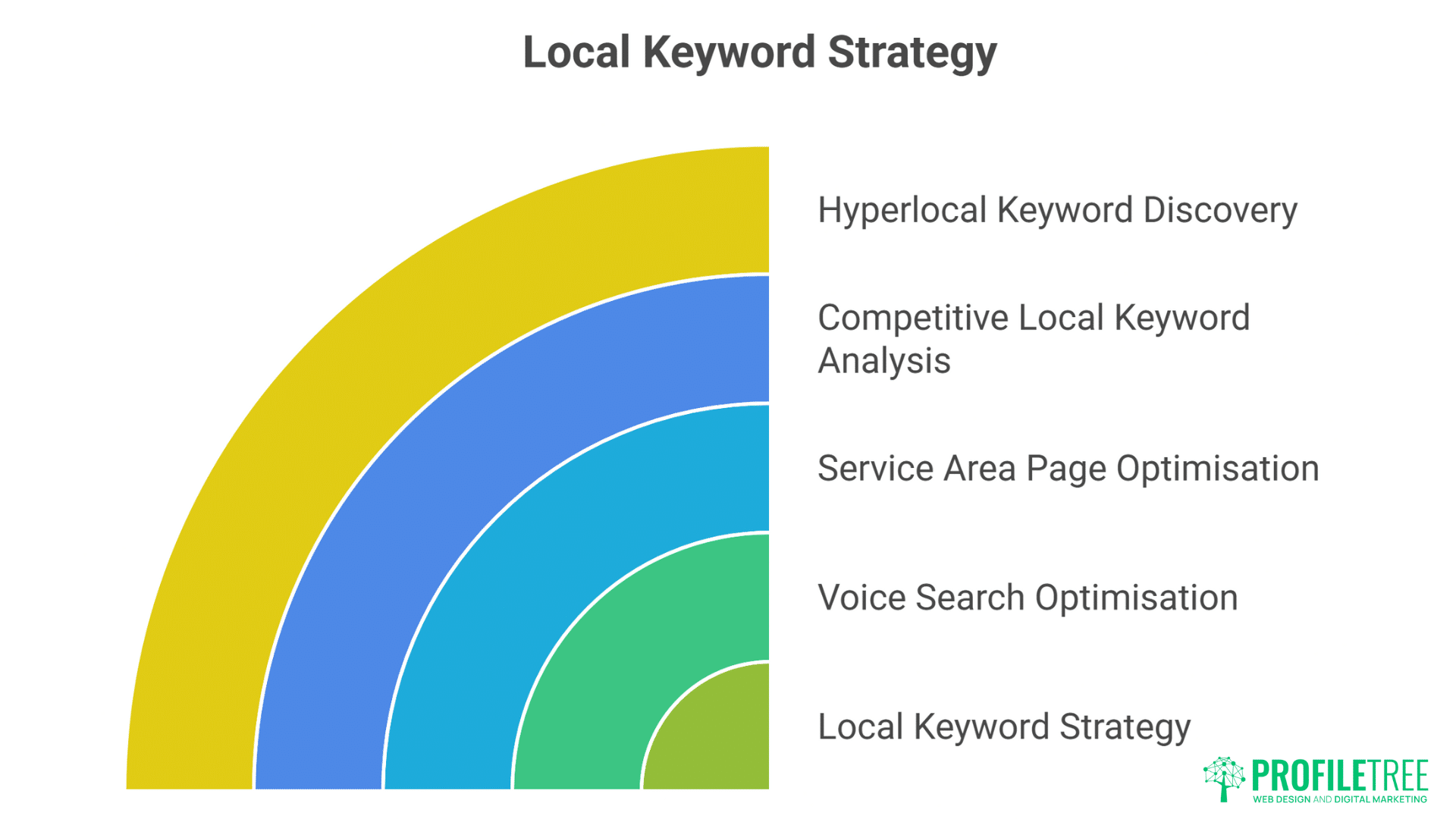
Sophisticated keyword prompts uncover the specific terms local customers use when searching for businesses like yours.
Local keyword strategy differs fundamentally from general SEO. Your prompts should identify and integrate location-specific search patterns that connect you with ready-to-buy local customers.
Hyperlocal Keyword Discovery
Uncover neighbourhood-level opportunities: “Generate fifty hyperlocal keywords for a plumber in South Belfast. Include neighbourhood names (Malone, Stranmillis, Lisburn Road). Combine with service variations (emergency plumber Malone, boiler repair Stranmillis). Add intent modifiers (best, cheap, 24-hour, reliable). Include ‘near me’ variations and voice search patterns. Consider colloquial area names locals use. Generate natural integration strategies for website content.”
Landmark and proximity searches: “Create keyword lists based on Belfast landmarks and proximity searches. Near landmarks: plumber near Queen’s University, electrician close to City Hospital. Transport hubs: mechanic near Great Victoria Street, dentist beside Botanic Station. Shopping areas: restaurant near Victoria Square, salon close to CastleCourt. Business districts: accountant Titanic Quarter, solicitor Cathedral Quarter. Include preposition variations (near, beside, close to, around).”
Competitive Local Keyword Analysis
Identify gaps competitors miss: “Analyse local search landscape for ‘coffee shop Belfast’. Identify underserved long-tail keywords competitors ignore. Find neighbourhood-specific opportunities. Discover time-based searches (early morning coffee Belfast, late night café). Uncover specific need searches (laptop-friendly café, dog-friendly coffee). Generate content strategy targeting gaps whilst maintaining natural language.”
Service area page optimisation: “Create keyword strategies for multiple location pages. Primary city page: broad terms plus city name. Neighbourhood pages: specific area focus with local context. Suburb pages: residential service emphasis. Rural area pages: coverage confirmation and travel willingness. Each page needs unique keyword set avoiding cannibalisation. Include local intent signals and geographic modifiers naturally.”
Voice Search Optimisation for Local Queries
Adapt for conversational searches: “Generate voice search optimisations for local businesses. Question formats: ‘Where’s the nearest…’, ‘What time does … close?’, ‘Who’s the best … in Belfast?’. Natural language patterns: ‘I need a plumber right now’, ‘Find me a good restaurant. Specific need expressions: ’emergency dentist open Sunday’, ‘cheap MOT near me today’. Create FAQ content matching voice search patterns exactly.”
According to Ciaran Connolly, ProfileTree founder, “Local voice searches often include immediate intent signals. Your content should answer the complete question, not just include the keywords, providing the what, where, when, and how in clear, conversational language.”
Review Management and Response Prompts
Strategic review prompts transform customer feedback into powerful social proof whilst managing reputation effectively.
Reviews significantly impact local rankings and conversion rates. Your prompts should generate responses that build trust, address concerns, and encourage future positive reviews.
Positive Review Response Templates
Craft appreciative yet varied responses: “Generate ten unique responses to five-star reviews for a restaurant. Each response should: thank specifically for what they mentioned, reference a detail from their review, reinforce the positive experience, subtly encourage return visits, invite them to try something new, maintain brand voice (warm, professional, local). Vary length from 50-150 words. Avoid generic templates. Include owner’s name for personal touch.”
Leverage positive reviews strategically: “Create responses that amplify positive feedback for SEO benefit. Quote specific compliments about service or products. Mention team members by name when praised. Reference menu items or services highlighted. Include subtle keywords naturally (Belfast restaurant, Italian dining). Share additional information (new menu, upcoming events). Generate responses that future customers find helpful when researching.”
Negative Review Recovery Strategies
Transform criticism into opportunity: “Develop response framework for one-star review about poor service. Acknowledge: validate their experience without admitting fault. Apologise: express genuine regret for disappointment. Act: explain steps taken to address issue. Amend: offer to make things right privately. Audience: remember response is for future customers too. Generate three response versions: when complaint is valid, when it’s exaggerated, when it’s false.”
Address specific complaint types: “Create response templates for common local business complaints. Long wait times: explain unusual circumstances and normal service. Price concerns: justify value and quality. Staff issues: address privately whilst showing you care. Quality problems: demonstrate commitment to standards. Miscommunication: clarify whilst taking responsibility. Each response should rebuild trust whilst protecting reputation.”
Review Generation Campaign Prompts
Encourage authentic feedback systematically: “Design review request campaign for satisfied customers. Email template: sent 3-7 days post-purchase. SMS option: brief with direct link. In-person request: script for staff. QR code strategy: placement and incentive. Follow-up sequence: gentle reminder if no response. Generate variations avoiding repetition. Include compliance with platform guidelines. Create tracking system for requests versus reviews received.”
Platform-specific review strategies: “Develop multi-platform review approach prioritising Google but including Facebook, Trustpilot, industry-specific sites. Create platform-specific requests highlighting ease and importance. Generate guidance helping customers choose appropriate platform. Include instructions simplifying review process. Design visual guides showing exact steps. Address common obstacles preventing reviews.”
Review Response Automation Frameworks
Scale responses whilst maintaining authenticity: “Create AI-assisted review response system maintaining personal touch. Categorise reviews: praise types, complaint categories, neutral feedback. Generate response components: opening acknowledgments, specific addresses, closing invitations. Build combination rules creating unique responses. Include manual review triggers for sensitive situations. Design escalation protocols for serious complaints. Maintain brand voice consistently across all responses.
Local Content Creation Prompts
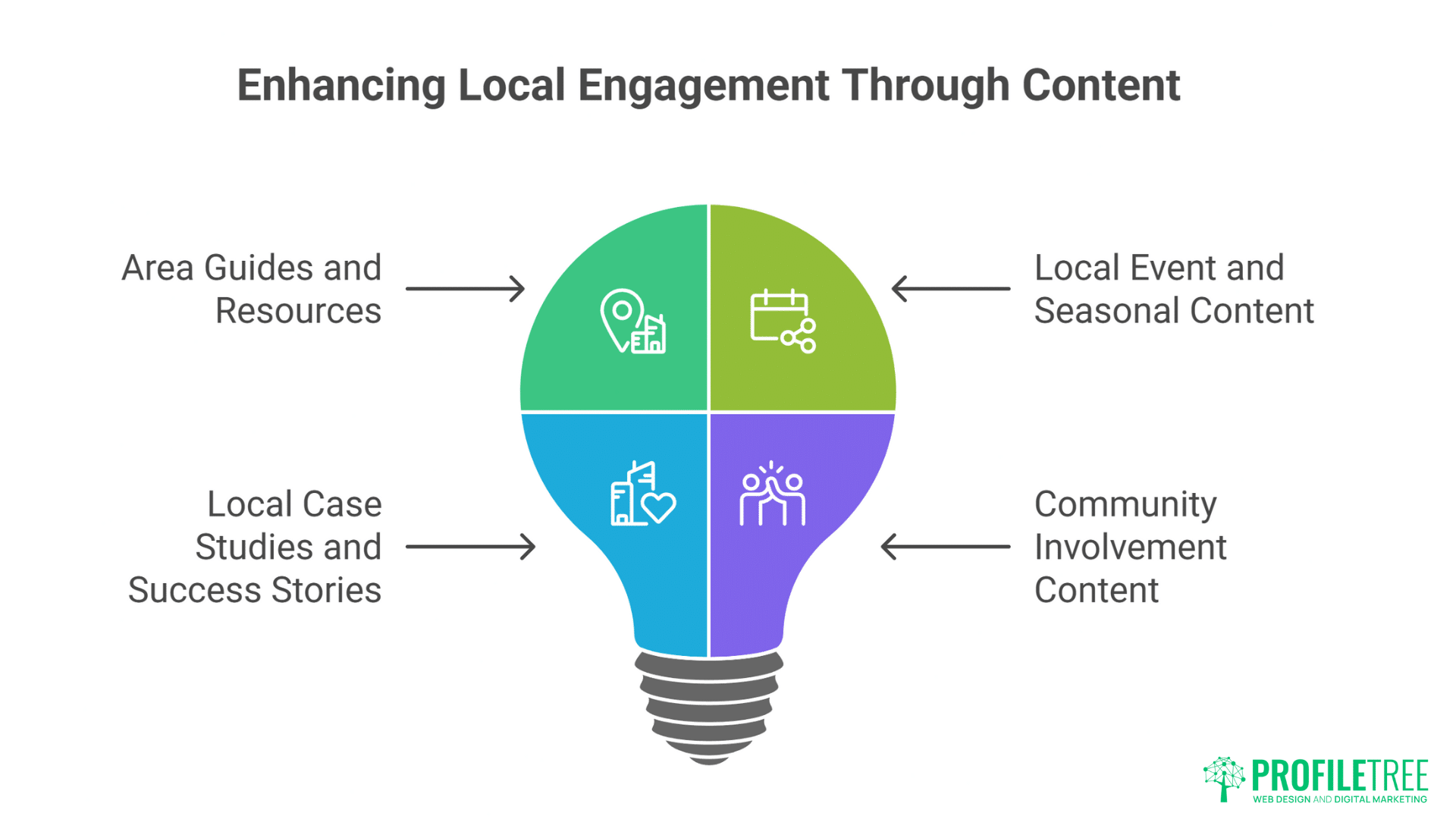
Location-specific content prompts generate material that resonates with local audiences whilst building geographic relevance.
Local content establishes your business as part of the community fabric. Your prompts should create content that demonstrates local knowledge, commitment, and involvement.
Area Guide and Resource Development
Position as local expert: “Create comprehensive area guide for businesses in Belfast City Centre. Include: parking options with costs and walking distances, public transport links and schedules, nearby amenities (banks, post office, cafes), local events calendar, seasonal considerations (Christmas markets, summer festivals), business networking opportunities. Generate monthly update schedule keeping information current. Include local partnership opportunities for content.”
Neighbourhood-specific content: “Develop neighbourhood guides for each service area. Local history and character description. Demographic insights for business relevance. Community events and gatherings. Local problems your service solves. Notable clients or projects in area. Transport and accessibility information. School catchments for family services. Shopping and amenity proximity. Generate unique angles avoiding duplicate content across areas.”
Local Event and Seasonal Content
Capitalise on local happenings: “Create content calendar aligned with Belfast events. St. Patrick’s Day: special offers and Irish themes. Belfast Marathon: supporter services and recovery treatments. Maritime Festival: nautical themes and harbour proximity. Christmas Markets: shopping packages and festive offerings. Orange parades: sensitive handling and practical information. Generate pre, during, and post-event content strategies.”
Seasonal local optimisation: “Develop seasonal content for Northern Ireland weather patterns. Spring: preparation services after winter damage. Summer: rare sunny day maximisation. Autumn: winterisation and preparation services. Winter: emergency response and weather resilience. Include micro-seasons (back-to-school, exam period, tourist season). Generate urgency whilst providing genuine value.”
Local Case Studies and Success Stories
Build trust through local proof: “Structure case study template for local clients. Client background: business type, location, challenge faced. Solution provided: specific services, timeline, approach. Results achieved: quantifiable improvements, testimonial quotes. Local relevance: why location mattered, area-specific challenges addressed. Visual elements: before/after photos, location shots. Generate interview questions extracting compelling narratives. Create variations for different service types.”
Community involvement content: “Document community participation for local SEO benefit. Sponsorships: youth sports, local charities, community events. Partnerships: local business collaborations, supply chain features. Employment: local hiring, apprenticeships, career development. Environmental: local sustainability initiatives, area improvements. Generate stories showing genuine community integration beyond mere proximity claims.”
Citation Building and NAP Consistency Prompts
Strategic citation prompts ensure your business information appears consistently across the web, building local authority.
Citations remain crucial for local SEO success. Your prompts should generate strategies for building, managing, and maintaining consistent business information across all platforms.
Citation Audit and Cleanup Strategies
Identify and fix inconsistencies: “Audit business citations across fifty UK directories. Check variations: business name (Ltd vs Limited, & vs and), address format (Street vs St, floor numbers, unit numbers), phone (international format, area codes, mobile vs landline). Identify: missing citations on major platforms, duplicate listings needing merger, incorrect information requiring updates, outdated information from moves or rebrands. Generate prioritised cleanup schedule based on domain authority.”
Create citation consistency guidelines: “Develop standard NAP format for all citations. Business name: exact legal entity with consistent styling. Address: Royal Mail preferred format with proper postcodes. Phone: primary number with consistent formatting. Website: canonical URL with proper protocol. Hours: standard format across all platforms. Description: 150, 300, and 750-character versions. Generate distribution checklist ensuring consistency.”
Strategic Citation Building Campaigns
Target high-value citation sources: “Identify citation opportunities for Belfast businesses. Tier 1: Google, Bing, Apple Maps, Facebook. Tier 2: Yelp, Yell, Thomson Local, Scoot. Tier 3: Industry directories (Law Society, RICS, dental registers). Local: Belfast City Council, Visit Belfast, Belfast Chamber. Niche: Industry-specific, interest-based, demographic-focused. Generate submission strategy prioritising impact and effort.”
Geographic citation expansion: “Build citations supporting multi-location strategy. City-wide directories for main location. Neighbourhood directories for local presence. Regional directories for wider coverage. National directories for authority. Industry directories for credibility. Generate unique descriptions for each platform whilst maintaining NAP consistency. Include tracking system monitoring citation status.”
Schema Markup Implementation Prompts
Structure data for local visibility: “Create LocalBusiness schema markup for enhanced visibility. Include: business type using specific schema.org categories, complete address with geo-coordinates, phone with international format, opening hours including special dates, price range and payment methods, images with proper alt text, reviews aggregateRating markup. Generate variations for different page types (homepage, location pages, service pages).”
Event and offer schema: “Develop schema markup for local promotions and events. Event markup: name, date, location, description, ticket information. Offer markup: valid dates, terms, eligible services, redemption process. FAQ schema: common local queries with answers. How-to schema: service process explanations. Generate implementation priority based on business goals and opportunities.”
Competitive Local SEO Analysis Prompts
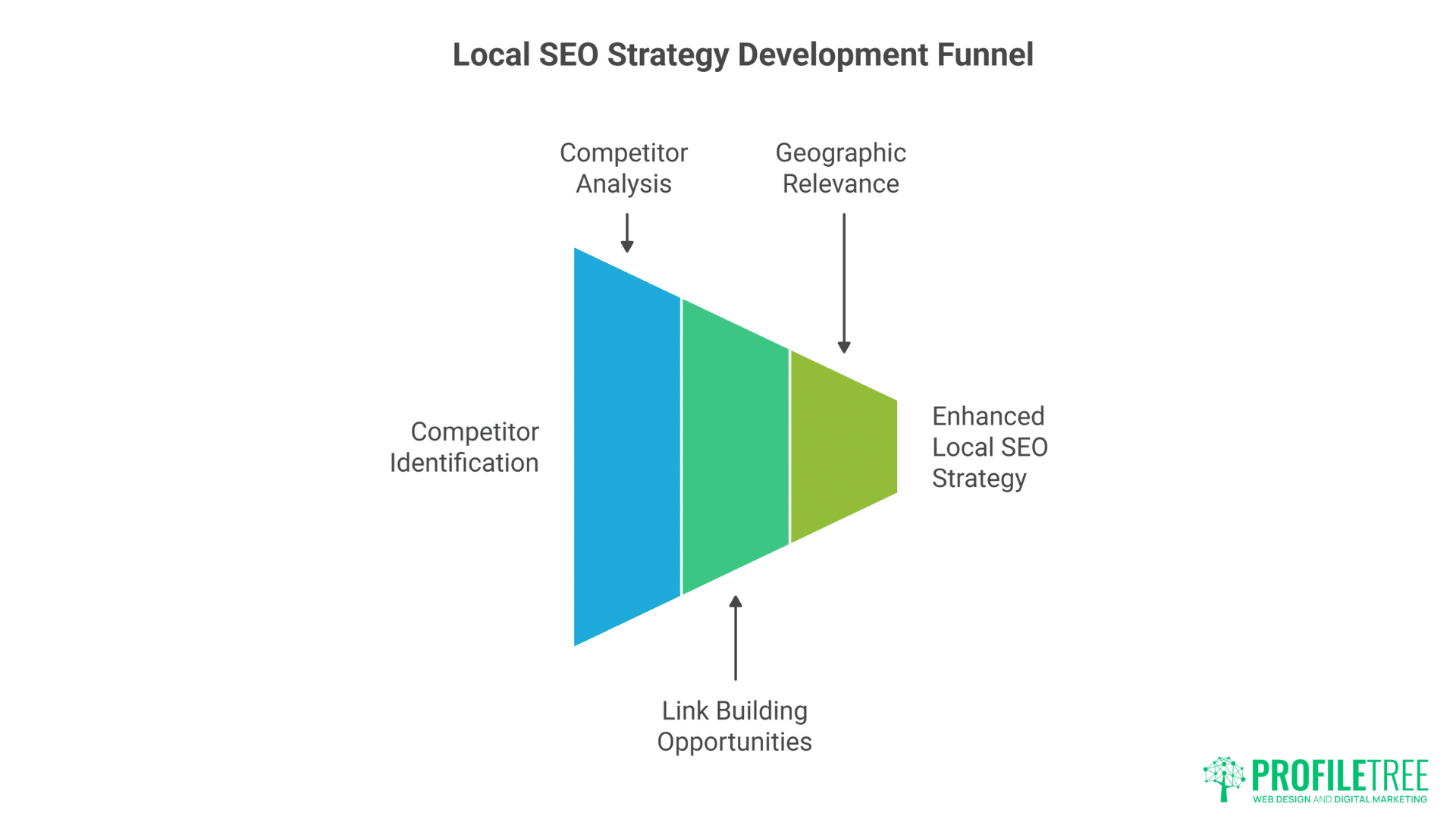
Intelligence-gathering prompts reveal competitor strategies and identify opportunities for local dominance.
Understanding your local competition provides strategic advantages. Your prompts should generate insights that inform superior local SEO strategies.
Local Competitor Identification and Analysis
Map your true competition: “Identify local competitors for accountancy firm in Belfast. Direct competitors: other accountants within 3-mile radius. Indirect competitors: online accounting services, bookkeeping freelancers. Aspirational competitors: firms ranking for target keywords. Geographic competitors: businesses in adjacent areas. Generate comparison matrix: services, pricing models, target markets, unique propositions, online presence strength.”
Reverse-engineer success: “Analyse top-ranking local competitors. Website factors: content depth, local signals, technical optimisation. Google Business Profile: completeness, review volume, response rates, post frequency. Citations: quantity, quality, consistency. Content strategy: topics, frequency, local focus. Link profile: local links, industry connections, partnerships. Generate replication and improvement strategies for each factor.”
Local Link Building Opportunity Identification
Discover local link sources: “Generate fifty local link opportunities for Belfast businesses. Local news: press release angles, expert commentary, event coverage. Business associations: chambers, BNI, industry groups. Sponsorships: sports clubs, charities, schools. Partnerships: complementary businesses, suppliers, clients. Local bloggers: relevant topics, guest post opportunities. Community sites: forums, Facebook groups, directories. Generate outreach templates for each opportunity type.”
Build geographic relevance: “Create link building strategies establishing local authority. Local resource creation: area guides earning natural links. Community involvement: documentation earning mentions. Expert positioning: local media commentary opportunities. Event participation: speaker opportunities, exhibition presence. Award applications: local business awards, industry recognition. Generate content supporting each link building approach.”
Multi-Location SEO Strategy Prompts
Sophisticated multi-location prompts manage complex local SEO across multiple service areas or branches.
Businesses serving multiple locations face unique challenges. Your prompts should generate strategies that avoid cannibalisation whilst maximising visibility across all areas.
Location Page Optimisation Strategies
Create unique value per location: “Develop location page template avoiding duplication. Unique elements: local team information, specific services offered, area-specific case studies, local testimonials, neighbourhood guides, parking and access information, local partnerships and involvement. Shared elements: brand messaging, core services, company values. Generate content ensuring 60% uniqueness minimum per page.”
Service area versus physical location: “Design strategies for businesses with and without physical premises. Physical locations: emphasise facility features, visit information, local presence. Service areas: coverage confirmation, travel policies, response times. Virtual services: local expertise, area knowledge, client base. Generate appropriate strategies based on business model and Google guidelines.”
Local Landing Page Architecture
Structure for scalability: “Create landing page hierarchy for multi-location business. Homepage: brand overview with location finder. City pages: major location overviews. Area pages: specific neighbourhood focus. Service-location combinations: ‘plumber in Lisburn’ pages. Generate URL structure, internal linking strategy, and content distribution plan. Include expansion framework for new locations.”
Avoid keyword cannibalisation: “Develop keyword distribution strategy across locations. Brand + service: homepage focus. City + service: main location pages. Neighbourhood + service: area pages. Long-tail variations: blog content. Emergency searches: dedicated landing pages. Generate keyword mapping ensuring clear page purposes. Include monitoring system for ranking conflicts.”
Local Social Media Integration Prompts
Social-local prompts create community connections that reinforce local search visibility.
Social signals increasingly influence local rankings. Your prompts should generate social strategies that build local engagement and drive local SEO benefits.
Platform-Specific Local Strategies
Optimise each platform locally: “Create local social media strategies per platform. Facebook: local group participation, event creation, location check-ins. Instagram: location tags, local hashtags, area photography. Twitter/X: local news engagement, area discussions, event commentary. LinkedIn: local business networking, area expertise sharing. TikTok: local trends, area challenges, community features. Generate content calendars maximising local relevance per platform.
Community engagement tactics: “Develop local community engagement approach. Share local news and developments. Celebrate other local businesses. Participate in area discussions. Support local causes and charities. Document local events attended. Feature local customers with permission. Generate authentic engagement avoiding promotional tone.”
User-Generated Content Campaigns
Leverage customer content: “Design UGC campaign for local visibility. Photo contests: best shots of meals, before/after transformations. Check-in rewards: incentives for location tags. Review encouragement: visual review prompts. Testimonial videos: customer success stories. Local hashtags: branded geographic tags. Generate campaign mechanics, legal considerations, and amplification strategies.”
Mobile Optimisation for Local Search
Mobile-first prompts ensure your local presence performs perfectly on devices where most local searches originate.
Most local searches happen on mobile devices with immediate intent. Your prompts should generate mobile-optimised strategies that capture these high-intent moments.
Click-to-Call Optimisation
Facilitate immediate contact: “Implement click-to-call optimisation for mobile users. Button placement: thumb-friendly positions above fold. Visual design: contrasting colours, adequate sizing. Text prompts: urgent language for immediate needs. Tracking: call source attribution setup. Alternative options: text, WhatsApp, callback forms. Generate testing framework for placement and design variations.”
Mobile Landing Page Speed
Ensure instant loading: “Optimise local landing pages for mobile speed. Image optimisation: compression, lazy loading, WebP format. Content prioritisation: critical information first. Reduce requests: combine files, inline critical CSS. Server optimisation: CDN usage, caching strategies. AMP consideration: when beneficial versus harmful. Generate performance budget and monitoring system.”
Location-Based Features
Leverage device capabilities: “Implement location-aware features for mobile users. Automatic nearest location detection. Distance calculations and directions. Location-specific offers and content. Store locator with real-time information. Appointment booking for nearest location. Generate privacy-compliant implementation strategies maximising convenience.”
Advanced Local SEO Techniques
Cutting-edge prompts implement sophisticated strategies that provide competitive advantages.
Stay ahead of competitors with advanced techniques. Your prompts should generate innovative approaches that Google rewards with enhanced visibility.
Entity Building and Knowledge Graph
Establish entity authority: “Build entity recognition for local business. Wikipedia presence: notability establishment strategies. Knowledge panel: qualification and optimisation. Entity connections: relationships with other entities. Brand entity: consistent signals across web. Local entity: geographic association strengthening. Generate systematic entity building campaign with milestones.”
Local AI and Voice Assistant Optimisation
Prepare for AI-driven discovery: “Optimise for AI assistants and voice search. Structured data: comprehensive schema implementation. Conversational content: natural language answers. Business information: complete and consistent everywhere. FAQ optimisation: voice-friendly Q&A pairs. Action integration: booking, calling, directions. Generate AI-friendly content formats and structures.
Predictive Local SEO
Anticipate algorithm changes: “Develop future-proof local SEO strategies. User experience: speed, accessibility, usability. Expertise demonstration: credentials, experience, results. Trust building: reviews, testimonials, guarantees. Local relevance: community integration, area expertise. Generate resilience strategies surviving algorithm updates.”
Measurement and ROI Tracking
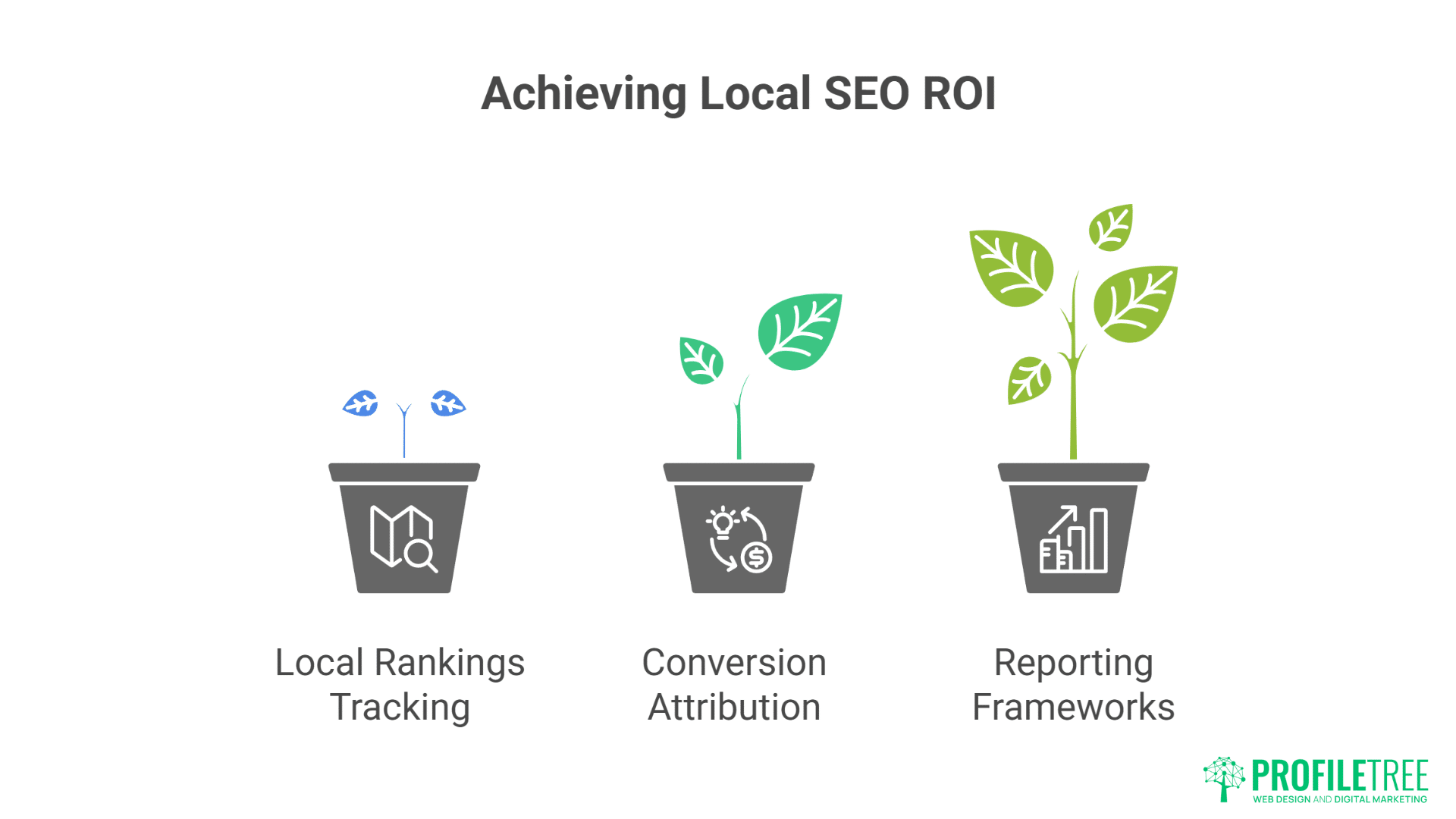
Analytics prompts create measurement frameworks proving local SEO value.
Demonstrating ROI justifies continued investment. Your prompts should generate tracking strategies that connect local SEO efforts with business outcomes.
Local Rankings and Visibility Tracking
Monitor performance accurately: “Setup local ranking tracking system. Keywords: brand, service, location combinations. Locations: actual searcher locations, not IP addresses. Devices: mobile and desktop separately. SERP features: map pack, knowledge panel, organic. Competitors: relative position monitoring. Generate reporting dashboard highlighting trends and opportunities.”
Conversion Attribution Modelling
Connect visibility to revenue: “Create attribution model for local SEO. Phone calls: tracking numbers, call recording. Form fills: source tracking, field analysis. Store visits: Google store visit insights. Direction requests: maps interaction tracking. Website events: micro-conversion monitoring. Generate ROI calculation framework including lifetime value.”
Local SEO Reporting Frameworks
Communicate value effectively: “Design local SEO reports for stakeholders. Executive summary: key wins and revenue impact. Visibility metrics: rankings, impressions, map appearances. Engagement metrics: calls, directions, website visits. Conversion metrics: leads, sales, revenue. Competitive position: relative performance. Generate visualisation strategies making data compelling.”
Professional Implementation Support
ProfileTree helps businesses across Northern Ireland, Ireland, and the UK dominate local search through strategic SEO implementation.
Whilst this guide provides comprehensive frameworks for local SEO success, many businesses benefit from professional implementation. Our team combines deep local market knowledge with technical SEO expertise to deliver measurable local search dominance.
We offer local SEO audits identifying immediate opportunities. Our Google Business Profile management ensures optimal visibility. Our citation building service establishes consistent presence across key platforms. For businesses seeking complete local dominance, we provide comprehensive local SEO campaigns that transform local search presence.
FAQs
How quickly can local SEO improvements show results?
Google Business Profile optimisations often show impact within days, especially for reviews and posts. Citation building typically takes 2-3 months for full effect. Content-based local SEO generally needs 3-6 months for significant movement. However, some businesses see immediate improvements from fixing critical issues like NAP inconsistencies or missing GMB categories.
What’s the most important factor for local SEO success?
Google Business Profile optimisation remains paramount—it’s your direct communication channel with Google about your business. Reviews come second, significantly impacting both rankings and conversions. Citations provide foundational trust signals. Quality local content demonstrates expertise and relevance. All factors work together; neglecting any creates vulnerabilities competitors can exploit.
How many citations does a local business need?
Quality outweighs quantity for citations. Most local businesses benefit from 40-60 high-quality citations on relevant platforms. Focus on major data aggregators (Foursquare, Data Axle), primary platforms (Google, Bing, Apple, Facebook), and industry-specific directories. Consistency across citations matters more than total number.
Should I create separate location pages for each service area?
Create dedicated pages only when you can provide unique, valuable content for each area. Include specific local information, area-specific case studies, and genuine local relevance. Avoid thin, duplicate content that merely swaps location names. Google rewards helpful, unique pages but penalises doorway pages created solely for rankings.
How do I compete with larger businesses in local search?
Focus on advantages larger businesses can’t match: personal service, local knowledge, community involvement, and flexibility. Encourage reviews from satisfied customers—smaller businesses often achieve higher ratings. Create hyper-local content larger competitors won’t bother with. Build relationships with other local businesses for mutual support. Use your agility to implement changes faster than corporate competitors.
Dominating Local Search Through Strategic Implementation
Mastering AI prompts for local SEO and Google Business Profile optimisation transforms how businesses attract nearby customers. The frameworks and strategies outlined here provide everything needed to achieve prominent local visibility and convert that visibility into revenue.
Success requires treating local SEO as an ongoing commitment rather than one-time setup. Your prompts should generate consistent optimisation efforts across all local ranking factors whilst maintaining authentic community connections. The combination of AI efficiency and local market knowledge creates sustainable competitive advantages that compound over time.
The local search landscape continues evolving with increasing mobile usage, voice search adoption, and AI-driven discovery. Sophisticated prompt engineering enables smaller local businesses to compete effectively against larger competitors with bigger budgets. Whether operating from a single location or managing multiple branches, mastering local SEO through strategic AI implementation delivers the neighbourhood visibility essential for sustained business growth.