The Digital Challenge Golf Tourism Businesses Face
Golf tourism is a competitive, high-value niche. Providers in Ireland are competing not just with each other but with well-funded international platforms that dominate generic search terms. The businesses we work with typically come to us with the same problem: a visually appealing site that generates almost no organic traffic and converts even less of the traffic it does receive.
The reasons for that are usually structural. Golf tourism websites are often built to look impressive rather than to perform. They load slowly on mobile, lack the content depth that search engines require, and rely on a single enquiry form rather than the kind of conversion architecture that turns a browsing golfer into a confirmed booking. Fixing that requires a different approach from the outset.
What a High-Performing Golf Tourism Website Actually Needs
Good website design for golf tourism providers goes well beyond selecting the right imagery. The site must function as a sales platform, a content hub, and a brand statement simultaneously. Each of those functions places specific technical and structural demands on the build.
Booking and Enquiry Infrastructure
A golf tourism provider typically offers packages with multiple variables: group size, dates, transport options, accommodation add-ons, equipment hire. A standard contact form cannot capture that complexity cleanly, and a form that asks the wrong questions increases admin workload while reducing lead quality.
Custom enquiry forms, built around the specific packages on offer, collect the data that matters from the first interaction. When combined with clear availability signals and strong calls-to-action at every stage of the user journey, this infrastructure reduces friction and increases the number of enquiries that convert into confirmed bookings.
Ecommerce Functionality for Merchandise and Add-Ons
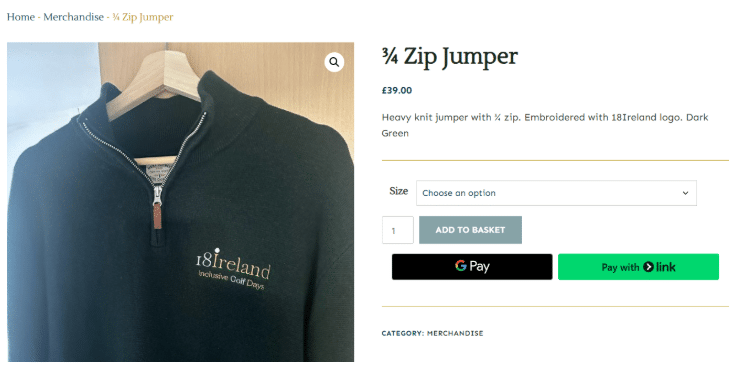
Many golf tourism providers also sell branded merchandise: golf balls, apparel, accessories, premium gifts. Integrating this into the main site rather than directing customers to a separate platform keeps the brand experience cohesive and captures additional revenue from visitors who may not immediately book a package.
We build ecommerce sections on WooCommerce for the flexibility it offers in product presentation, inventory management, and payment processing. The key is ensuring the shop does not feel bolted on. It should be a natural extension of the brand, consistent in design and easy to navigate for someone who has arrived looking for a golf experience rather than a retail transaction.
Interactive Course Mapping
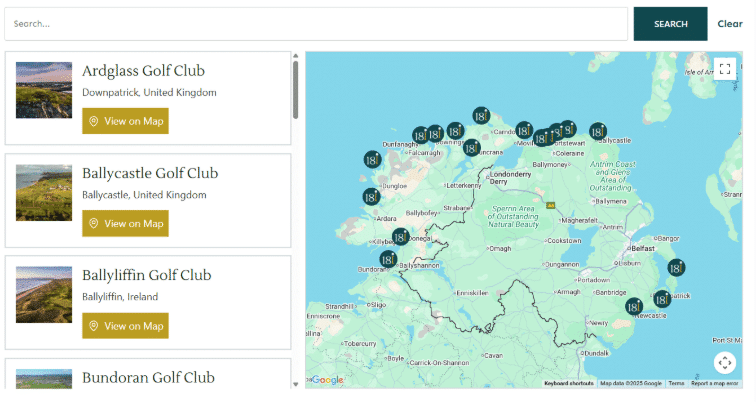
For providers offering access to multiple courses, an interactive map is one of the most effective tools for converting interest into enquiry. A static list of course names means nothing to an international visitor. A visual map with clickable pins, each leading to a course page with imagery, local highlights, and package availability, gives that visitor a reason to stay on the site and explore.
We have built custom course maps for golf clients using branded pins that match the site’s visual identity. Each pin connects to a self-contained landing page optimised for the relevant location and course name, which also improves keyword coverage across the site.
SEO for Golf Tourism Websites: How Providers Get Found Online
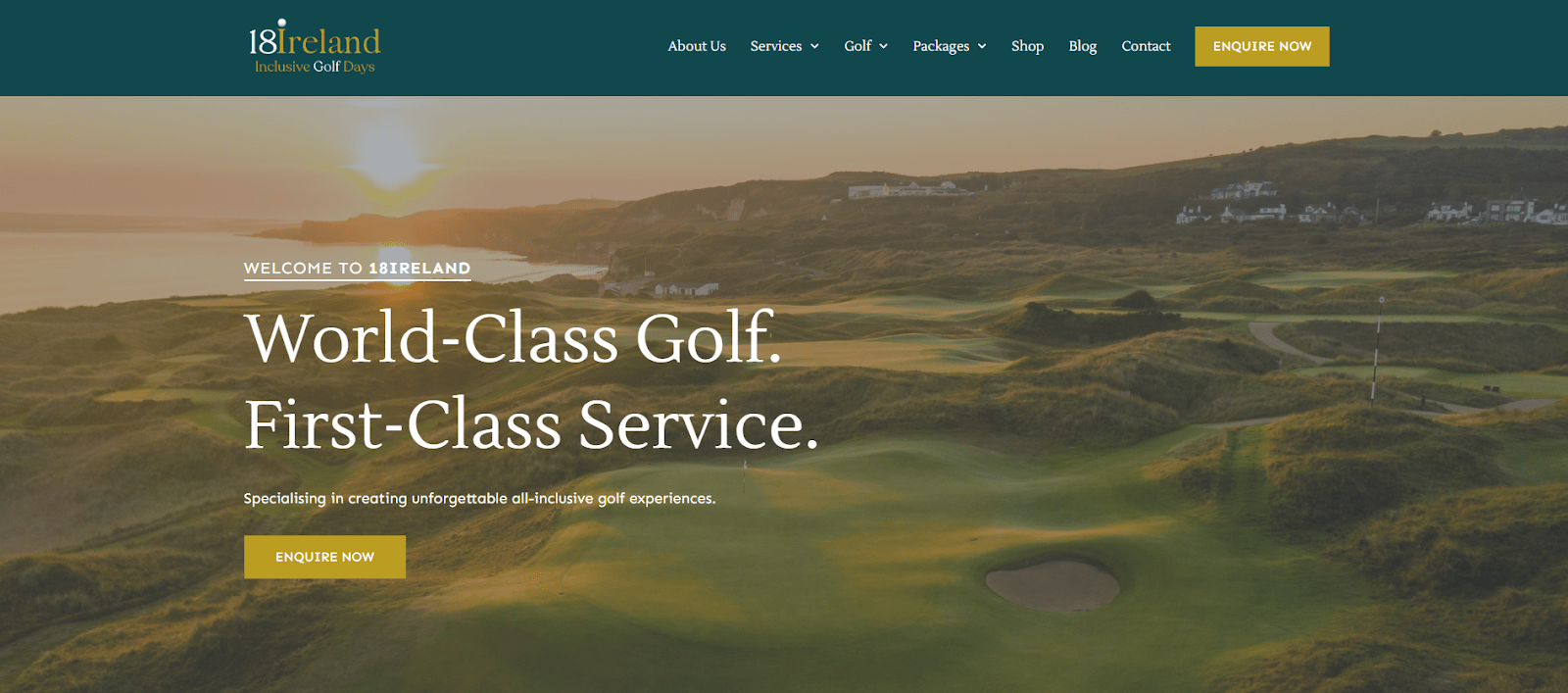
Website design for a golf tourism provider only delivers commercial value if the site ranks for the terms that potential customers actually search. Most generic golf terms are dominated by aggregators and international platforms. The opportunity for individual providers lies in experience-led and destination-specific keywords that those platforms cannot target effectively.
Search terms like “golf and stay packages Northern Ireland,” “one-day golf experience Ireland,” and “luxury golf transport Belfast” represent genuine commercial intent from visitors planning a trip. These terms have lower competition and higher conversion rates than broad keywords, and they are far more achievable for a well-structured site with relevant content.
A golf tourism website also benefits from local SEO signals: accurate business listings, consistent NAP data, and structured data markup that helps search engines understand the geographic scope of the service. For businesses targeting international visitors, there is an additional consideration around hreflang tags and how the site handles currency, language, and regional content variations.
Content That Earns Rankings Over Time
A blog section is not optional for a golf tourism website competing in organic search. It is the primary mechanism for acquiring keyword coverage beyond the core service pages. The content topics that perform well are not generic travel articles. They are specific, experience-led pieces that match the way golfers actually plan trips.
Useful content themes for golf tourism providers include course-by-course guides, seasonal playing conditions, local accommodation and travel logistics, and behind-the-scenes content about what makes a particular golf experience distinctive. This content builds topical authority over time and gives the site a reason to attract returning visitors rather than only first-time arrivals.
Digital Marketing for Golf Tourism Providers
Getting a golf tourism website right is the foundation. What builds on that foundation is a digital marketing strategy that extends the reach of the site beyond organic search and keeps the brand visible to potential customers throughout their decision-making process.
Social Media and Video Content
Golf tourism is a visual experience. Social media, particularly Instagram and YouTube, are natural channels for communicating the quality of the courses, the landscapes, and the overall experience. Short-form video content showing a tee shot at a coastal course in good light will outperform any written description of the same thing.
The sites we build include structured social sharing functionality and clean metadata so that content shared from the site maintains its visual quality when it appears in social feeds. We also advise clients on what content to create and how frequently, because a site that is actively feeding good content into social channels generates compounding awareness rather than a single spike at launch.
Email and Repeat Bookings
Golf tourism customers who have had a positive experience are highly likely to return, but only if the brand stays visible between visits. A well-structured email list, combined with targeted seasonal campaigns and early-access offers for returning customers, is one of the most cost-effective channels available to a golf tourism provider.
The site should be built with list growth in mind from the start. That means clear newsletter sign-up points, an offer or incentive that gives visitors a reason to subscribe, and an integration with the email marketing platform of the client’s choice. Bolt-on solutions added after launch never perform as well as functionality built into the original architecture.
How ProfileTree Approaches Website Design for Golf Tourism Providers
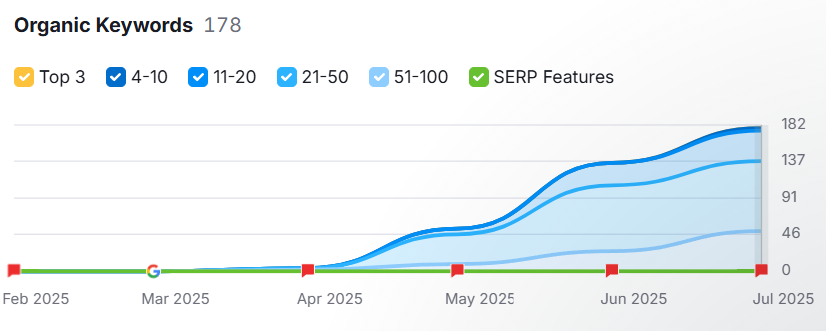
Our process for golf tourism website design follows a consistent structure regardless of the size or complexity of the project. We begin with a strategy session covering the client’s target audience, their primary conversion goals, and the competitive landscape they are operating in. That conversation shapes every subsequent decision, from the site structure to the keyword targets to the type of content we recommend.
The build phase covers CMS setup, design execution, ecommerce integration where required, custom functionality, and performance optimisation. We test across devices and browsers before launch and provide a structured handover that gives the client the knowledge they need to manage the site day-to-day. Post-launch support is available for clients who prefer to have ongoing technical oversight.
Ciaran Connolly, founder of ProfileTree, puts it plainly: “The golf tourism websites that perform consistently well are the ones where the design, the content, and the technical foundations are all pulling in the same direction from day one. A polished design sitting on weak infrastructure, or strong SEO applied to a site that does not convert, will not deliver the results a client needs.”
For providers ready to invest in a digital platform that generates bookings rather than just a brand presence, you can find out more about our website design services for tourism and leisure businesses and how we approach each project.
Follow us on our socials for the latest news and articles: Facebook | Instagram | LinkedIn
FAQs About Website Design for Golf Tourism Providers
How long does it take to see SEO results for a golf tourism website?
Most golf tourism websites in competitive regions begin to show meaningful organic growth between three and six months after launch, assuming the site has been built with the correct technical foundations and a content strategy is in place from the start. Sites without those foundations can take considerably longer, and some never achieve meaningful organic visibility at all.
What should a golf tourism website include to drive international bookings?
International visitors need clear package information, transparent pricing or a frictionless way to request a quote, high-quality imagery of the courses and experiences on offer, and social proof in the form of reviews or testimonials. Practical logistics information such as transport, accommodation, and equipment hire also reduces the number of pre-booking questions and increases the conversion rate from enquiry to confirmed booking.
Can a golf tourism website handle both bookings and merchandise sales?
Yes, and the two functions work well together when integrated into a single platform. WooCommerce handles both transactional flows effectively, with separate sections for packages and merchandise that share the same brand design and checkout architecture. The key is ensuring the two sections complement rather than distract from each other.
How does video content affect bookings for golf tourism providers?
Video content that shows the actual experience, the courses, the landscape, and the quality of the transport and hospitality, consistently outperforms static imagery in converting interest into enquiry. Embedded video on service pages increases average time on page and reduces bounce rate, both of which are positive signals for organic rankings. Short-form clips distributed through social channels also drive traffic back to the site from audiences who may not have found it through search.
What ongoing maintenance does a golf tourism website require?
A golf tourism website requires regular content updates to maintain search rankings, technical maintenance to ensure performance and security standards are met, and periodic structural reviews as the client’s service offering evolves. Seasonal content updates, new course pages, and campaign landing pages for promotions are typical ongoing needs. Clients who commit to a consistent content programme see compounding growth; those who treat the site as a one-off build typically plateau within twelve to eighteen months.
How can a golf course use content marketing to attract mid-week bookings?
Mid-week availability is a common challenge for golf tourism providers. Content that specifically targets the audience most likely to book mid-week, corporate groups, golf society organisers, and flexible leisure travellers, and that addresses their specific decision-making criteria, can shift the booking pattern meaningfully. Blog content covering corporate golf day planning, group travel logistics, and mid-week incentives, combined with targeted email campaigns to existing customers, is typically the most cost-effective approach.
Check Out More Case Studies
If you enjoyed this case study, check out more of our previous projects: Community Charity Marketing Project | Website Design for Membership Platform | Tourism Marketing for Crumlin Road Gaol