
Premium Property Marketing: A Digital Playbook for Agents
Table of Contents
Selling a high-value home is not the same job as selling an average one. The buyer pool is smaller, the decision cycle is longer, and first impressions form online before anyone books a viewing. Most estate agents know this, yet their marketing still looks much the same whether the asking price is £200,000 or £2 million.
That gap is where digital marketing earns its keep. Strong visuals, careful targeting and a clear online presence give a premium listing the attention it needs to reach the right buyers, including those searching from outside the UK.
This guide on luxury property marketing walks through how ProfileTree, a Belfast-based digital marketing agency, helps property-sector clients market premium homes online. You will find the visual groundwork, the targeting approach, the regional angles that matter in the UK and Ireland, and the practical steps for a launch.
Why Premium Listings Need a Different Digital Approach
Premium property marketing rewards depth over volume. A standard listing aims for footfall. A high-value one aims for the few qualified buyers who can act, and it has to look the part while doing so. The work below sets out what changes when the asking price climbs.
The buyer has shifted from features to lifestyle
Higher-end buyers rarely choose a home on square footage alone. They respond to how a property fits the life they want, the area around it, the light in the rooms, the sense of having somewhere few others can. Marketing that lists specifications misses this. Marketing that shows a way of living connects.
This changes the brief for everyone involved. The copy stops reading like an inventory and starts describing mornings in a kitchen or the walk to a harbour. The images stop cataloguing rooms and start suggesting a life. For an estate agent used to standard listings, the adjustment is real, and it is where a marketing partner earns its place.
This shift in motivation is exactly why visual and editorial quality matter more at the top of the market, which the next point picks up.
Visual quality sets the first impression
For a premium home, the photographs and video are the shop window. Buyers form a view in seconds, and amateur images undercut a serious asking price before any words are read. Professional photography, considered video and well-judged staging are the baseline, not the upgrade.
Getting that visual layer right is a production skill in itself, and it links directly to how a property is found online, which is the next concern.
The search happens online, often from abroad
Many premium buyers begin remotely. They browse, shortlist and sometimes commit before travelling. International interest is a real share of high-value transactions in the UK, so a listing that performs only on a domestic portal leaves buyers untouched. A property that ranks for the right terms, loads quickly and shows well on a phone reaches further.
ProfileTree builds and maintains the websites that carry this kind of content through its website design service for agencies that want a property showcase rather than a brochure.
Mobile performance is the quiet decider here. A buyer scrolling on a phone in another time zone will not wait for heavy images to load, and a slow page loses them before the home gets a chance. A site that is quick, clean and easy to navigate on a small screen does more for a premium listing than any single clever feature.
Building the Visual Foundation
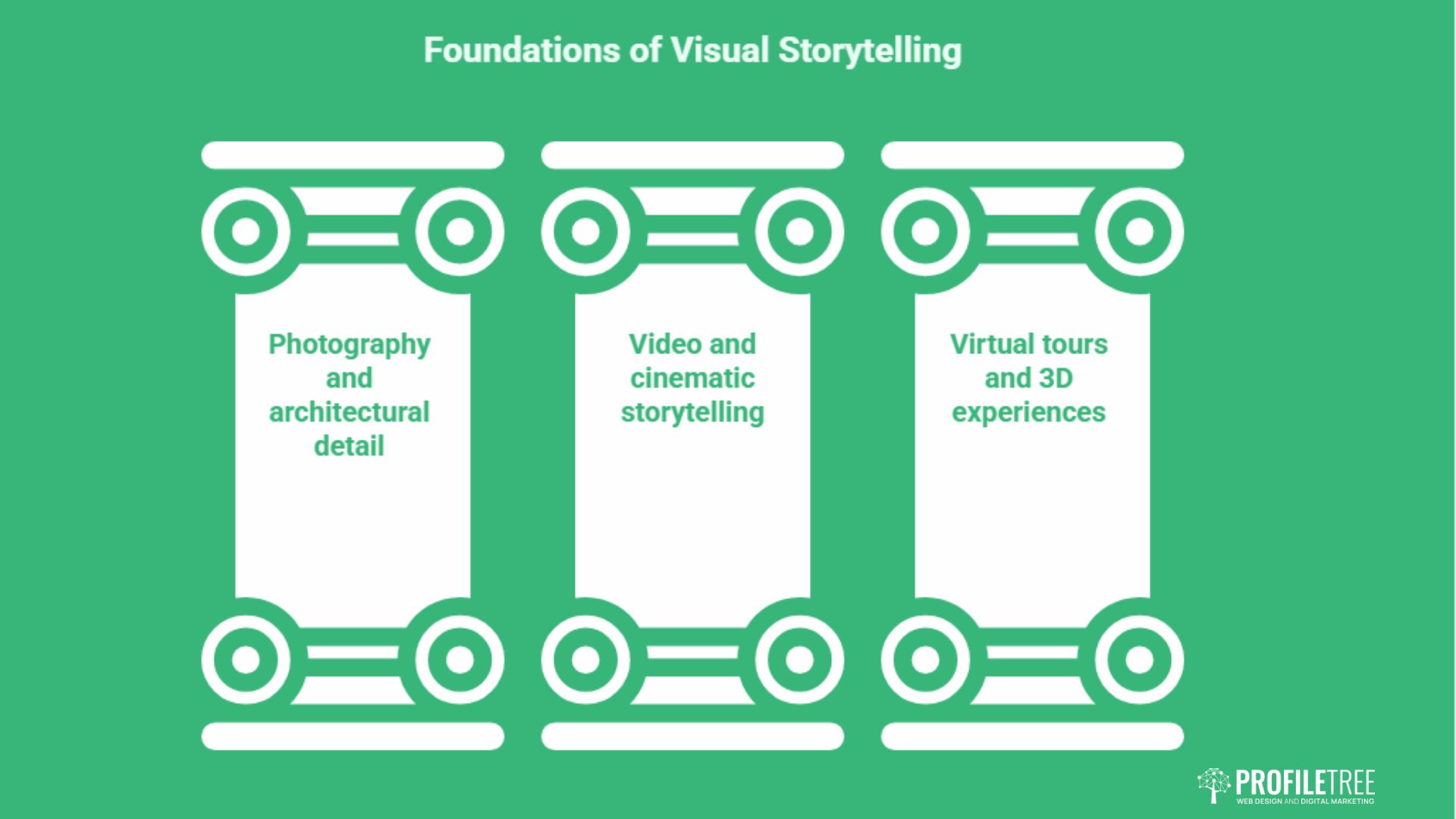
Visual content does the heaviest lifting in premium property marketing. It is the part buyers remember and share. This section covers the three layers that matter most: still photography, moving image, and the virtual experiences that let remote buyers explore at their own pace.
Photography and architectural detail
Strong property photography borrows from architectural and editorial work. It uses light, composition and restraint to show a home at its best without overselling it. Drone shots place the property in its setting, which matters for rural estates and coastal homes where the surroundings are part of the value.
Consistency across the set matters as much as any single image. A run of photographs shot in the same light, at the same standard, reads as considered, while a mix of strong and weak images undercuts the whole listing. Planning the shoot around the time of day each room shows best is a small discipline that lifts the result.
Photography sets the tone, and video extends it into something a buyer can sit with, which is where the next layer comes in.
Video and cinematic storytelling
Video lets a property tell a story rather than present a list. A short, well-paced film can show how rooms connect, how light moves through a day, and what life in the home might feel like. This is craft work, and it benefits from a team that produces video for a living.
ProfileTree offers exactly that through its video marketing service, helping property clients turn a listing into a piece of content worth watching and sharing.
Virtual tours and 3D experiences
Self-guided virtual tours let a buyer walk through a property at midnight from another country. For pre-construction homes, photo-realistic visualisation sells what does not yet exist, opening off-plan interest before a brick is laid. These tools suit remote and international buyers especially well, and they shorten the path to a serious enquiry.
The practical gain is filtering. A buyer who has already toured a home virtually arrives at a physical viewing further along in their thinking, which saves time for everyone and tends to produce stronger offers. For agents handling several premium listings at once, that filtering is the difference between chasing curiosity and meeting intent.
The role of virtual tours in property work is worth reading in its own right, and ProfileTree covers it in a dedicated guide on property virtual tours.
Targeting, Reach and Online Presence
Visuals only work if the right people see them. Premium buyers are a narrow audience, so the targeting has to be precise, and the website behind it has to convert interest into contact. This section covers how to find qualified prospects, how to be visible in search, and how to use video and social channels without diluting a premium feel.
Reaching qualified buyers, not crowds
Paid campaigns for high-value homes are built on tight audience segments, not broad reach. Retargeting keeps a property in front of people who have already shown interest through their browsing. Private, password-protected listings keep a sense of exclusivity for owners who want discretion. The aim is fewer, better leads.
The same logic applies to where the budget goes. Spreading a small premium budget across every channel produces noise, while concentrating it on two or three places where the right buyers spend their time produces results. Knowing which channels those are, for a given price bracket and area, is the part that benefits most from experience.
Getting this targeting right is part of a wider plan, and ProfileTree shapes that plan through its digital strategy service, which sets the audience, channels and budget before a penny is spent on ads.
Search visibility for high-value terms.
A premium listing should be found by buyers searching for it. That means a fast, well-structured website, clear local signals for the area being sold, and content that answers the questions buyers actually type. Search engine optimisation for property terms is slower than paid ads but builds lasting visibility.
ProfileTree handles this work through its SEO service, helping agencies rank for the searches their buyers run.
Social channels and content that fit the brand.d
Short-form video and image-led posts suit premium property well, provided they hold a consistent, restrained tone. The point is reached with the right feel, not volume for its own sake. Agencies that already invest in social content tend to see it as supporting their listings rather than competing with them.
For the strategy side of this, ProfileTree offers a social media service, and its analysis of how social marketing drives sales shows the commercial case in plain numbers.
Regional Nuance Across the UK and Ireland
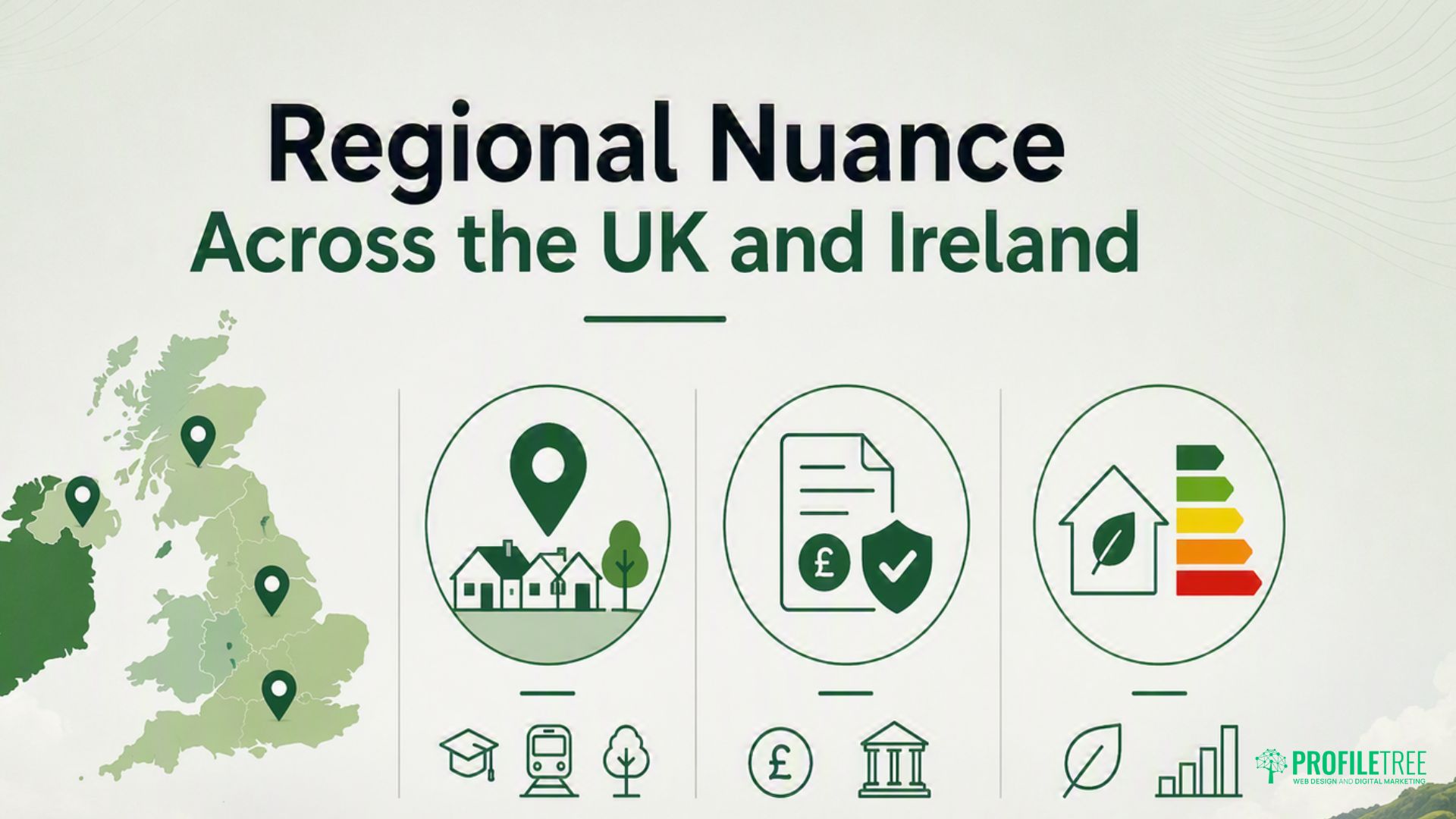
Premium markets are local before they are global. A buyer in Belfast, Dublin or the Home Counties responds to different signals, and the rules around high-value purchases vary too. This section covers the regional angles ProfileTree builds into property campaigns, from market character to the practical detail of tax and timing.
Local market character matters.
What reads as premium in one region looks ordinary in another. Marketing that names the right neighbourhoods, schools, transport links and local character speaks to buyers who know the area, and reassures those who do not. Northern Ireland, in particular, has drawn fresh interest in its higher-value housing, which makes local knowledge a selling point. For buyers weighing a move, ProfileTree’s sister brand offers a useful overview of the top cities in Northern Ireland.
Local character sells the lifestyle, but high-value buyers also weigh the financial details, which the next point addresses.
Tax and regulatory awareness
Premium buyers think about Stamp Duty Land Tax in the UK and, in Ireland, the rules set by the Property Services Regulatory Authority. Marketing that acknowledges these realities, rather than ignoring them, builds trust with a buyer who is already taking advice. It signals that the agent understands the transaction, not just the property.
This kind of detail is part of presenting a property credibly, and a well-built site makes room for it without clutter, which ties back to development quality.
Energy ratings as a selling point
A strong EPC rating is becoming a genuine asset at the top of the market. Buyers increasingly value running costs, wellbeing features and lower-carbon homes, and a high rating supports a stronger asking price. Marketing that puts energy performance forward, rather than burying it, meets a real shift in buyer priorities.
Presenting these features clearly online relies on a site that performs, and ProfileTree’s website development service builds property sites that load fast and hold up under traffic.
Running a Premium Marketing Launch
A high-value listing benefits from a planned launch rather than a scattered one. The work moves through preparation, build-up and the live campaign, with each stage feeding the next. This section sets out a practical sequence and the standards worth holding to throughout.
Preparation and asset creation
The first stage is groundwork: market research, pricing strategy, and the creation of every visual asset before anything goes live. Photography, video, floor plans and copy are all prepared in advance so the launch lands fully formed. Rushing this stage shows, and premium buyers notice.
Solid preparation needs people who know the tools, and training the in-house team is often money well spent, which leads to the next point.
Building the team’s skills
Agencies that bring some marketing capability in-house move faster and brief external partners better. Practical training in content, social and basic analytics pays off across every listing, not just one. ProfileTree runs this through its digital training service, aimed squarely at SMEs and teams new to digital work.
With the team ready and assets prepared, the campaign itself can run to a clear timeline.
The launch sequence and measurement
A premium campaign typically runs over several weeks, longer where international reach is needed. A workable shape is prepared in the first fortnight, a build-up phase of teaser content and private previews, then the public launch with paid and organic activity together. Throughout, lead quality matters more than lead volume, and tracking should reflect that.
Useful measures are the number of qualified enquiries, the time to first serious offer, and the final sale price against the original guide. Vanity figures such as raw page views tell you little about a home that needs only a handful of capable buyers. Reviewing these numbers weekly lets an agent adjust spend and messaging while the campaign is still live rather than after it has run its course.
Where AI tools can speed up prospect matching and content production, ProfileTree advises on sensible adoption through its AI transformation service, keeping the human judgment that premium clients expect.
All prices and figures in this guide are indicative UK examples and correct at the time of writing; use them as a benchmark rather than fixed quotations.
Ciaran Connolly, founder of ProfileTree, notes: “For premium properties, visual content needs to go beyond simple documentation and become real storytelling. The campaigns that work do not just show a property. They convey a feeling, an aspiration, and a clear sense of place that matches how the buyer sees themselves.”
Conclusion
Premium property marketing comes down to matching the quality of the home with the quality of its presentation online. Strong visuals, precise targeting, regional awareness, and a well-built website together reach the buyers who can act. Agencies that get these right sell faster and protect their asking prices. The work is steady rather than flashy, and it rewards planning over guesswork. ProfileTree helps property-sector clients put each piece in place and keep it working across every listing.
Talk to ProfileTree about marketing your next premium listing. See the digital marketing services and start the conversation.
FAQs
How do you market a property without putting it on portals?
Off-portal, or off-market, selling relies on private networks rather than public listing sites. Agents share the property directly with qualified buyers, often through buyer’s agents and targeted, audience-segmented social adverts that reach high-value prospects without broad exposure. Private, password-protected listing pages keep the details discreet.
Does video marketing work for premium property?
Yes, and it tends to matter more at the top of the market. Premium buyers respond to how a home feels, and video carries atmosphere in a way photographs alone cannot. A short, well-produced film shows how rooms connect and how light changes through the day. The shift worth noting is away from broad influencers and towards niche authorities, such as architects or interior designers, whose audiences trust their judgement on design and quality.
What are the Stamp Duty implications for high-value properties?
Stamp Duty Land Tax in England and Northern Ireland rises in bands, so higher-value homes carry a larger duty charge, which buyers factor into their offers. Marketing for properties at this level often uses a price-on-application approach rather than a fixed figure, partly because the total cost of purchase matters as much as the headline price. Buyers at this level usually take professional tax advice, so accuracy and transparency in any financial reference build trust.
What is a green premium in property?
A green premium is the higher value buyers are willing to pay for energy-efficient, lower-carbon homes. A strong EPC rating, good insulation and wellbeing features increasingly support a higher asking price, particularly among younger high-value buyers. Marketing that puts energy performance forward meets a real and growing priority rather than treating it as an afterthought.
How long does a premium marketing campaign take?
Most run over several weeks, commonly between twelve and twenty-four, depending on the reach required. Campaigns aimed at international buyers sit at the longer end because the audience is spread across time zones and markets. The early weeks go on preparation and asset creation, followed by a build-up phase and then the live campaign. Quality of leads, not speed alone, is the measure that matters.