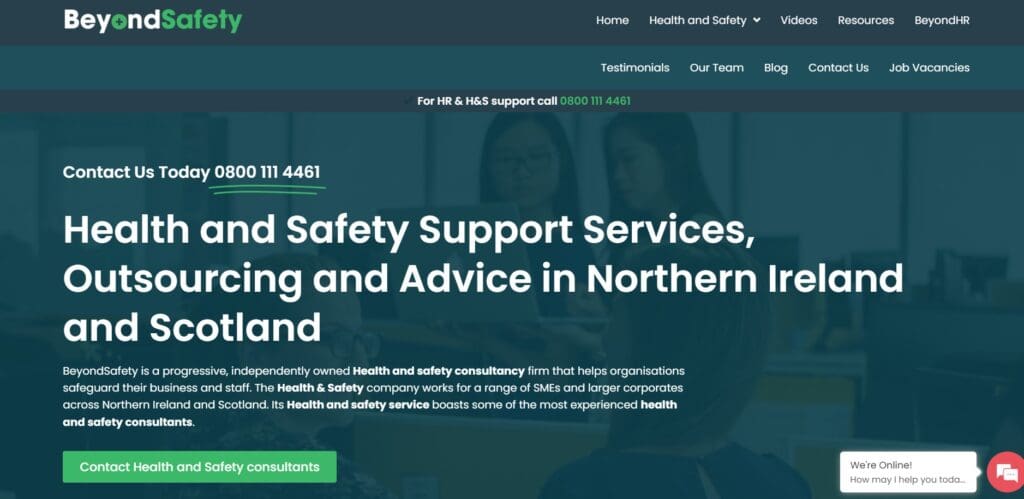
The Challenge Health and Safety Consultancies Face Online
For any growing business, the question of how to find an SEO domain solution that supports expansion without undermining what already exists is one of the trickier problems in digital strategy. The businesses we work with in Northern Ireland frequently face a version of this challenge when they diversify into adjacent service areas.
The pattern is consistent: a company builds genuine domain authority over several years, then introduces a new product line or sub-brand that needs its own online presence. The instinct is often to register a fresh domain. In practice, that decision can split link equity, divide audience signals, and leave a brand-new site competing in search results with no prior authority.
This is precisely where many organisations get the calculus wrong, and it is one of the most common strategic errors we see when auditing websites for clients across Northern Ireland, Ireland, and the UK.
About BeyondHR: The Project
BeyondHR is a Northern Ireland-based human resources consultancy serving businesses across NI, England, and Scotland. As the company grew, it identified a clear gap in the market for specialist health and safety consultancy services, and BeyondSafety was developed to meet that demand.
BeyondSafety helps businesses comply with relevant health and safety legislation, offering guidance and consultancy support. The goal was to position BeyondSafety as a credible, standalone specialist within the sector whilst keeping it connected to the established BeyondHR brand.
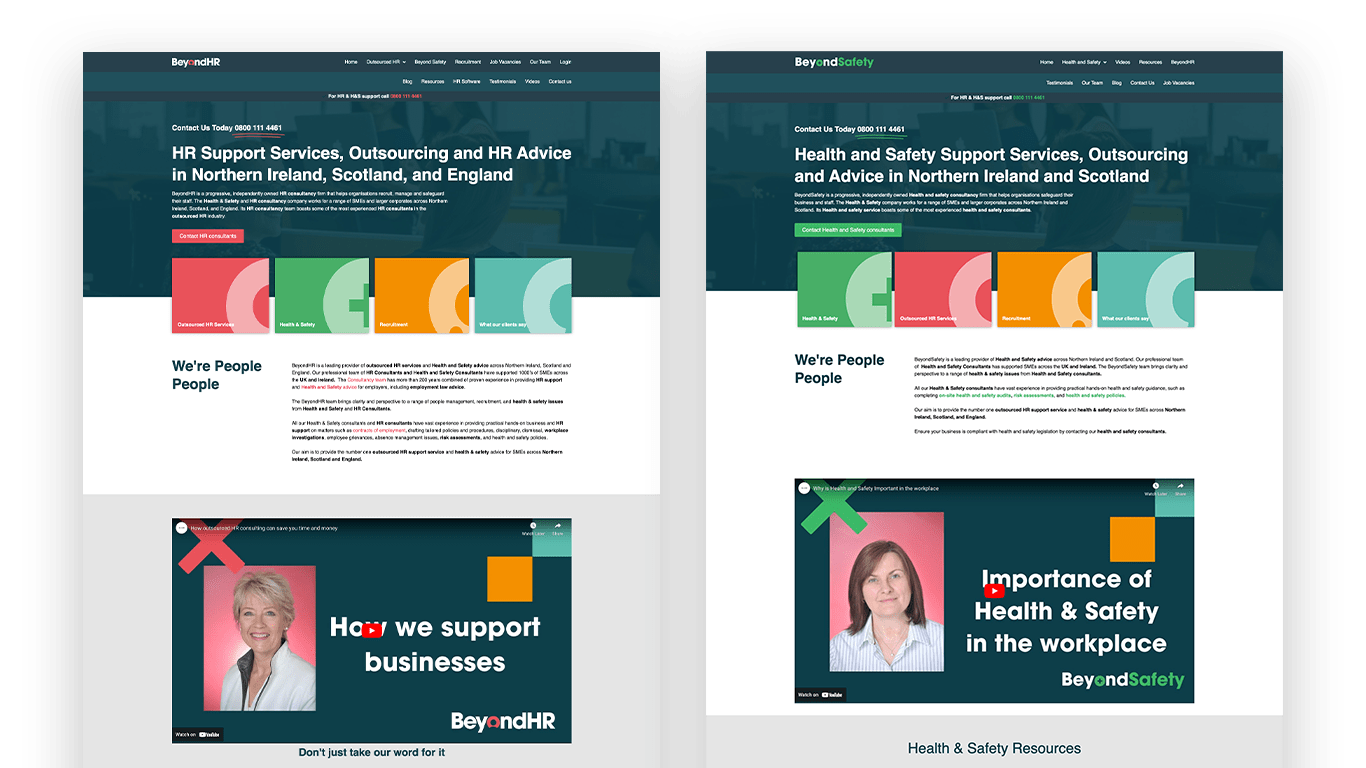
The brief to ProfileTree was specific: create a distinct online presence for BeyondSafety without breaking the SEO performance already built under the BeyondHR domain.
The Results
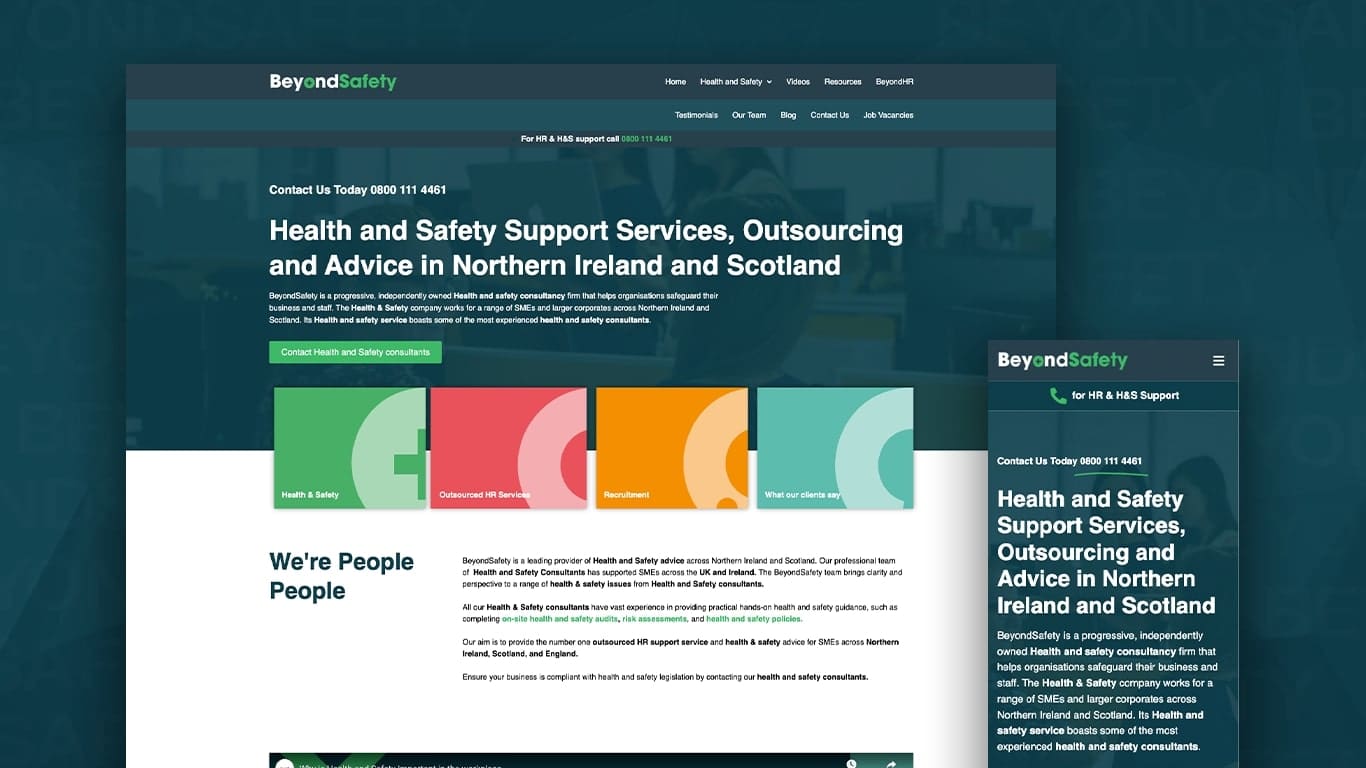
The microsite approach delivered the outcomes BeyondHR needed without the risks that came with splitting domains.
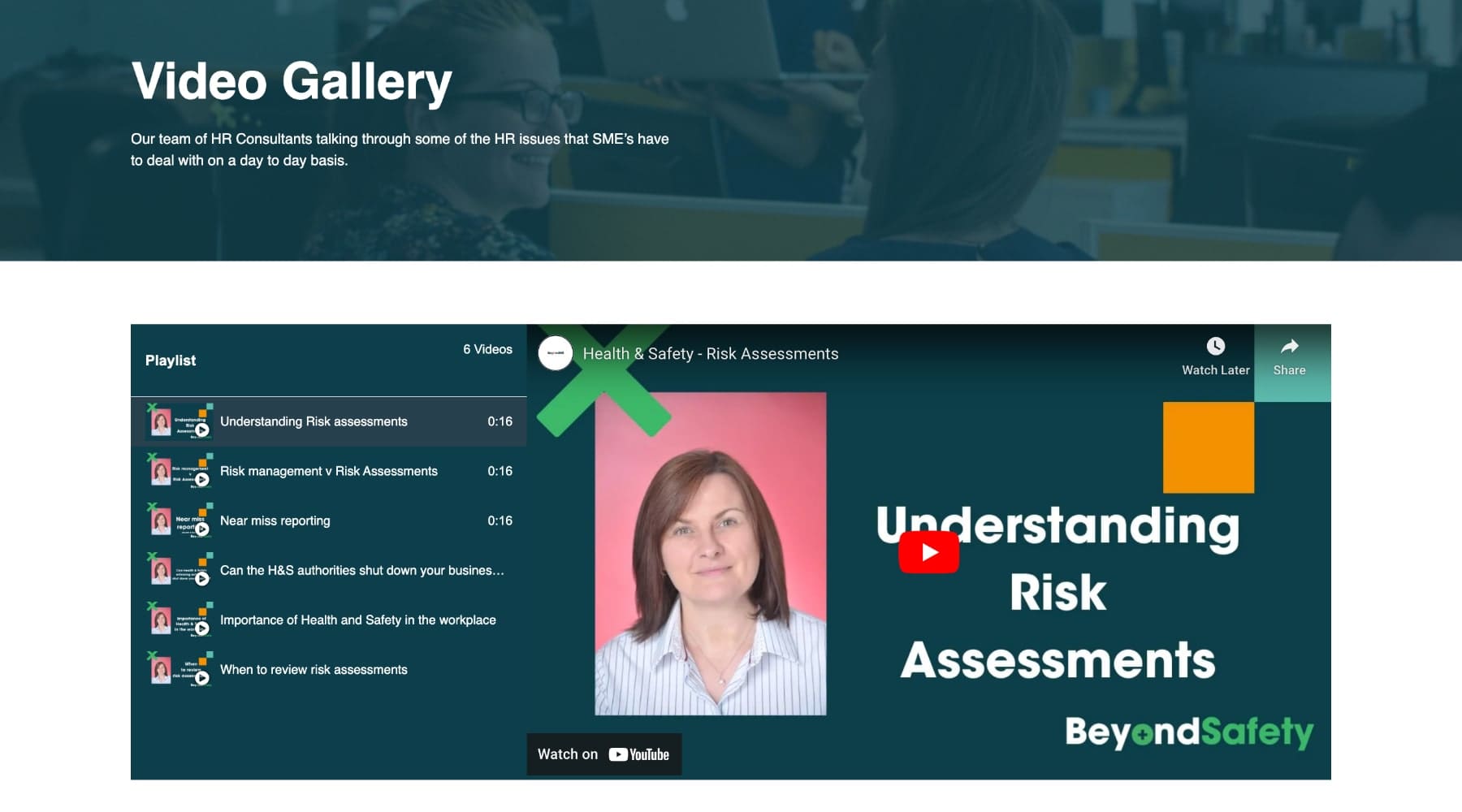
The existing SEO efforts under the BeyondHR domain were not disrupted. The main website now ranks for over 280 keywords, with BeyondSafety’s separate pages adding new keyword coverage on top of that foundation. The client also achieved rankings within Google’s video search results through the dedicated video content strategy, opening a channel that the original BeyondHR site had not previously occupied.
Both brands now operate from a single, well-managed platform. BeyondHR retains its established identity and rankings; BeyondSafety has a credible, search-optimised presence that supports its growth ambitions across Northern Ireland, England, and Scotland.
How ProfileTree Approaches SEO Domain Strategy for Growing Businesses
“The question of how to find an SEO domain solution is rarely just a technical one,” says Ciaran Connolly, founder of ProfileTree. It’s a business strategy question. When a company introduces a new service line, the domain structure needs to reflect where the business is going, not just where it is now.
The approach we take at ProfileTree starts with understanding what has already been built. Domain authority, existing keyword rankings, and content history are all assets. The goal is to extend and protect those assets, not discard them in favour of a clean slate.
For businesses considering a sub-brand or service expansion, a microsite architecture is often the most practical route. It avoids the authority vacuum of a brand-new domain, reduces hosting and management overhead, and allows the parent brand to pass genuine relevance to the new section of the site.
The right structure will always depend on the specific situation, the degree of brand separation required, and the keyword landscape. That is why the strategy phase matters as much as the build itself.
If you are working through a similar challenge for your business, ProfileTree’s SEO services for Northern Ireland businesses cover domain strategy, site architecture, and ongoing optimisation as part of a full SEO engagement.
Follow us on our socials for the latest news and articles: Facebook | Instagram | LinkedIn
Frequently Asked Questions
What does it mean to find an SEO domain solution for a sub-brand?
To find an SEO domain solution for a sub-brand means identifying the right domain structure to support the new brand’s online presence without undermining the parent site’s existing search performance. Options include a standalone domain, a subdomain, or a microsite within the existing domain. Each carries different implications for authority, management, and long-term SEO performance.
Will launching a microsite affect the main website’s rankings?
When built correctly, a microsite should not disrupt the main domain’s rankings. In the BeyondHR project, existing keyword rankings were preserved throughout the build and remained stable after launch. The key is ensuring the microsite has its own dedicated URL structure and that there is no internal keyword cannibalisation between the two sections of the site.
How long does it take to build a microsite within an existing domain?
Timelines depend on the scope of the build, but a well-specified microsite project of this kind typically takes between six and twelve weeks from brief to launch. That includes strategy, design, development, and content production.
Can a microsite rank for different keywords from the main site?
Yes, and this is one of the main advantages of the microsite approach. By creating dedicated pages with their own URLs and content targeting a separate keyword set, a microsite can open entirely new areas of search visibility without competing with the parent site’s existing content.
What SEO factors matter most when choosing a domain structure?
The most important factors are existing domain authority, the degree of brand separation required, keyword cannibalisation risk, and the practical cost of managing multiple domains. For businesses that already have a well-established domain, preserving that authority is almost always the right starting point.
Does ProfileTree handle health and safety consultancy websites specifically?
ProfileTree works across a wide range of sectors, including professional services, consultancy, and regulated industries. The BeyondSafety project is one example of how we approach sector-specific web design and SEO for businesses where credibility and compliance signalling matter as much as visibility.
Check Out More Case Studies
If you enjoyed this case study, check out more of our previous projects: Community Charity Marketing Project | Website Design for Membership Platform | Tourism Marketing for Crumlin Road Gaol