
Decentralised Web Design: What It Is and When It Makes Sense for Your Business
Table of Contents
Decentralised web design refers to building websites and web applications on blockchain networks rather than central servers. Instead of a single company controlling the infrastructure, the application runs across a distributed network, with rules and transactions managed by smart contracts. For most SMEs, this is still emerging territory, but understanding the basics now puts you in a stronger position to evaluate it when the business case arrives.
“Blockchain and decentralised applications are moving from niche technical experiments to real commercial tools. The SMEs who take time to understand the fundamentals today will be far better placed to act when the right use case lands in their sector,” says Ciaran Connolly, founder of ProfileTree.
What Decentralised Web Design Actually Means
Most websites you use today run on central servers. A company owns the server, controls the data, and makes decisions about uptime, access, and privacy. If that server goes down, the site goes down. If the company changes its terms, you’re subject to them.
Decentralised web design takes a different approach. Rather than one controlling server, the application runs across a network of computers (called nodes), each holding a copy of the same data. No single party controls it. Decisions about how the application behaves are written into code in advance, through what are called smart contracts.
For businesses, this matters most in situations where trust between parties is difficult to establish, data integrity is non-negotiable, or intermediaries are adding cost and friction to transactions.
ProfileTree’s web design and development services cover the full range from conventional WordPress builds through to technically complex web applications, so it’s worth understanding where decentralised architecture fits alongside more familiar options.
How Smart Contracts Work
A smart contract is a set of rules written in code and stored on a blockchain. When the conditions in the contract are met, it executes automatically, without any person needing to approve or trigger it.
A simple example: a business agreement where payment is released once a delivery is confirmed. With a smart contract, the confirmation triggers payment automatically. No invoice chasing, no dispute about timing.
The code runs on the blockchain network, which means it’s visible to all parties, cannot be altered once deployed, and executes consistently every time. The trade-off is exactly that inflexibility: unlike a traditional contract, you cannot easily amend a smart contract once it’s live.
The Ethereum network is the most widely used platform for smart contracts, using a programming language called Solidity. Other networks, including Cardano and Polkadot offer similar functionality with different approaches to speed and energy use.
The Architecture Behind Decentralised Applications (DApps)
Decentralised applications, usually called DApps, combine smart contracts on the backend with a conventional-looking front-end interface. From a user’s perspective, a DApp can look and feel like any other website or app. What’s different is what’s underneath.
Front-End Interface
The front end of a DApp is built with standard web technologies: HTML, CSS, and JavaScript. It’s the part users see and interact with. The key difference is that instead of sending requests to a company’s server, the front end communicates with the blockchain through what’s called a web3 provider.
Smart Contract Layer
This is where the business logic lives. Every rule, every transaction, every condition is defined in smart contracts stored on the blockchain. When a user takes an action in the DApp, a transaction is created, signed with their private key, and recorded permanently on the blockchain.
Why This Matters for Web Design
Designing and building a DApp requires a different skill set to a standard WordPress or e-commerce build. The front-end design principles (clear navigation, fast load times, mobile responsiveness) are identical. But the integration with the blockchain backend, the handling of wallet connections, and the communication of complex processes to non-technical users all require specific expertise.
This is where content strategy and user experience design become critical. If you’re building something on a blockchain and your audience doesn’t understand what’s happening, they won’t use it. Clear content, plain-language explanations, and well-structured digital marketing are not optional extras for DApps; they’re the difference between adoption and abandonment.
Where Decentralised Web Design Is Being Used Now
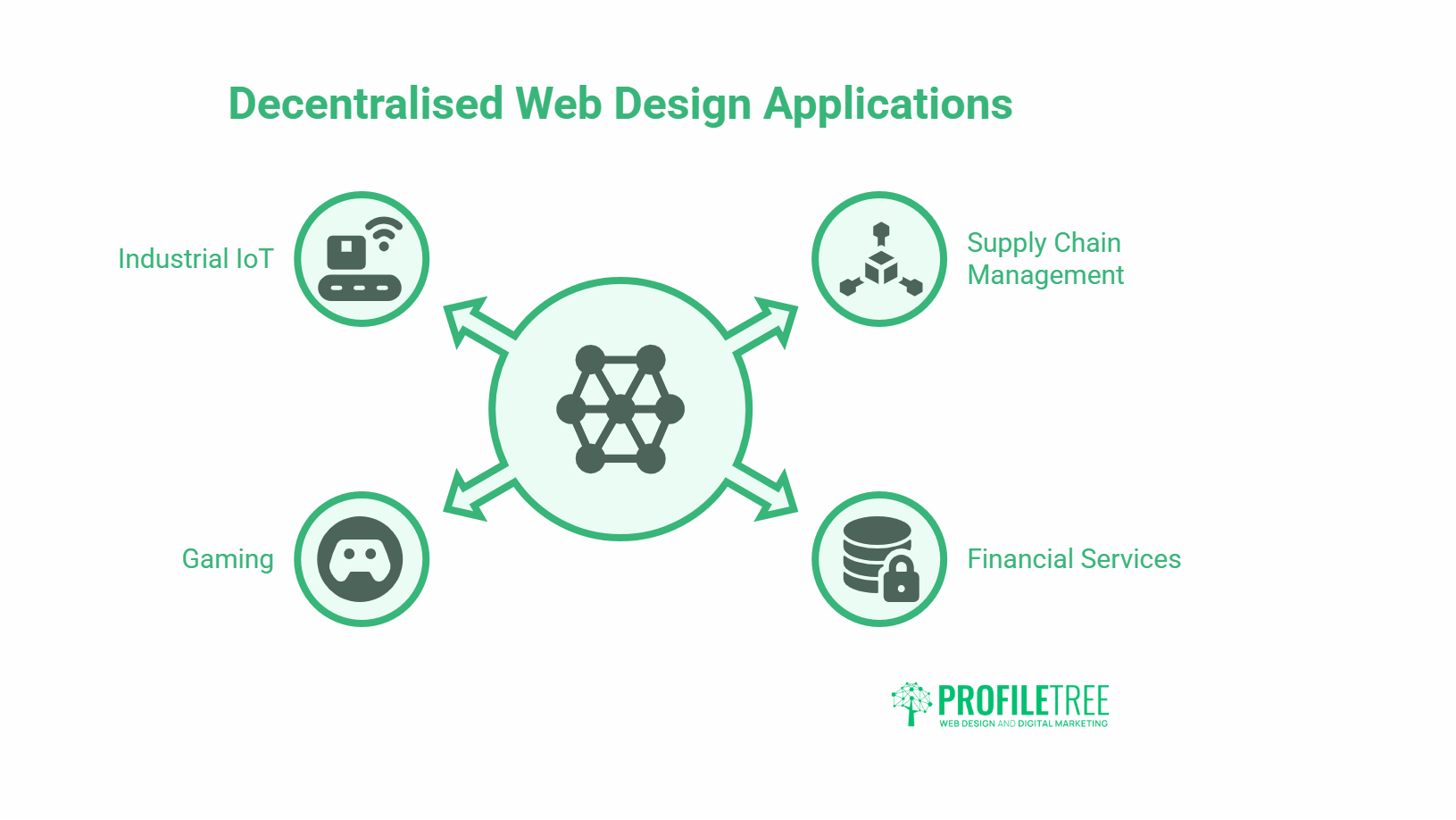
Supply Chain Management
Blockchain-based tracking is one of the most mature applications. Businesses use it to record every stage of a product’s journey, creating an immutable record that can be verified by any party in the chain. This reduces fraud, simplifies auditing, and gives end customers verifiable proof of origin.
Financial Services and DeFi
Decentralised Finance (DeFi) covers financial services that run without traditional intermediaries: lending, borrowing, and trading managed by smart contracts rather than banks. DeFi platforms allow users to transact directly with each other, with the rules enforced automatically. The regulatory environment around DeFi in the UK is still developing, with the Financial Conduct Authority actively working on a framework.
Gaming and Digital Ownership
Blockchain gaming has introduced genuine ownership of in-game assets. Players can buy, sell, or trade items as tokens on the blockchain, with ownership recorded in a way that game developers cannot override. This has created new revenue models for developers and new categories of digital asset for players.
Industrial IoT
Combining blockchain with Internet of Things devices allows machines to execute contracts and trigger payments automatically, based on sensor data. A manufacturing business could set up a system where restocking orders are placed and paid for automatically once inventory drops below a set threshold.
Security, Privacy, and Legal Considerations for UK Businesses
Security
The distributed nature of blockchain makes it resistant to many conventional attacks. There’s no single point of failure to target. However, smart contracts themselves can contain vulnerabilities. Once deployed, a contract with a bug cannot simply be patched; it requires a new contract and a migration of activity. This is why auditing smart contract code before deployment is non-negotiable.
GDPR and Data Privacy
Blockchain’s immutability creates a genuine tension with GDPR’s right to erasure. If personal data is written to a blockchain, deleting it in the conventional sense is not possible. Developers working with blockchain in the UK and EU need to architect systems that either keep personal data off-chain (storing only non-personal references on the blockchain) or use privacy-preserving approaches such as zero-knowledge proofs.
Any business considering a blockchain-based application that handles personal data should take legal advice before building. The Information Commissioner’s Office has published guidance on blockchain and data protection.
Legal Standing of Smart Contracts in the UK
The UK Law Commission has confirmed that smart contracts can, in principle, have legal standing as contracts under English law. The key condition is that the traditional requirements for a contract (offer, acceptance, consideration, intention to create legal relations) are met. This is an evolving area; businesses using smart contracts for significant commercial arrangements should work with a solicitor familiar with technology law.
Scalability: The Honest Picture
One of the most common criticisms of blockchain-based applications is scalability. Earlier public blockchains processed far fewer transactions per second than conventional payment systems, which made them impractical for high-volume consumer applications.
This is changing. Layer-2 solutions process transactions off the main blockchain and settle them in batches, significantly increasing throughput. Networks are also experimenting with different consensus mechanisms: Proof of Stake (used by Ethereum since 2022) is both more energy-efficient and faster than the earlier Proof of Work model.
Scalability is not a solved problem, but it is no longer the barrier it was. For most B2B applications, current performance is adequate.
The Role of Oracles: Connecting Blockchain to the Real World
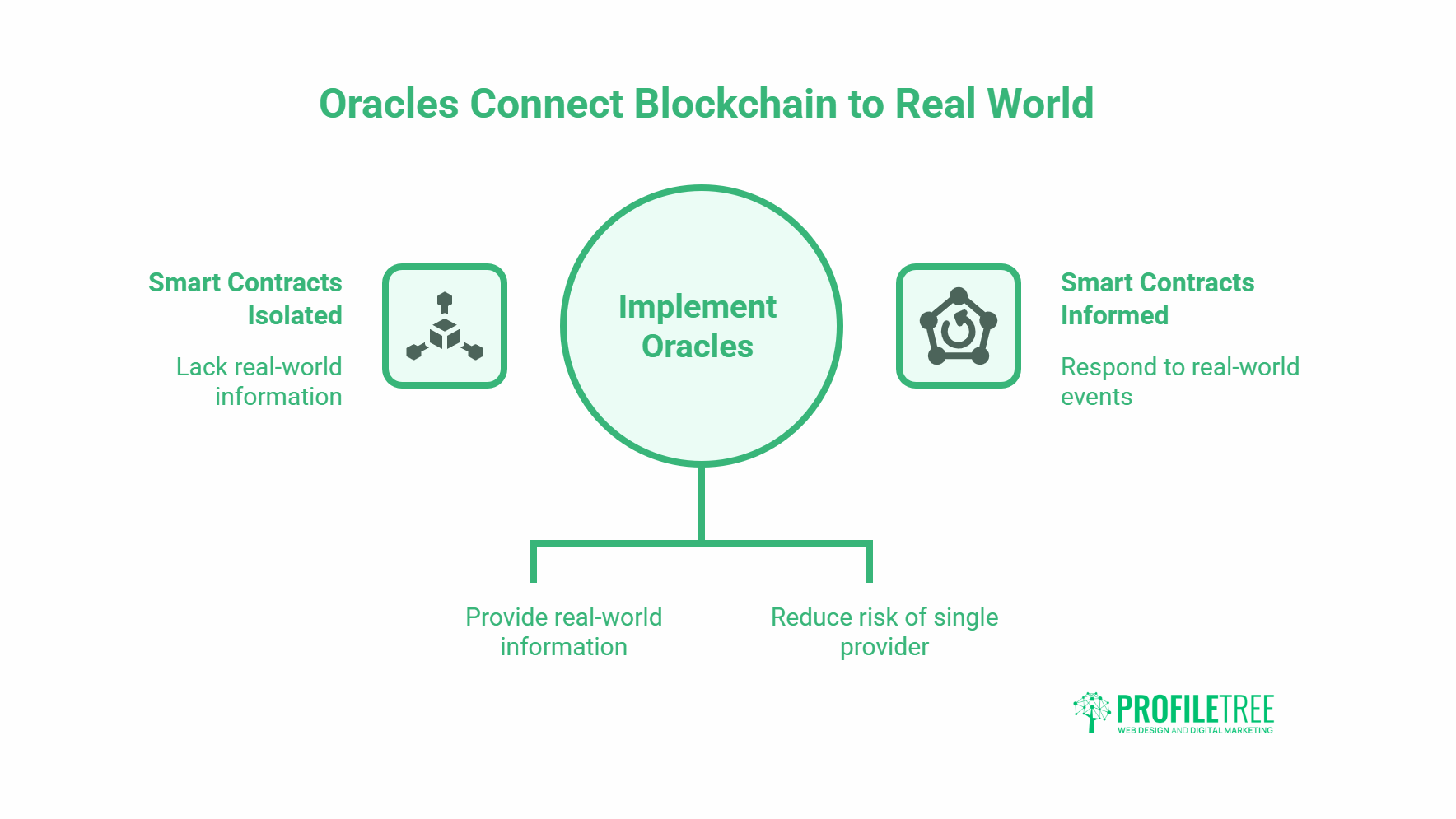
Smart contracts only know what’s on the blockchain. If a contract needs to respond to a real-world event (a delivery confirmed, a price reached, a weather threshold crossed), it needs a way to receive that information. This is what oracles do.
An oracle is a trusted data feed that provides real-world information to a smart contract. In an insurance application, an oracle might provide verified weather data that automatically triggers a payout when conditions meet the claim criteria.
The reliability of an oracle is as important as the smart contract itself. Poorly sourced or manipulable data feeds create vulnerabilities. Most serious DApp projects use decentralised oracle networks rather than a single data provider to reduce this risk.
What This Means for Your Digital Strategy
Most SMEs do not need a decentralised web application right now. For the vast majority of business websites, a well-built WordPress site with solid SEO, clear content, and a reliable host will outperform anything built on blockchain for the foreseeable future.
The honest answer is: decentralised web design is relevant when your use case specifically requires trustless transactions, immutable records, or direct peer-to-peer exchange without an intermediary. Those conditions apply in specific sectors and specific processes, not across the board.
What matters for most businesses is having a digital presence that works: fast, accessible, clearly written, and built to convert visitors into customers. That’s where content marketing and well-executed web design make the biggest commercial difference.
That said, understanding where this technology is heading matters for longer-term planning. Businesses in supply chain, financial services, or any sector where provenance and transparency are commercially important should be watching blockchain applications closely. The AI transformation work ProfileTree delivers with SMEs increasingly touches adjacent territory, as AI and blockchain applications begin to intersect in areas like automated compliance and supply chain verification.
Frequently Asked Questions
What is decentralised web design?
Decentralised web design builds websites and web applications on blockchain networks rather than central servers. The application runs across a distributed network of computers, with rules and transactions managed by smart contracts. No single company controls the infrastructure.
What is a smart contract?
A smart contract is a set of rules written in code and stored on a blockchain. It executes automatically when predetermined conditions are met, without requiring human approval. Once deployed, it cannot be altered.
Is a smart contract legally binding in the UK?
The UK Law Commission has confirmed that smart contracts can have legal standing under English law, provided the standard conditions for a valid contract are met. This is still a developing area of law and professional legal advice is recommended for significant commercial arrangements.
What is a DApp?
A DApp (decentralised application) is a web application that runs on a blockchain network rather than a central server. The front-end interface can look and behave like a conventional website, but the backend logic is managed by smart contracts on the blockchain.
What is the difference between Ethereum and other blockchains?
Ethereum is the most widely used platform for smart contracts and DApps due to its maturity and developer community. Other networks including Cardano and Polkadot offer different trade-offs around speed, energy use, and interoperability. The right choice depends on the specific application.
What are the GDPR implications of using blockchain?
Blockchain’s immutability conflicts with GDPR’s right to erasure. Businesses handling personal data should keep personal information off-chain and store only non-personal references on the blockchain. Legal and technical advice is essential before building any blockchain application that processes personal data in the UK or EU.
When should an SME consider a decentralised web application?
When the use case specifically requires trustless transactions, immutable record-keeping, or direct peer-to-peer exchange without an intermediary. For most standard business websites, a conventional build will be more practical, faster to market, and easier to maintain.
What is an oracle in blockchain terms?
An oracle is a trusted data feed that provides real-world information to a smart contract. It allows contracts to respond to external events, such as confirmed deliveries or verified price data, that exist outside the blockchain.