
Online Advertising for Small Businesses: A UK Owner’s Guide to Profitable Campaigns
Table of Contents
Most business owners already know that online advertising for small businesses exists as an option. Far fewer have a clear model for why it should work, or a way to tell whether the money spent is coming back. This guide addresses both questions before you commit a single pound, because online advertising for small businesses only pays off when it is approached as a measured investment rather than a hopeful punt.
At its core, online advertising for small businesses means paying to show a message to people on digital platforms, with a level of targeting and measurement that traditional advertising simply cannot match. For a business owner, marketing manager, or decision maker weighing up where to spend a limited budget, that precision is the whole appeal: every pound can be tracked back to a click, an enquiry, or a sale.
Online advertising for small businesses sits across four main formats: search ads on Google and Bing, display banners, social platforms including Facebook, Instagram, LinkedIn and TikTok, and video ads on YouTube and streaming services. Every platform runs on an auction model, meaning you compete in real time for the same audience as other advertisers. A well-targeted ad from a small business can outrank a poorly targeted ad from a much larger competitor, and relevance beats budget more often than most beginners expect.
What Online Advertising for Small Businesses Actually Involves
One of the most important distinctions in online advertising for small businesses is the difference between capturing demand that already exists and creating demand from nothing. Many business owners mix these two approaches on the wrong platforms, then put the poor results down to online advertising not working, rather than to a mismatch between the format and the audience’s mindset.
Demand Capture: The Search Model
Demand capture means showing your ad to someone who is already actively looking for what you sell. A homeowner searching “emergency plumber Belfast” has expressed a specific, urgent need. The ad does not need to be clever or entertaining, only relevant, clear and fast to load. The person has already decided they want something; your job is to appear and to look credible when you do.
Google Search remains the dominant demand capture channel for online advertising for small businesses. Businesses that pair paid search with an ongoing SEO strategy tend to see stronger results than those relying on either channel alone, since organic and paid listings reinforce each other in the same search results.
The key metrics for demand capture campaigns are click-through rate and conversion rate. Click-through rate tells you how often people who see your ad choose to click it. Conversion rate tells you how often those clicks turn into the outcome you actually want, whether that is a phone call, a form submission or a purchase.
Demand Generation: The Social Model
Demand generation means showing your product to people who were not actively looking for it. Social platforms are the primary channel here, since the person is scrolling for entertainment or connection, and your ad needs to interrupt that scroll with something that catches attention.
For demand generation, creative quality is the single biggest variable in online advertising for small businesses. The opening two seconds of a video, the image, and the first line of copy decide whether anyone engages at all. No amount of targeting precision makes up for creative that fails to stop the scroll, which is why investing in professional video content production before launching social campaigns tends to pay for itself.
Which Approach Should You Start With?
The right starting point depends on your business model:
- Emergency or search-driven services, such as plumbers, dentists or accountants, should start with Google Search
- Visual or discovery-led products, such as clothing, food or interiors, tend to do better on Instagram or TikTok
- B2B services, such as software, consulting or training, usually find LinkedIn the most precise channel
- Local service businesses, such as restaurants, gyms or salons, tend to benefit from Google Maps ads combined with Facebook’s local targeting
Splitting your budget across too many platforms too early means you never gather enough data on any one channel to improve it. Online advertising for small businesses rewards focus, especially in the first three months.
Choosing the Right Platform
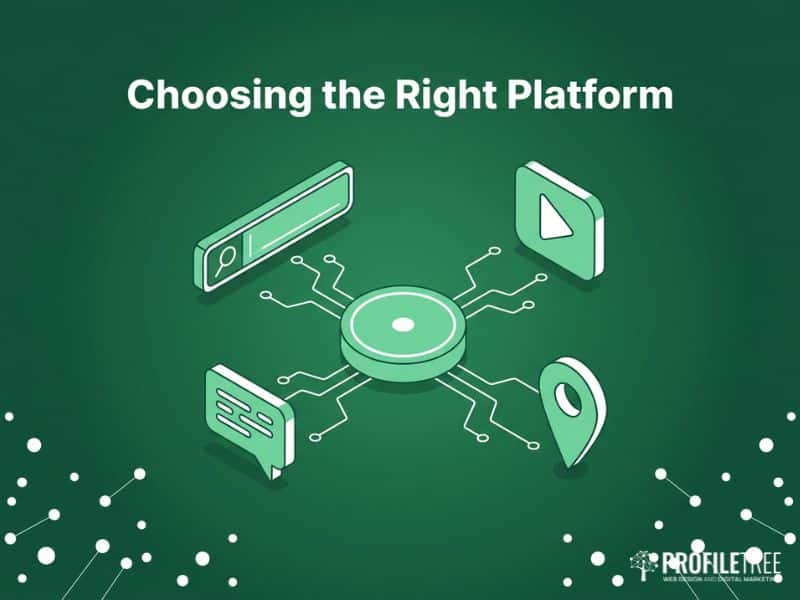
Once the difference between demand capture and demand generation is clear, platform selection for online advertising for small businesses becomes far more logical, especially when it is guided by a clear digital strategy service rather than trial and error. Each platform has structural strengths, and working against them is one of the most common and costly mistakes small business advertisers make.
Google Ads
Google Ads covers search, display, shopping and YouTube within a single system. For most business owners new to online advertising for small businesses, Search campaigns are the safest starting point. You control which search terms trigger your ad through keyword selection, and you pay only when someone clicks. Google Maps integration means local businesses appear prominently for nearby searches, which matters most for service businesses in Belfast, Dublin or any regional UK city that also invest in improving search visibility through organic channels.
Performance Max campaigns now combine every Google channel with AI-driven targeting. These can work well, but they need careful monitoring on smaller budgets, because the algorithm needs conversion data before it can bid efficiently.
Meta (Facebook and Instagram)
Meta’s advertising system is the most developed demand generation tool available to small businesses, particularly when campaigns draw on proper social media marketing support rather than default settings. Its approach revolves around audience targeting: you define who you want to reach by demographics, interests, behaviours and previous interactions with your brand, and the platform finds matching users.
Video content consistently outperforms static images on Meta, and a professional video marketing approach tends to lift engagement further still. Retargeting website visitors through the Meta Pixel remains one of the highest-return tactics available. iOS privacy changes have reduced tracking accuracy in recent years, which makes creative testing and revenue-based measurement more important than trying to attribute every individual conversion to a specific ad.
LinkedIn for B2B
LinkedIn is expensive on a cost-per-click basis. For B2B businesses targeting specific job titles, industries or company sizes, though, it is often the only channel that delivers that precision at scale. Lead generation forms, which capture contact details without the person leaving the platform, tend to produce solid results for service businesses targeting decision makers directly as part of a wider strategic digital planning process.
Bing (Microsoft Advertising)
Bing is consistently underrated. Its UK and Irish audience skews older and more affluent than Google’s, and cost per click typically runs 20 to 40 per cent lower. For businesses targeting established professionals, homeowners or an older demographic, Bing campaigns can be highly cost-effective, and campaigns can be imported directly from Google Ads once your Google account is already running.
Regional Targeting: Getting More From Every Pound
A tactic rarely discussed in generic guides is regional targeting within the UK itself. Cost per click on Google and Meta is generally higher in London and the South East, where competition is fiercest. Businesses that serve a wider area, or that deliver services remotely, often find that shifting budget toward secondary cities produces a lower cost per acquisition for broadly the same audience quality, since regional bids are frequently overlooked by larger national advertisers.
Budgeting, Bidding and Measuring Return on Ad Spend
One of the most consistent worries around online advertising for small businesses is budget. Business owners fear spending money without seeing anything back. The answer is not to spend less, but to measure more carefully and set clear expectations before a campaign goes live.
Working Backwards from Cost Per Acquisition
A useful framework here is to work backwards from your target cost per acquisition. If a new customer is worth £500 in profit, and your website converts enquiries into customers at 30 per cent, you can afford to spend up to £150 per enquiry and still break even. If Google Search delivers enquiries at £40 each, the campaign is profitable; at £200 each, either the conversion rate needs to improve or the customer’s value needs to be higher.
Bidding Strategy
Google’s Smart Bidding uses machine learning to adjust bids in real time based on predicted conversion likelihood. For new campaigns with limited data, manual cost-per-click bidding gives you more control early on. Once an account has 30 to 50 conversions, switching to Target CPA or Target ROAS bidding tends to improve efficiency, because the algorithm finally has enough signal to work with.
The Metrics That Matter
| Metric | What It Measures | Healthy Range |
|---|---|---|
| Click-Through Rate (CTR) | Ad relevance and appeal | Search: 3-10%; Display: 0.1-0.5% |
| Cost Per Click (CPC) | Bid competition for your keywords | Varies widely by sector and region |
| Conversion Rate | Landing page and offer effectiveness | B2C: 2-5%; B2B: 1-3% |
| Cost Per Acquisition (CPA) | Total cost to win one customer | Must sit below customer lifetime value |
| Return on Ad Spend (ROAS) | Revenue generated per £1 spent | Minimum 3:1 for most businesses |
A well-structured professional website design is often the difference between paid traffic that converts and paid traffic that simply bounces. Before increasing an advertising budget, it is worth checking whether the landing pages behind the ads, built through solid custom website builds, are doing their job.
Ciaran Connolly, founder of ProfileTree, is direct about where small business campaigns most often go wrong: “We see businesses obsess over impression counts when the only number that matters is how many of those impressions became customers. If ten thousand people saw your ad and none of them bought anything, the campaign failed, regardless of how good the numbers look on a dashboard.”
The Stop-Loss Framework: Knowing When to Turn an Ad Off
Knowing when to stop gets far less attention than it deserves. Before a campaign launches, set a stop-loss figure: a fixed amount of spend, typically two to three times your target cost per acquisition per variation, beyond which an underperforming ad is paused automatically, no exceptions. Without one agreed in advance, it is easy to keep a failing ad running on hope alone, which is how advertising budgets quietly disappear.
Every experienced advertiser accepts that a first campaign will rarely be the best one. Test one variable at a time, such as the headline, image, offer or audience, and run each variation long enough to collect meaningful data, ideally at least 100 clicks, before drawing conclusions.
Staying Compliant: GDPR, ASA Rules and Platform Tax Surcharges

No guide to online advertising for small businesses in the UK is complete without covering compliance, since the rules here carry real financial and reputational consequences.
GDPR and Cookie Consent
The Information Commissioner’s Office enforces GDPR actively, and advertising platforms increasingly require proper consent management before they will track visitors accurately. You need explicit opt-in consent before placing advertising cookies, including Google Ads tags and the Meta Pixel, on a UK or EU visitor’s browser; implied consent or pre-ticked boxes are not compliant. Customer lists uploaded to platforms for targeting must have been collected with appropriate consent for marketing use.
Server-side tagging, which moves data collection to your own server rather than the visitor’s browser, is worth considering once monthly spend passes around £1,000, since it improves data accuracy and reduces reliance on browser cookies that are increasingly blocked. Getting this right usually depends on managed WordPress hosting that can support the extra server-side setup without slowing the site down.
ASA Rules on Claims and Substantiation
The Advertising Standards Authority is increasingly vigilant about the claims small businesses make in ads. It is common for owners to reach for absolute statements, such as “the UK’s best plumber” or “lowest prices guaranteed”, without having the evidence to back them up if challenged. Under the CAP Code, any claim you cannot substantiate can get an ad removed. If you claim to be the cheapest, you need a documented price comparison process, and any paid partnership or influencer-led ad must carry a clear disclosure, such as #ad.
VAT and the Digital Services Tax Surcharge
One of the more common surprises for business owners new to online advertising for small businesses is the tax gap between the advertised budget and the actual bill. Since November 2020, Google has added a 2 per cent UK Digital Services Tax surcharge to advertiser invoices, shown as a separate line item on top of media spend; Meta introduced a comparable 2 per cent surcharge on UK ad spend from July 2026. Neither surcharge is the same as VAT, which is charged separately and, for VAT-registered UK businesses, is usually handled through the reverse charge mechanism because most major platforms bill from Ireland or the US.
Using AI Without Losing Your Brand Voice
AI tools are now built into most advertising platforms, from Google’s Performance Max to Meta’s Advantage+ campaigns, and a proper AI marketing automation setup genuinely helps with the mechanical parts of online advertising for small businesses. Where they help less is in giving a small business a distinct voice, which is exactly the thing that makes a local or regional brand recognisable against national competitors.
Where AI Genuinely Helps
AI-driven bidding and targeting tools are good at pattern-matching across large volumes of conversion data faster than a person could manually. This is most useful once a campaign already has enough conversions to learn from, typically after the first few weeks. The same applies to conversational AI solutions, which can qualify enquiries generated by a campaign around the clock rather than leaving them to sit in an inbox overnight. A short digital training workshop for the team can also help staff use these tools properly rather than accepting default settings.
Keeping the Copy Sounding Like You
The risk is that AI-generated ad copy defaults to the same handful of phrases and a generic, slightly corporate tone that could belong to any business in any country. For a UK small business, that flatness is a real cost, because familiar, locally grounded language builds more trust than polished but generic copy. Treat AI drafts as a starting point: rewrite the opening line in your own words, keep specific details about your business and location, and read the final version aloud before it goes live. If it does not sound like something you would actually say to a customer, it needs another pass.
A Working 30-Day Plan for Online Advertising for Small Businesses
Online advertising for small businesses only produces results when it is organised into a clear sequence rather than launched all at once. Here is a practical month-one framework that works for most first campaigns.
Days 1 to 7: Foundation
Audit your website and landing pages before spending a pound, since paid traffic only amplifies whatever conversion-focused web design already exists there. Install conversion tracking through Google Tag Manager. Define your target audience in specific terms rather than broad demographics. Set KPI targets, including cost per acquisition, return on ad spend, and a minimum conversion volume, before making any optimisation decisions.
Days 8 to 14: Build
Write three to five ad variations for your primary campaign, testing different headlines and value propositions against each other. Launch one campaign on one platform rather than several at once, whether that means search or a focused social media marketing campaign. Configure exclusions from the outset, such as negative keywords for Google and audience exclusions for Meta, so budget is not wasted on obviously irrelevant clicks.
Days 15 to 30: Learn and Adjust
Review performance every two to three days rather than hourly, since daily fluctuations rarely mean anything on their own. Pause the weakest ad variations and put more budget behind the strongest. Check Google’s search term reports for irrelevant queries quietly consuming budget, then decide whether to increase spend, refine targeting, or fix the landing page.
Taking the Next Step
Online advertising for small businesses is a starting point, not a finished project. Every campaign generates data that makes the next one better, provided someone is actually reviewing it. Start with one platform, one campaign, and one clear goal, put measurement in place before you spend a pound, and give the campaign enough time to produce meaningful data before you review, adjust and repeat.
ProfileTree is a Belfast-based web design and digital marketing agency working with businesses across Northern Ireland, Ireland and the UK to plan, build and manage digital advertising campaigns, helping business owners apply online advertising for small businesses in ways that generate real commercial returns rather than vanity metrics.
FAQs
How much should a small business spend on online advertising?
A practical starting point is 5 to 10 per cent of your revenue target for that channel. Most UK small businesses running Google Search campaigns begin with £300 to £500 a month and scale once cost per acquisition is proven.
Is Google Ads or Facebook better for small businesses?
Neither is universally better. Google tends to produce faster results for services people actively search for, while Facebook works better for products that need to build awareness first. Start with whichever matches your demand type, prove it, then add the second platform.
How long does it take to see results from online advertising?
Search campaigns can generate clicks and enquiries within 24 to 48 hours of launch. Meaningful optimisation data typically takes two to four weeks to build up. Changing settings too quickly stops the platform’s algorithm from learning what works for your audience.
Do I need a website to advertise online?
For most platforms, yes. Meta’s lead generation forms allow leads to be captured without a website as a short-term measure, but sustainable results need a fast, well-structured site with clear calls to action.
What is retargeting and how does it work?
Retargeting shows ads to people who visited your website but did not convert. A tracking tag records their visit and lets you reach them again elsewhere, typically converting at two to five times the rate of cold audience campaigns.
What is ROAS and why does it matter?
ROAS stands for Return on Ad Spend. A ROAS of 4:1 means £4 earned for every £1 spent. It is the most direct measure of whether a campaign is commercially viable, and most businesses need a minimum of 3:1 to cover costs and generate profit.
What is the UK Digital Services Tax surcharge?
It is a 2 per cent fee Google, and now Meta, add to UK ad invoices on top of media spend, separate from VAT and worth building into your budget from the start.
Do I need to worry about ASA rules for small ad budgets?
Yes. The CAP Code applies regardless of budget size. Any claim you cannot substantiate, such as being “the cheapest” or “the best”, can get an ad removed.