
What Marketers Can Learn from the Barbie Movie: A Masterclass in Modern Branding
Table of Contents
The Barbie movie is, by any measure, one of the most studied marketing campaigns of the modern era. Released in the summer of 2023, the Barbie movie generated over $1.4 billion at the global box office on a production budget of around $145 million and a marketing spend of roughly $150 million. The numbers are extraordinary, but the real story of the Barbie movie is not the budget. It is the strategy. From cryptic paparazzi leaks and neon fashion shoots to over 100 brand partnerships and a coordinated global cultural conversation, the Barbie movie turned itself into something genuinely unavoidable.
For marketing managers, agency directors, and business owners across Northern Ireland, Ireland, and the UK, studying a campaign at this scale can feel inspiring but impractical. You cannot paint Google pink. You almost certainly do not have Margot Robbie on speed dial. But beneath the spectacle of the Barbie movie lay a set of foundational principles that cost nothing to replicate: the psychology of anticipation, the power of unexpected partnerships, the discipline of audience segmentation, and the courage to lean into cultural friction. These are tools that work as well for a Belfast-based SME as they did for Mattel and Warner Bros.
At ProfileTree, a Belfast-based digital agency, we have worked with SMEs and growing businesses across digital marketing strategy, SEO services, content marketing, video production, and AI transformation. The principles that made the Barbie movie a cultural force are the same ones that determine whether a business campaign earns attention or disappears into the noise. This guide translates the Barbie movie playbook into practical steps your team can actually use.
The Metrics Behind the Pink Wave: Why the Barbie Movie Worked

Before pulling apart the tactics, it is worth understanding the scale of what the Barbie movie achieved. Most analyses focus on the box office figure, but the marketing performance was equally remarkable and, for practitioners, more instructive.
By the Numbers
The Barbie movie campaign produced results across every measurable channel. The table below gives a sense of the scope.
| Metric | Result |
|---|---|
| Global box office revenue | Over $1.4 billion |
| Marketing spend | Approximately $150 million |
| Brand partnerships | Over 100 collaborations |
| Google search trend (“Barbie”) | Peak in July 2023, highest in five years |
| Barbenheimer combined opening weekend (US) | Over $243 million |
What the Data Actually Tells Us
The Barbie movie did not succeed purely because of budget scale. Competing summer releases had comparable spend and generated a fraction of the cultural impact. The difference was structural. The campaign was built around psychological triggers and earned media mechanics, not just paid placements. The marketing team understood that social sharing, organic curiosity, and earned press coverage would multiply every dollar of paid spend if the initial creative sparked a genuine conversation. This is precisely why a clear digital marketing strategy sits at the foundation of every campaign that punches above its weight.
For SMEs, this is the most important takeaway from the Barbie movie numbers: strategy multiplies budget. A well-constructed campaign on a modest spend will consistently outperform a poorly structured one with a large budget behind it.
Lesson 1: Master the Art of Anticipation

One of the defining characteristics of the Barbie movie campaign was what it chose not to reveal. Most brands launch by immediately explaining what their product is, what it costs, and why you should buy it. The Barbie movie team did the exact opposite, and in doing so, they handed the campaign’s momentum to the audience.
How the Barbie Movie Built Its Drip Campaign
Months before any official trailer, stylised paparazzi photographs of Margot Robbie and Ryan Gosling rollerblading in fluorescent outfits surfaced online. This was not accidental. It was a calculated breadcrumb: high-quality, visually arresting, and entirely without context. The audience was left to speculate. Social media did the rest. By the time the official trailer arrived, millions of people were already desperate for the context the Barbie movie had been withholding.
This technique is known as breadcrumbing. You give the audience just enough to spark curiosity, then you pause. The gap between what people know and what they want to know is where organic engagement lives. The Barbie movie exploited that gap with precision over a six-month pre-release window.
The Curiosity Gap and How to Use It
The curiosity gap is the psychological space between what an audience already knows and what they want to know. The Barbie movie used it at scale, but the mechanics work equally well in email subject lines, LinkedIn posts, and social media marketing campaigns. A subject line that reads “We are changing how Belfast businesses handle X” outperforms one that simply names the product, every time.
Build suspense deliberately. Use countdowns, staged reveals, and partial information. But there is one rule the Barbie movie followed that every campaign should observe: when the reveal comes, it must deliver. Anticipation that ends in disappointment converts advocates into critics faster than any bad review.
How to Execute This on an SME Budget
You do not need a Hollywood cast to build anticipation. You need a disciplined pre-launch timeline and the willingness to withhold information deliberately. A practical framework for any business launch looks like this.
- Eight weeks before launch: Define your central mystery. What question does your launch answer? Do not answer it yet.
- Six weeks before launch: Release a single visual anomaly. An extreme close-up, an unexpected colour palette, or a detail that makes people ask questions.
- Four weeks before launch: Open a gated waitlist. No product specifics. Frame it as an exclusive event, not a standard release.
- Two weeks before launch: Release a short video focused on feeling rather than feature.
- Launch day: Provide the context. Deliver the answer to the question you have been teasing. Ungate the offer and redirect the built-up curiosity to your conversion goal.
Lesson 2: Leverage the Power of Audience Segmentation

One of the most underappreciated aspects of the Barbie movie campaign was how precisely it spoke to different audiences with different messages. The film was not marketed as a children’s movie, nor purely as a nostalgia play for millennials, nor as a feminist manifesto. It was all three simultaneously, with distinct creative executions for each audience group.
Identify Your Target Segments
Effective segmentation begins with understanding who your audience actually is, not who you assume it to be. The Barbie movie marketing team identified at least four distinct groups: children aged 5 to 12, millennial adults who grew up with the doll, Gen Z audiences attracted to the film’s satirical undertones, and mainstream moviegoers drawn in by the star casting and cultural noise. Each group received messaging crafted around their specific motivation for engaging with the Barbie movie. Building this capability within your own team is one of the most valuable things a structured digital training programme can deliver.
For businesses, the exercise starts with data. Use Google Analytics audience reports, CRM records, and direct customer conversations to identify meaningful differences within your customer base. Age, industry, purchase motivation, and prior engagement all produce segments worth addressing with distinct messaging.
Create Personas and Tailor Your Strategy
A persona is a concise, realistic profile of your ideal customer within a given segment. Building one does not require specialist software. A one-page document per segment covering demographic detail, primary motivation, preferred channels, and primary objection is sufficient to produce meaningfully differentiated messaging.
The Barbie movie used the same core product, a single film, but framed it entirely differently depending on which segment was being addressed. The nostalgic millennial saw a homecoming. The Gen Z viewer saw sharp social commentary. The parent buying cinema tickets for their child saw an accessible, colourful adventure. One film, four campaigns, four separate emotional contracts with four distinct audience groups.
“What the Barbie movie showed us is that segmentation is not about creating different products. It is about recognising that the same product solves different problems for different people. When you speak to each group in their own language, on the channels where they actually pay attention, conversion rates improve and cost per acquisition falls,” says Ciaran Connolly, founder of ProfileTree.
Lesson 3: Strategise Brilliant Brand Collaborations
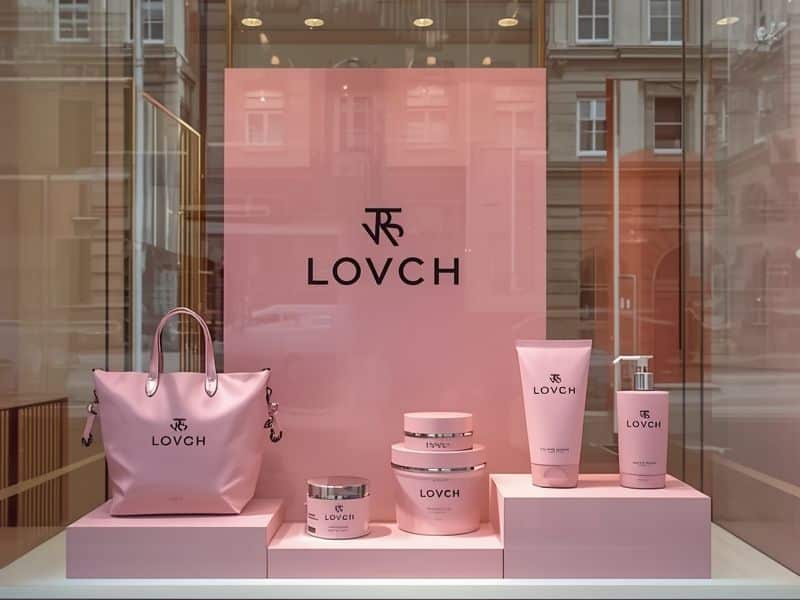
No element of the Barbie movie campaign generated more discussion among marketing professionals than its volume and variety of brand collaborations. Over 100 brands, from Xbox and Crocs to Airbnb and Bumble, aligned themselves with the campaign. The result was a cascade of co-branded content that extended the Barbie movie’s reach far beyond the entertainment press and into the daily feeds of audiences who might never have watched a trailer.
Moving Beyond Obvious Synergies
The conventional wisdom on brand partnerships is to find companies that share your audience. The Barbie movie marketing team went further. They looked for brands that would create dissonance: the unexpected pairing that stops a scroll. Barbie appearing in the Xbox ecosystem or alongside Progressive Insurance was entirely unexpected. That friction generated attention a standard partnership cannot produce. For SMEs, the same principle applies. Instead of partnering with businesses that mirror what you do, find companies that serve the same customer at a different point in their journey. A Belfast business offering professional website design partners not only with SEO firms but with accountants, HR consultants, and commercial photographers who serve the same SME clients at different moments of need.
Define Objectives and Create Unique Value
The Barbie movie partnerships worked because each one produced something genuinely new: a limited-edition product, a co-branded experience, or a social media moment. Every partner brought their audience to the Barbie movie ecosystem. The Barbie movie brand elevated every partner in return. The exchange was symmetrical and clearly defined before it launched.
When structuring a partnership, define three things before approaching a potential collaborator: what you bring, what you need, and what the combined offering looks like for the customer. Strong partnerships share a target audience, have complementary strengths, reflect shared values, and produce a concrete joint deliverable with measurable outcomes.
The B2B Application: Finding Your Unlikely Partners
The typical B2B partnership is two similar companies hosting a joint webinar. It is safe, expected, and rarely generates new audience growth. The Barbie movie approach asks a different question: who has my customer’s attention right now, and how do I get into that conversation?
A software company targeting creative agencies might partner with a premium coffee supplier that equips agency offices. A co-branded agency essentials bundle puts both brands in front of a shared audience in a format neither could create alone. The pattern interruption of a technology brand appearing in a lifestyle context creates exactly the kind of earned attention that made the Barbie movie campaign so disproportionately effective relative to spend.
Lesson 4: Inspire and Influence People (And Know When to Stop)

Perhaps the boldest element of the Barbie movie campaign was its willingness to be polarising. The film did not shy away from feminist themes, satire, or social commentary. The marketing team leaned into the debate. Controversy, handled with discipline, is one of the most effective organic amplifiers available to any campaign.
Create a Meaningful Brand Story
A brand story is not a company history. It is the answer to the question: what does this brand stand for, and why does that matter to the people it serves? The Barbie movie story was about reinvention: a 64-year-old cultural icon confronting her own limitations and choosing something more authentic. That narrative resonated because it reflected a genuine cultural moment and the specific anxieties of the audiences the Barbie movie was targeting. Building this kind of narrative is at the heart of effective content marketing strategy, where the goal is always to give the audience a reason to care before you give them a reason to buy.
For businesses, the equivalent is finding the human truth at the centre of what you do. It is rarely about your product. It is about the transformation your product enables. The Barbie movie succeeded because the marketing team had identified a story worth telling, not just a product worth selling.
Use Social Proof and Leverage Influencers
The Barbie movie campaign was partly built on user-generated content. The Barbiecore aesthetic spread organically across Instagram and TikTok months before the film arrived. The marketing team did not manufacture the trend. They created the conditions for it and then amplified what emerged organically. For businesses, the parallel is clear: make reviews prominent, publish case studies with specific measurable outcomes, and create lightweight mechanisms that encourage customers to share their experience. Coupling this with a considered social media marketing plan ensures that organic advocacy is captured and amplified rather than left to disappear into the feed.
Social proof works at every scale. You have your five-star Google reviews, your client testimonials, and your LinkedIn network. These are your version of the Barbiecore wave. The discipline is in activating them intentionally, not hoping they appear by accident.
The Risk of Pink Fatigue: Knowing When to Stop
Not every lesson from the Barbie movie is about doing more. One of the most commercially instructive aspects of the campaign is what happened after the peak. The pink wave that drove over $1.4 billion in revenue had largely crested by the end of 2023. Brands that continued leaning on Barbie-adjacent aesthetics and references into 2024 found diminishing returns and, in some cases, active audience irritation.
Brand saturation is a genuine risk. Monitor social sentiment, watch engagement rates on your brand content, and establish internal benchmarks for when a campaign creative has peaked. Knowing when to exit a trend is as commercially important as knowing when to enter it. The Barbie movie team got both right.
What the Barbie Movie Means for Your Digital Strategy

The lessons from the Barbie movie translate directly into the disciplines that drive digital growth for businesses in Northern Ireland, Ireland, and the UK. Web design, SEO, content strategy, video production, digital marketing, and AI transformation are all touched by what this campaign demonstrated.
Content Strategy and SEO
The Barbie movie campaign demonstrates that content only travels when it is built around genuine audience interest, not around what the brand wants to say. In SEO terms, this is the difference between content that earns links and shares organically and content that requires paid amplification to reach its own audience. Investing in professional SEO services ensures that every piece of content you produce is structured to earn that organic reach. Building content around search intent, answering real questions in plain language, and creating genuinely useful resources is the SEO application of the same principle that made the Barbie movie a cultural force.
Video Production and YouTube Strategy
The Barbie movie used video as the primary vehicle for anticipation-building. Each visual release was calibrated for maximum curiosity with minimum information. For businesses investing in video marketing and production, the parallel is direct: a well-crafted 60-second teaser that raises a question outperforms a three-minute product walkthrough that answers one. Format your video content around the emotion you want to create in the viewer before you address the features you want to explain.
AI Training and Digital Transformation
The Barbie movie campaign was, at its core, a data-driven exercise. Every creative decision was informed by audience research, social listening, and real-time sentiment analysis. For SMEs investing in AI marketing and automation or exploring AI chatbot solutions, this is the most direct commercial application of those tools. AI-powered audience analysis and campaign performance modelling allow smaller teams to make the same calibre of data-informed decisions that Mattel’s marketing division made with a dedicated research team. The Barbie movie did not invent these capabilities. It simply deployed them at scale with exceptional creative discipline.
FAQs
What was the marketing budget for the Barbie movie?
The Barbie movie’s marketing budget was approximately $150 million, slightly exceeding its production budget. That spend across global advertising, brand partnerships, and the pre-release campaign returned over $1.4 billion at the box office.
How did the Barbie movie use influencer marketing?
The campaign seeded content across celebrity, mid-tier, and micro-influencer levels at once. The visual identity was strong enough that Barbiecore spread organically on TikTok and Instagram without a direct brief. Micro-influencers with engaged niche audiences consistently outperformed broader reach on conversion.
What is Barbenheimer marketing and what can businesses learn from it?
Barbenheimer was the phenomenon created when audiences turned the simultaneous release of the Barbie movie and Oppenheimer into a shared cultural event. Both films benefited because each was tonally distinct enough to amplify the other. The lesson: when a competitor enters your space, differentiate harder rather than chase the same ground.
How can small businesses apply the Barbie movie marketing strategy?
Build anticipation through staged pre-launch content, find one unexpected partnership outside your industry, and tailor messaging to each audience segment. A clear digital strategy turns these principles into a repeatable framework rather than a one-off campaign.
What marketing lessons from the Barbie movie apply to B2B businesses?
Every core principle applies: anticipation works for product launches, segmentation works wherever you have multiple buyer types, and unexpected partnerships reach net-new audiences in any sector. B2B buyers are people, and people respond to authentic brand narratives regardless of category.