
SEO for Solicitors and Law Firms: How People Find Legal Help Today
Table of Contents
When someone needs legal help, buying a house, writing a will, facing divorce, dealing with an employment dispute, or starting a business, they search online. “Solicitors near me,” “conveyancing solicitor [town],” “divorce lawyer”, these searches happen constantly as people look for legal professionals to guide them through significant life events.
Legal services involve profound trust. Clients share sensitive personal information, rely on professional expertise for outcomes that significantly affect their lives, and make financial commitments based on professional advice. That trust must be established before clients will engage, and increasingly, it starts with what they find online.
The legal market spans everything from high street practices handling conveyancing and wills to specialist firms focused on complex commercial or litigation matters. At every level, the principles are similar: be visible when potential clients search, build trust through your online presence, and make it easy for people to take the next step.
This guide explores SEO for solicitors and law firms and how they can build search visibility that attracts quality clients, people with genuine legal needs who will value professional expertise.
SEO for Solicitors: How People Search for Legal Services
Understanding search behaviour reveals when and how to reach potential clients.
The Service-Specific Search
Most legal searches target specific services:
- Property: “Conveyancing solicitor [location],” “property lawyer near me”
- Family: “Divorce solicitor,” “family law solicitor [location],” “child custody lawyer”
- Wills and estates: “Will writing solicitor,” “probate lawyer,” “inheritance dispute solicitor”
- Personal injury: “Personal injury solicitor,” “accident claim lawyer”
- Employment: “Employment solicitor,” “unfair dismissal lawyer,” “employment tribunal help”
- Commercial: “Business solicitor,” “commercial lawyer [location],” “contract lawyer”
Clients usually know what legal service they need and search accordingly.
The Problem Search
Some searches describe situations rather than services:
“What to do after car accident” “Employer not paying wages” “Neighbour boundary dispute” “Executor duties when someone dies”
Problem searches capture people researching situations who may not yet know they need a solicitor.
The Local Search
Legal services are primarily local for many practice areas:
“Solicitors near me” “Law firm [town]” “Lawyer [location]”
Local searches capture clients seeking accessible legal help.
The Cost Search
Legal costs concern many clients:
“How much does conveyancing cost” “Divorce solicitor fees” “No win no fee solicitor” “Fixed fee wills”
Cost searches indicate price-conscious clients wanting to understand affordability.
The Urgency Search
Some legal needs are urgent:
“Emergency injunction solicitor” “24 hour legal advice” “Urgent legal help”
Urgent searches capture clients with immediate needs.
Local Search for Solicitors
Many legal services remain locally focused. Clients want solicitors they can meet, particularly for significant matters. Local presence and reputation matter.
Google Business Profile for Law Firms
Your Google Business Profile establishes local visibility.
- Categories: Law Firm, Solicitor, and specific categories if available (Family Law Attorney, Real Estate Attorney equivalent categories).
- Services: List practice areas, conveyancing, family law, wills and probate, commercial, litigation, employment.
- Hours: When can clients reach you? Many people can only call during work hours, making availability important.
- Photos: Professional office photos, team images, conveying professionalism and accessibility.
- Description: Practice areas, approach, firm history, what distinguishes you.
Managing Reviews
Reviews influence solicitor choice, though the legal context is sensitive. Clients may be reluctant to publicly discuss divorce proceedings or disputes.
Encourage reviews where appropriate:
- After successful property transactions
- Following will preparation
- When business clients are satisfied
Respond to all reviews professionally, being mindful of confidentiality.
Your Website: Building Confidence
Your website must establish credibility and help potential clients understand how you can help.
Essential Information
Potential clients need:
- Practice areas: What legal services do you offer?
- Your team: Who are the solicitors? What are their specialisms and experience?
- Your approach: How do you work with clients? What should they expect?
- Contact and access: How do they reach you? Where are you located?
- Regulatory information: SRA registration, professional credentials
Practice Area Pages
Create dedicated pages for each practice area:
- Conveyancing: Buying, selling, remortgaging, process, what’s included, timelines
- Family law: Divorce, separation, children matters, financial settlements
- Wills and probate: Will writing, lasting powers of attorney, estate administration
- Commercial: Business formation, contracts, commercial property, disputes
- Employment: Employee and employer advice, tribunal representation
- Litigation: Dispute resolution, court proceedings, alternative dispute resolution
- Personal injury: Accident claims, process, funding options
Each page should explain what’s involved, your approach, and how to proceed.
Team Pages
Introduce your solicitors:
- Qualifications and admissions
- Practice areas and specialisms
- Experience and background
- Professional memberships
- Perhaps something personal to humanise
Clients want to know who’ll handle their matter. Named professionals with visible credentials build trust.
Location Considerations
For local visibility, ensure location is clear:
- Address and directions
- Parking and accessibility
- Areas and regions served
- Multiple office locations if applicable
Location pages can capture geographic searches: “Solicitors in [Town]”
Content That Attracts Clients

Beyond service pages, helpful content attracts clients during research phases.
Legal Guides
Help people understand legal processes:
“The Conveyancing Process Explained” “Guide to Getting Divorced” “Making a Will: What You Need to Know” “What Happens in Employment Tribunal” “Starting a Business: Legal Considerations”
Legal guides capture research searches while demonstrating expertise.
Rights and Responsibilities Content
Help people understand their position:
“Your Rights When Buying a House” “Employee Rights at Work” “What Executors Need to Know” “Landlord and Tenant Rights”
Rights content captures people researching situations.
Situation-Specific Content
Address specific scenarios:
“What to Do If You’re Made Redundant” “Steps After a Car Accident” “When Relationships Break Down: Your Options” “Inheriting Property: What Happens Next”
Situation content reaches people at moments when legal help becomes relevant.
News and Updates
Legal changes affect clients. Commentary demonstrates currency:
“New Employment Law Changes” “Property Market Legal Updates” “Changes to Probate Fees”
Timely content shows you’re on top of developments.
Building Trust and Credibility
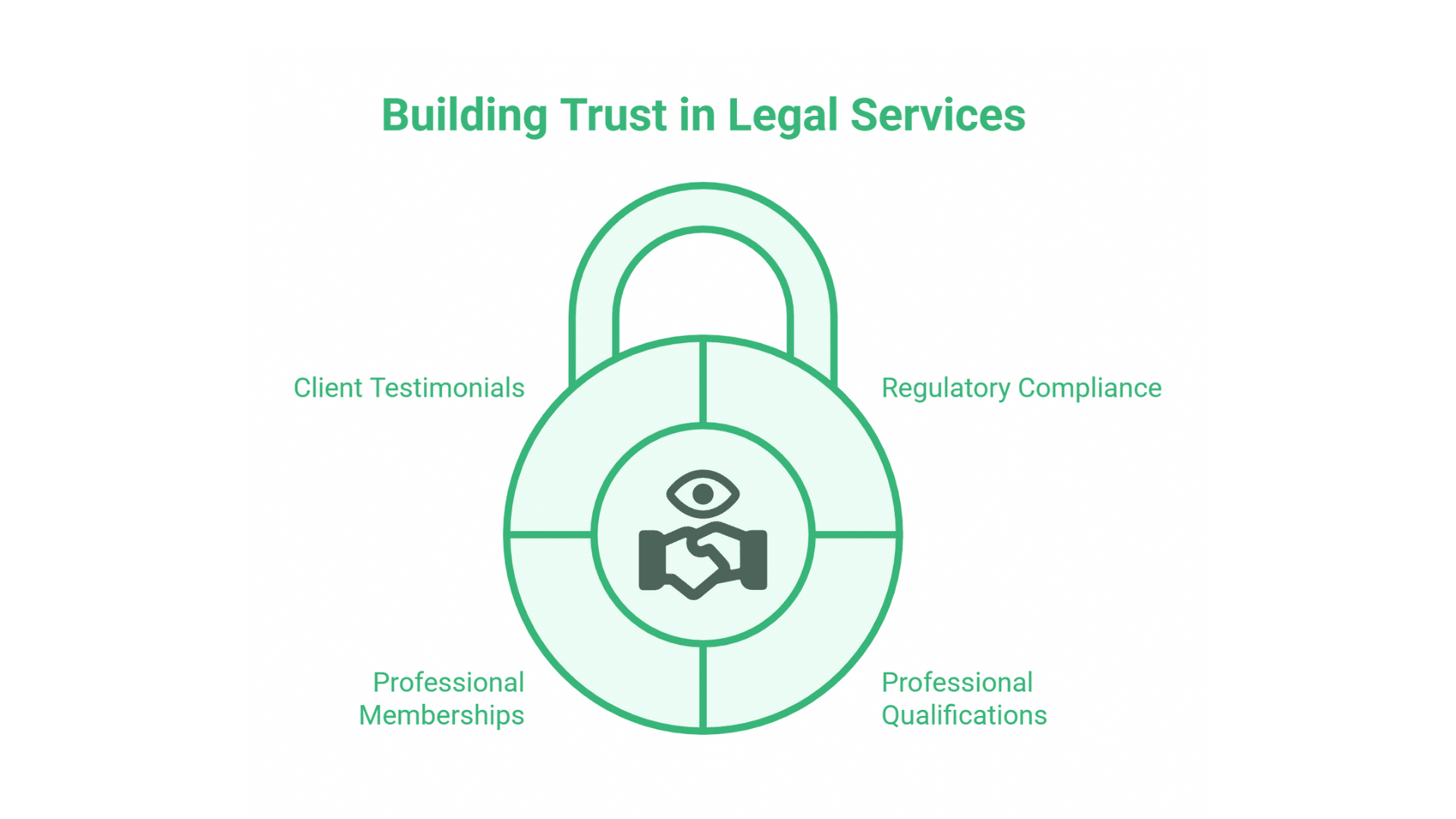
Legal services require profound trust. Your online presence must establish credibility before clients will engage.
Regulatory Compliance
Solicitors are regulated. Display compliance clearly:
- SRA (Solicitors Regulation Authority) number
- Authorised and regulated statement
- Professional indemnity insurance
- Complaints procedure
- Transparency rules compliance
Regulatory compliance is mandatory, displaying it builds confidence.
Professional Qualifications
Show your credentials:
- Qualified solicitor status
- Practice areas of accreditation
- Specialist panels or schemes
- Additional qualifications
- Years qualified and experience
Qualifications matter to clients assessing expertise.
Professional Memberships
Display relevant memberships:
- The Law Society
- Specialist associations (Resolution for family law, APIL for personal injury)
- Local law societies
- Accreditation schemes
Memberships indicate professional standing and specialism.
Client Testimonials
Where appropriate and permitted, client testimonials provide reassurance:
- Successful outcomes (appropriately anonymised)
- Client experience of working with you
- Communication and service quality
Client stories humanise legal services and demonstrate real-world value.
The Pricing Question
Legal costs concern many clients. How do you address this online?
Regulatory Requirements
SRA transparency rules require certain price information to be published for specific services. Ensure compliance with:
- Conveyancing pricing information
- Probate pricing
- Immigration (if applicable)
- Employment tribunal (employee unfair/wrongful dismissal)
- Motoring offences (if applicable)
- Debt recovery (if applicable)
Beyond Compliance
Additional pricing transparency can help:
- Fixed fee services where offered
- Pricing factors explained
- What affects costs
- Funding options (legal aid eligibility, no win no fee, insurance)
- Initial consultation arrangements
Transparency about costs builds trust and qualifies serious enquiries.
Practice Area Considerations
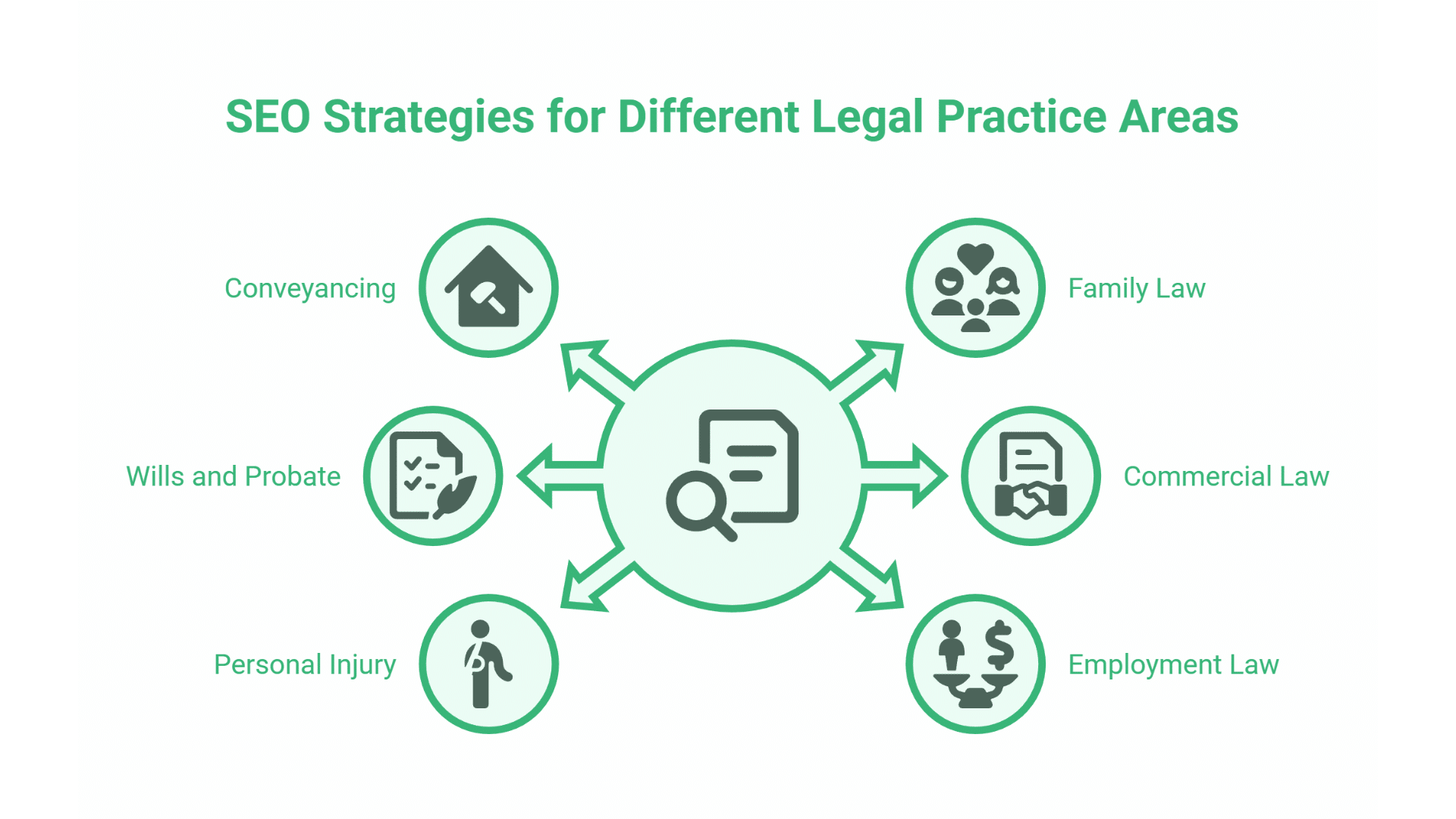
Different practice areas have different SEO dynamics.
Conveyancing
Highly competitive, price-sensitive market:
- Clear pricing essential
- Process explanation important
- Local presence valued
- Reviews from satisfied buyers/sellers powerful
Conveyancing clients research and compare extensively.
Family Law
Sensitive, emotional area:
- Compassionate, understanding tone
- Privacy emphasis
- Clear process explanation
- Range of resolution options (mediation, collaborative, litigation)
- Accessibility for first contact
Family clients need to feel understood and supported.
Wills and Probate
Often prompted by life events:
- Accessibility for older clients
- Clear, jargon-free explanations
- Fixed fee options valued
- Home visit availability if offered
Wills clients often appreciate straightforward, personal service.
Commercial
Business clients have different needs:
- Sector expertise valued
- Responsiveness essential
- Commercial understanding important
- Ongoing relationship potential
Commercial clients seek business-minded lawyers.
Personal Injury
Highly competitive, marketing-intensive area:
- No win no fee clarity
- Process explanation
- Success demonstration
- Accessibility and communication emphasis
Personal injury clients often shop around and compare.
Employment
Both employer and employee clients:
- Clarity about who you act for
- Tribunal process explanation
- Outcome possibilities
- Cost options
Employment clients often face urgent, stressful situations.
Competing Effectively
The legal market is competitive. How do you differentiate?
Against Large Firms
Large firms have resources but can feel impersonal:
- Partner-level attention
- Personal service
- Accessibility
- Local knowledge
- Potentially better value
Position the benefits of working with practices where clients matter individually.
Against Online Legal Services
DIY legal services and online providers compete on price:
- Professional expertise and judgment
- Tailored advice for circumstances
- Problem prevention
- Support when things go wrong
- Relationship and accountability
Position the value of proper professional advice.
Finding Your Position
Consider what distinguishes your practice:
- Practice area specialisms
- Industry expertise
- Service approach
- Local reputation
- Accessibility and responsiveness
Clear positioning helps potential clients understand why to choose you.
Measuring Success
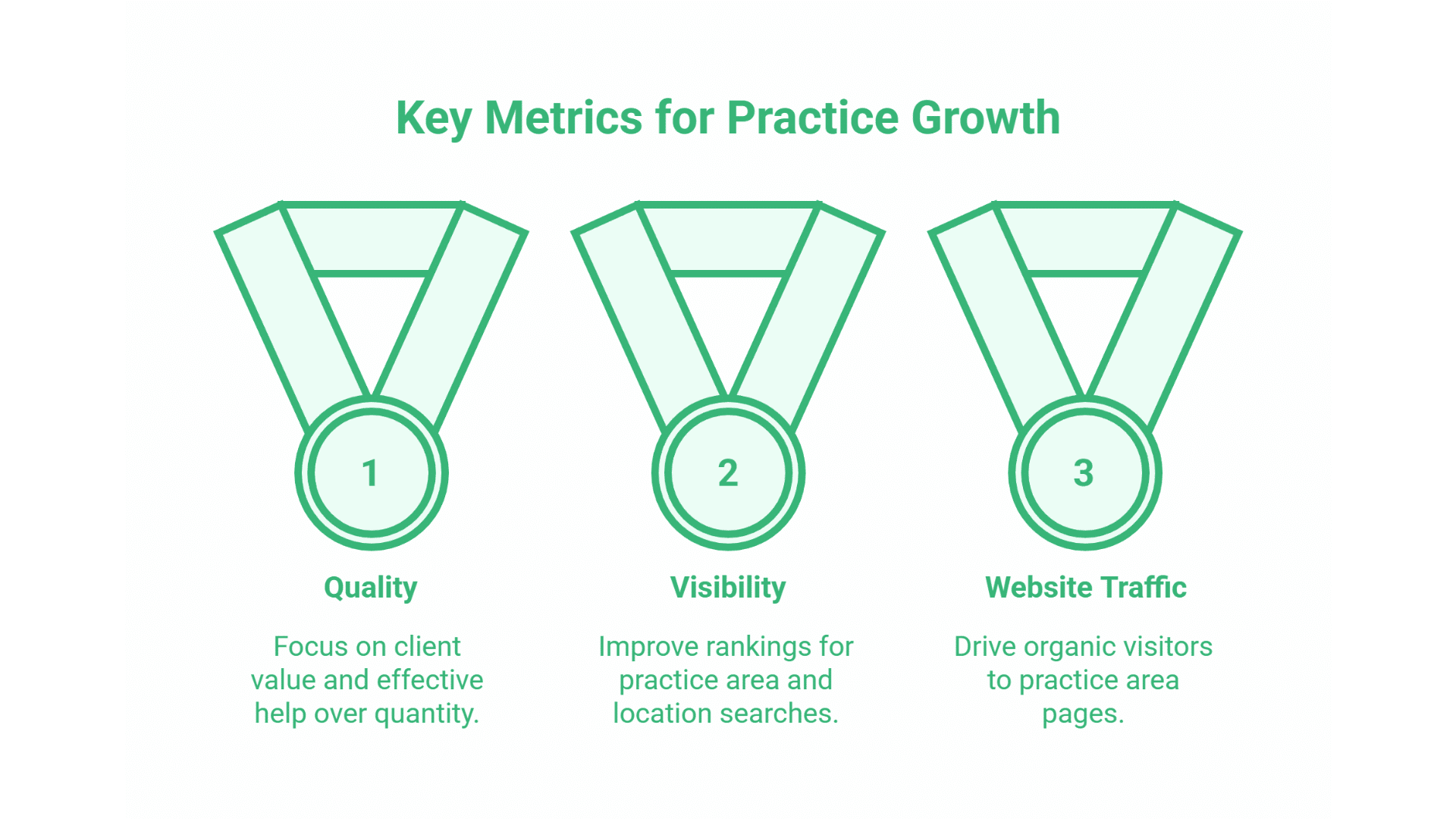
Track metrics connecting to practice growth:
- Visibility: Rankings for [practice area] + location searches
- Website traffic: Organic visitors, especially to practice area pages
- Enquiries: New client enquiries from search
- Quality: Are enquiries from clients you can help effectively?
- Conversion: Are enquiries converting to instructions?
- Client value: What’s the value of search-acquired clients?
Quality matters more than quantity. One good client relationship may be worth many unsuitable enquiries.
Getting Started
If you’re beginning to address search visibility:
- First: Claim and optimise your Google Business Profile, practice areas, regulatory information, professional photos.
- Second: Ensure your website has dedicated pages for each practice area with clear, helpful content.
- Third: Display regulatory compliance and professional credentials prominently.
- Fourth: Create helpful content explaining legal processes in accessible language.
- Fifth: Ensure pricing transparency meets regulatory requirements and client expectations.
These foundations build visibility that attracts quality client enquiries over time.
Connecting with People Who Need Legal Help
The people searching for solicitors today have real legal needs, property to buy, relationships to resolve, estates to administer, businesses to protect, rights to defend. They’re looking for professionals they can trust with matters that significantly affect their lives.
When your online presence demonstrates your expertise, makes your services understandable, and helps potential clients feel confident about making contact, you attract people who’ll value professional legal guidance.
If you’re ready to improve your law firm’s search visibility and attract more quality clients, ProfileTree’s team works with professional service firms across Northern Ireland, Ireland, and the UK. We understand both the technical requirements of effective SEO and the trust-building essential for legal services. Get in touch to discuss how we can help your practice grow through search.