
SEO for Photographers: How to Attract More Clients Through Search
Table of Contents
When someone needs a photographer—for a wedding, family portraits, business headshots, or a commercial project—they search online. “Wedding photographer Belfast,” “family photographer near me,” “product photography”—these searches happen constantly. Photographers who understand SEO for photographers appear in those results and book the clients, while equally talented but less visible competitors are left wondering why enquiries are slow.
SEO for photographers operates in a visual-first, trust-driven market. Clients don’t just compare prices; they assess style, quality, and personality fit. They browse portfolios, study past work, and try to picture their own moments captured through your lens. The decision is emotional as much as it is practical, which makes strong search visibility paired with compelling presentation essential.
The photography market is competitive and fragmented. Hobbyists compete with professionals, budget packages compete with premium services, and stock photography competes with bespoke shoots. Yet photographers who invest in SEO for photographers—especially with a clear specialism and location—consistently attract higher-quality, better-aligned clients.
ProfileTree works with creative businesses across Northern Ireland, Ireland, and the UK to build search visibility that converts. For photographers, effective SEO for photographers means showing up at the right moment, presenting work that resonates instantly, and making the path from search to booking simple and intuitive.
Why Search Visibility Matters for Photographers
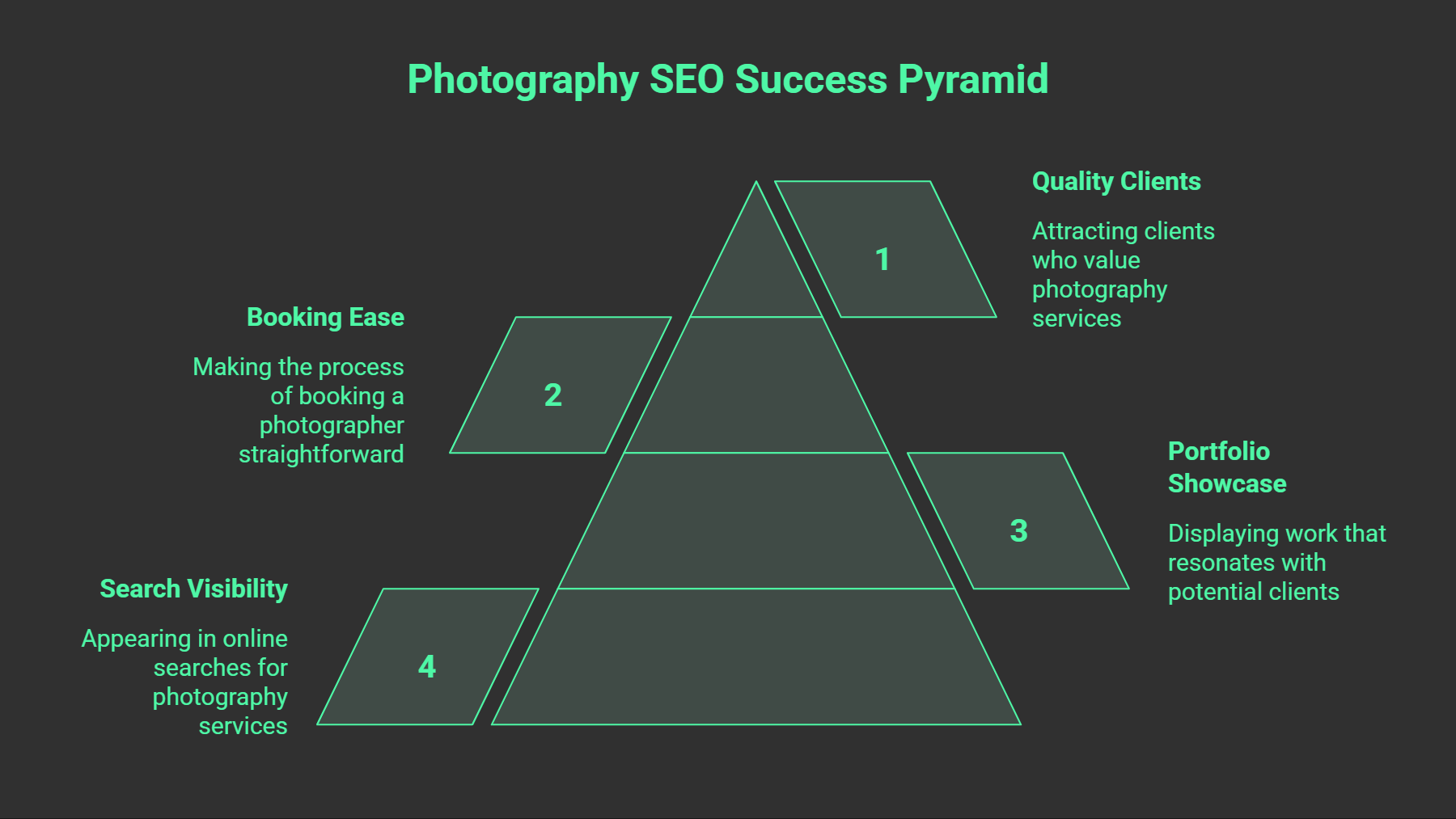
The photography market has distinct characteristics that shape SEO strategy.
The Visual Decision
Photography purchases are fundamentally visual:
- Clients browse portfolios extensively
- Style fit matters as much as technical quality
- Emotional response drives decisions
- One stunning image can win a booking
This visual focus shapes how your website should work—images must load quickly, display beautifully, and create emotional impact.
The Local Reality
Most photography services are geographically constrained:
- Wedding photography requires local or travel availability
- Portrait sessions need accessible studios or locations
- Commercial work often requires an on-site presence
- Event coverage is location-dependent
This geographic focus makes local SEO particularly powerful for most photographers.
The Specialism Factor
Photography spans vastly different markets:
- Wedding and event photography
- Portrait and family photography
- Commercial and product photography
- Real estate and architectural photography
- Food photography
- Fashion and editorial photography
Each specialism has different clients, search patterns, and competitive dynamics. Effective SEO focuses on your specific niche rather than “photography” generically.
Trust and Style Fit
Photography involves trust and personal fit:
- Clients trust you with important moments
- They want someone they’ll enjoy working with
- Style match affects satisfaction
- Personality comes through in both work and interactions
Your online presence must showcase both technical ability and the experience of working with you.
“Photography is one of the most visual businesses imaginable, yet many photographers neglect the basics of being found online. When someone searches for a wedding photographer or needs commercial work, appearing in results with a stunning portfolio is how bookings happen. Beautiful work that nobody can find doesn’t pay the bills.” — Ciaran Connolly, ProfileTree
Google Business Profile for Photographers
Your Google Business Profile is essential for local photography visibility.
Essential Profile Setup
Categories: Select accurate categories:
- Photographer (primary for most)
- Wedding Photographer
- Portrait Photographer
- Commercial Photographer
- Photography Studio
- Event Photographer
Choose the primary based on the main focus. Add secondary categories for additional services.
Attributes: Complete relevant attributes:
- Online appointments available
- In-person consultations
- On-site services (travel to clients)
Business description: Communicate:
- Photography specialisms
- Style and approach
- Coverage area
- Experience and background
- What makes you distinctive
Photography: Obviously Critical
For photographers, Google Business Profile photos are portfolio samples:
What to include:
- Your strongest work in each specialism
- Variety showing range
- Recent work showing the current style
- Behind-the-scenes showing personality
- Studio or working environment
- You at work (builds personal connection)
Photo quality:
- Use your best work—this represents your standard
- Ensure images display well at Google’s sizes
- Update regularly with fresh work
- Show variety within your style
Managing Reviews
Reviews significantly influence photography bookings:
Encouraging reviews:
- Ask after delivering images
- Time requests when clients are delighted
- Make it easy with direct links
- Consider asking at key moments (wedding morning reactions, gallery reveals)
What to encourage clients to mention:
- Their experience working with you
- How did you make them feel comfortable
- Quality of delivered images
- Specific moments you captured
- Overall service experience
Responding to reviews:
- Respond warmly to every review
- Thank clients for trusting you
- Reference specific moments where appropriate
- Show personality consistent with your brand
Website Strategy for Photographers
Your website is your portfolio, showroom, and booking engine.
Essential Website Elements
Portfolio: Your most important content:
- Organised by category/specialism
- Your absolute best work
- Curated, not comprehensive
- Regular updates showing the current style
About you:
- Your story and background
- Why did you become a photographer
- Your approach and philosophy
- Personality and working style
- Professional photo of you
Services:
- Clear service descriptions
- What’s included
- Session process
- Deliverables
Pricing:
- At a minimum, starting prices or investment ranges
- Package options
- What affects pricing
- Value explanation
Contact:
- Easy enquiry process
- Response time expectations
- Booking calendar, if applicable
- Multiple contact methods
Portfolio Organisation
Structure portfolio for both visitors and search:
By specialism:
- /wedding-photography/
- /portrait-photography/
- /commercial-photography/
- /event-photography/
By sub-category:
- /wedding-photography/church-weddings/
- /portrait-photography/family-portraits/
- /commercial-photography/product-photography/
This structure creates natural landing pages for specific searches.
Individual Session/Project Pages
Create pages for significant work:
Wedding features:
- The couple’s story
- Venue and details
- Selection of images
- Testimonial from a couple
Commercial projects:
- Client and brief
- Approach and execution
- Final images
- Results achieved
These pages provide:
- SEO opportunity (venue names, locations)
- Social proof of experience
- Content for searches
- Shareable features
Location Pages
Target geographic searches:
/wedding-photographer-belfast/: Belfast wedding coverage
/family-photographer-lisburn/: Lisburn portrait services
/commercial-photography-dublin/: Dublin commercial work
These pages capture location-specific searches.
Technical Foundations for Image-Heavy Sites
Photography websites need specific technical attention:
Image optimisation:
- Compress without visible quality loss
- Use appropriate formats (WebP with fallbacks)
- Implement lazy loading
- Provide multiple sizes for responsive display
Speed:
- Critical for image-heavy sites
- Use content delivery networks
- Optimise server response
- Minimise blocking resources
Mobile:
- Many clients browse on phones
- Images must display well on small screens
- Navigation must work on touch
- Contact must be easy on mobile
Alt text:
- Describe images meaningfully
- Include relevant keywords naturally
- Assist accessibility
- Provide context for search engines
Our guide at profiletree.com/seo-basics/ covers technical fundamentals.
Local SEO Strategy for Photographers
Most photographers serve geographic areas.
Local Keyword Targeting
Understand how clients search:
Specialism + location:
- “Wedding photographer Belfast”
- “Portrait photographer near me”
- “Commercial photography Dublin”
Style + location:
- “Documentary wedding photographer [location]”
- “Natural light photographer [location]”
- “Studio photographer [location]”
Venue-specific:
- “Photographer [venue name]”
- “Wedding photography [hotel name]”
Your Google Business Profile and website should target these patterns.
Building Photography Citations
Directory listings reinforce presence:
Photography directories:
- Professional body directories (MPA, BIPP, SWPP)
- Wedding directories (Hitched, Bridebook)
- Commercial directories
- Regional photographer listings
General directories:
- Yell.com
- Thomson Local
- Yelp
- Bark
Wedding-specific:
- Hitched
- Bridebook
- Wedding venues directory listings
Ensure consistent Name, Address, and Phone across all listings.
Venue and Location Relationships
Build visibility through locations:
Venue relationships:
- Get listed on venue supplier lists
- Create content featuring venue work
- Build relationships with venue coordinators
- Tag venues appropriately in work
Location content:
- Create guides to local photography locations
- Feature local venues and settings
- Build local relevance through content
Local Link Building
Local links strengthen visibility:
- Partner with complementary wedding suppliers
- Connect with local businesses needing photography
- Build relationships with venues
- Participate in local events and styled shoots
- Join local business networks
- Support local community initiatives
Specialism SEO Strategies
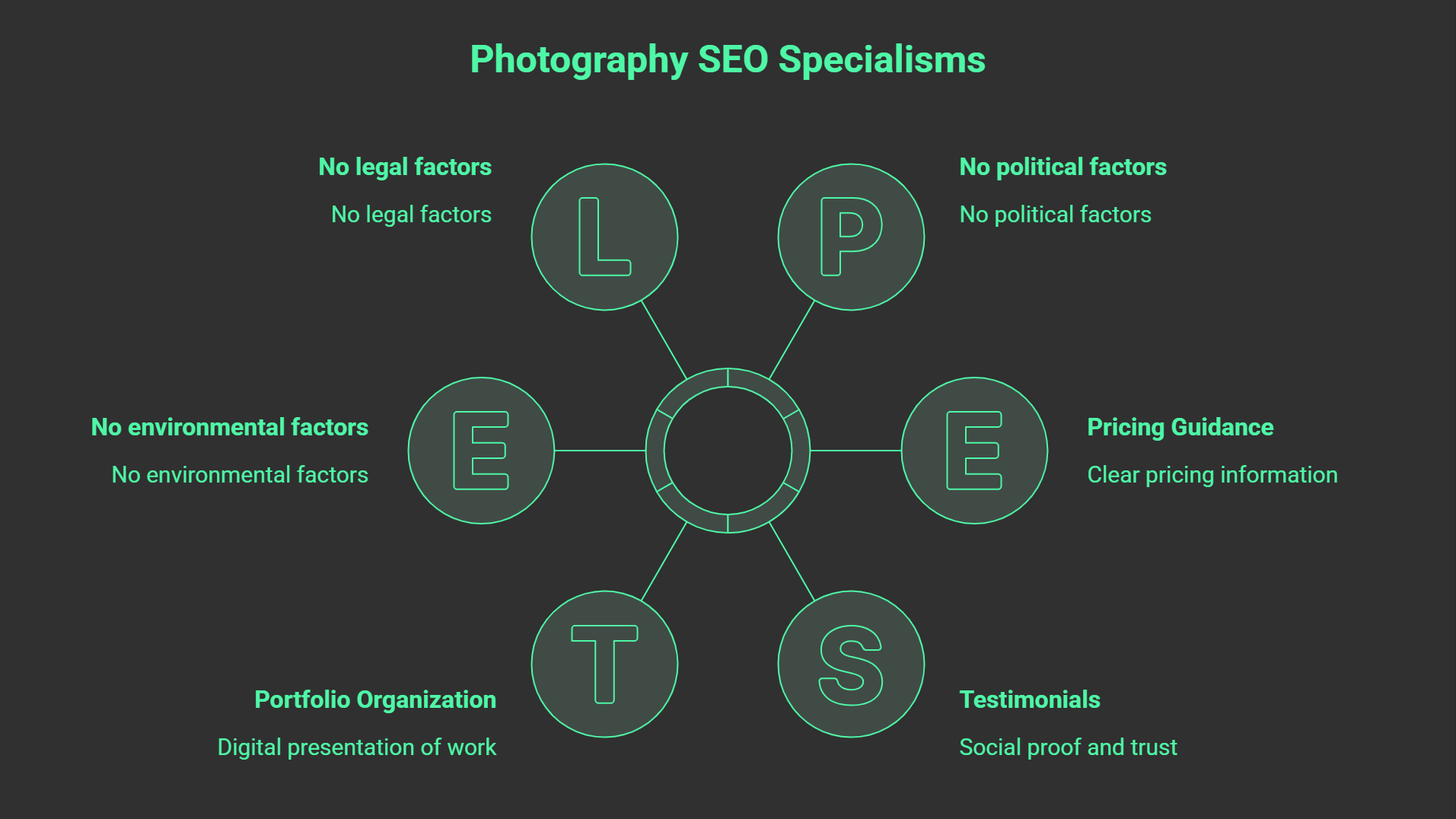
Different photography specialisms require different approaches.
Wedding Photography SEO
Target keywords:
- “Wedding photographer [location]”
- “[Style] wedding photography”
- “[Venue] wedding photographer”
Content approach:
- Individual wedding features with venue names
- Venue guides and galleries
- Wedding planning advice content
- Seasonal wedding content
Critical elements:
- Testimonials from couples
- Full wedding galleries showing storytelling ability
- Information about your approach
- Clear pricing guidance
Portrait Photography SEO
Target keywords:
- “Portrait photographer [location]”
- “Family photographer near me”
- “Headshot photographer [location]”
- “[Type] portraits [location]”
Content approach:
- Session guides (what to wear, what to expect)
- Location guides for portrait sessions
- Before/after for headshots (corporate)
- Family session inspiration
Critical elements:
- Variety of portrait styles
- Information about the session experience
- Clear pricing and what’s included
- Easy booking process
Commercial Photography SEO
Target keywords:
- “Commercial photographer [location]”
- “Product photography [location]”
- “Corporate photography [location]”
- “[Industry] photography”
Content approach:
- Case studies showing business results
- Industry-specific portfolio sections
- Behind-the-scenes process content
- Value of professional photography content
Critical elements:
- Professional presentation
- Clear process explanation
- Business-focused testimonials
- Evidence of working with businesses
Real Estate and Architectural Photography
Target keywords:
- “Property photographer [location]”
- “Real estate photography [location]”
- “Architectural photographer”
Content approach:
- Portfolio organised by property type
- Before/after showing impact
- Process and turnaround information
- Value proposition for estate agents
Critical elements:
- Consistent quality demonstration
- Fast turnaround capability
- Easy ordering process
- Bulk/partnership pricing options
Content Strategy for Photographers
Content marketing demonstrates expertise and captures research-stage clients.
Educational Content
Helpful content for potential clients:
Planning content:
- “How to choose a wedding photographer”
- “What to wear for portrait sessions”
- “How to prepare for headshot photography”
Process content:
- “What to expect from a photography session”
- “How long until I receive my photos?”
- “Understanding photography pricing”
Tips content:
- “Best times of day for outdoor photos”
- “How to photograph children” (for parents)
- “Getting the most from your photo session”
Location and Venue Content
Content leveraging local knowledge:
Venue guides:
- “Wedding photography at [venue]”
- “Best portrait locations in [area]”
- “Corporate photography spaces in [city]”
Location features:
- “Photography guide to [location]”
- “Hidden gems for photos in [area]”
- “Seasonal photography spots”
Behind-the-Scenes Content
Content showing your process and personality:
Session features:
- How you approach different situations
- Equipment and technique insights
- Working with different clients
Business insights:
- Your photography journey
- Why do you shoot as you do
- Passion projects and personal work
Video content works excellently for photographers—behind-the-scenes, editing process, and client reactions. Our guide at profiletree.com/video-storytelling/ covers video strategy.
Image SEO Specifics
For photographers, image SEO deserves special attention.
File Naming
Use descriptive file names:
- ❌ IMG_4532.jpg
- ✅ belfast-city-hall-wedding-photography.jpg
Include relevant keywords naturally in file names.
Alt Text Strategy
Write meaningful alt text:
- Describe what’s in the image
- Include relevant keywords naturally
- Provide context for visually impaired users
- Don’t stuff keywords unnaturally
Example: “Bride and groom first dance at Titanic Hotel Belfast wedding reception”
Image Sitemaps
Submit image sitemaps to help search engines find and index your images.
Structured Data
Implement relevant schema markup:
- ImageObject for portfolio images
- LocalBusiness for your business
- Service for service offerings
- Review for testimonials
Measuring Photography SEO Success
Track metrics connecting to actual bookings.
Key Metrics
Visibility:
- Google Business Profile views
- Website organic traffic
- Portfolio page engagement
- Local keyword rankings
Engagement:
- Enquiries from search
- Portfolio time on the page
- Contact form submissions
- Phone calls from the search
Business outcomes:
- Enquiries by source
- Bookings from search leads
- Revenue from search-acquired clients
- Average booking value
Portfolio Performance
Track which portfolio sections perform best:
- Most viewed galleries
- Pages with the highest enquiry rates
- Content driving engagement
- Images attracting attention
Seasonal Patterns
Photography has predictable seasonality:
- Wedding peak season (May-September in the UK/Ireland)
- Christmas family portrait season
- Corporate January planning
- Summer event season
Compare performance to the same periods in previous years.
Common Mistakes Photographers Make
Avoid these frequent errors:
Slow-loading portfolio: Beautiful images that take forever to load. Optimisation is essential.
Incomplete Google Business Profile: Missing services, few photos, and unmanaged reviews.
No location focus: Targeting “photographer” instead of “photographer [location].”
Hidden pricing: Not indicating investment levels at all. Even ranges help qualify enquiries.
All portfolio, no words: Beautiful images without supporting text. Search engines need words, too.
Outdated work: Portfolio showing old style or outdated work. Keep it current.
Generic presentation: A website that could describe any photographer.
Ignoring reviews: Not requesting reviews or responding to feedback.
Poor mobile experience: Portfolio that doesn’t work on phones.
No individual project pages: Missing opportunity to create content for specific venues, locations, and project types.
Getting Started with Photography SEO
If you’re beginning SEO or reviewing existing efforts:
Immediate priorities:
- Claim and complete the Google Business Profile
- Add your best portfolio images
- Ensure contact is easy
- Verify mobile experience
First month:
- Respond to all existing reviews
- Create specialism pages
- Verify consistent information across directories
- Implement the review request process
First three months:
- Build citations in photography directories
- Create location/venue content
- Add individual session/project pages
- Improve technical foundations (speed)
Ongoing:
- Regular portfolio updates
- Fresh content creation
- Reviews from happy clients
- Monitor and improve based on results
Frequently Asked Questions
How important is website speed for photographers?
Critical. Image-heavy sites are prone to slow loading, but potential clients won’t wait. Optimise images aggressively, use CDNs, and test regularly on mobile connections.
Should I display pricing on my website?
Yes, at least investment ranges or starting prices. Hidden pricing creates friction and attracts enquiries from clients who can’t afford you. Transparency qualifies enquiries.
How do I balance image quality with website speed?
Use modern compression and formats (WebP), implement lazy loading, serve appropriate sizes for different devices, and use content delivery networks. Quality and speed aren’t mutually exclusive with proper optimisation.
What content works best for photographer SEO?
Venue and location content captures specific searches. Session guides attract research-stage clients. Individual wedding/project features create ongoing content. Educational content demonstrates expertise.
How important are alt tags for photography websites?
Very important. Alt text helps search engines understand image content, improves accessibility, and creates a keyword opportunity. Write natural descriptions including relevant terms.
Should I blog about every session?
No—quality over quantity. Feature your best work with thoughtful content. A few excellent features work better than many thin posts.
How do I compete with photographers who charge much less?
Focus on your specialism, showcase your best work, build reviews and testimonials, and target clients seeking quality over price. Competing on price usually leads nowhere good.
How long does photography SEO take to work?
Google Business Profile improvements often show results within weeks. Broader website visibility typically takes three to six months. Seasonal patterns mean wedding photographers should start well before peak season.
Should I focus on Instagram or SEO?
Both for different purposes. Instagram builds engagement and community; SEO captures active searchers with specific needs. Most successful photographers invest in both.
How do I handle enquiries that don’t match my pricing?
Respond professionally, be clear about your investment levels, and consider whether there are appropriate alternatives you might suggest. Every enquiry is a chance to build a reputation, even if it doesn’t become a booking.
Building Long-Term Photography Success
Photography SEO rewards visual excellence and local focus. The fundamentals are clear: complete Google Business Profile, stunning portfolio, specialism focus, location targeting, and genuine reviews.
Photographers executing these basics attract clients from competitors who don’t. The opportunity isn’t competing for “photographer”—it’s owning specific searches in your specialism and location.
The photographers who book consistently aren’t necessarily the most talented. They’re the ones visible when potential clients search, compelling when prospects browse portfolios, and easy to contact when clients are ready to book. Make sure you’re one of them.
If you’re ready to improve your photography business’s search visibility and attract more clients, ProfileTree’s team works with creative businesses across Northern Ireland, Ireland, and the UK. We understand both the technical requirements of effective SEO and the visual nature of photography marketing. Get in touch at profiletree.com/contact-us/ to discuss how we can help your business grow through search.