
SEO for Nurseries: A Practical Guide to Filling Places
Table of Contents
Parents searching for “nursery near me” or “childcare Belfast” often convert into an enquiry within days, not months, which is what makes SEO for nurseries one of the fastest routes to a full waiting list. Yet most nursery and childcare websites still read like a printed leaflet, and it’s worth saying so plainly: a services list, a phone number, and a handful of stock photos. Search visibility doesn’t reward that. It rewards settings that answer the exact questions parents are typing into Google, that display trust signals such as Ofsted or Care Inspectorate ratings clearly, and that keep a live Google Business Profile accurate and up to date.
Here’s what moves the needle for nursery and childcare SEO across the UK and Ireland: Google Business Profile optimisation, keyword strategy for daycare nursery SEO, website content that converts, regulatory trust signals, recruitment SEO, and local link building. ProfileTree works with service businesses across Northern Ireland, Ireland, and the UK, and our specialist SEO services are built around the enquiry-to-registration journey nurseries actually run, not a generic keyword checklist copied from another industry.
Why Nursery and Childcare SEO Needs a Different Approach
Childcare decisions carry more weight than almost any other local purchase a family makes, and it’s worth starting there. Parents are trusting a stranger with their child’s safety for hours at a time, often at the largest recurring cost in the household budget after rent or a mortgage. That combination of emotional stakes and financial commitment means nursery SEO can’t just copy the playbook built for a café or a hairdresser, even though the underlying local search mechanics look similar on paper.
Three things set this market apart. First, the search is intensely local: a parent won’t drive across a city for daily drop-off and pick-up, so ranking within a two or three-mile radius matters more than ranking nationally. Second, trust signals do more work than price alone.
An Ofsted rating, a DBS-checked staff list, and genuine parent reviews often decide a shortlist before a single visit is even booked. Third, funding terminology (30 hours free childcare, tax-free childcare, the NI Pre-school Education Programme) shapes a huge share of search volume, and a site that never mentions it misses parents at the exact moment they’re ready to enquire.
Nursery SEO also has to work harder on trust than most local sectors, because the buyer and the “user” aren’t the same person: a parent is choosing on behalf of a child who can’t give feedback. Vague, generic copy is far less forgivable here than for a plumber or an estate agent. This is exactly why daycare nursery SEO has to lead with reassurance rather than sales language, and why SEO for early years content reads best when it’s clearly written by someone who understands the sector.
Getting this foundation right works best as part of a wider digital marketing strategy from day one, rather than treating nursery SEO as a bolt-on once occupancy problems have already appeared.
Google Business Profile SEO for Nurseries and Childcare Settings
Your Google Business Profile is usually the first thing parents see, and for multi-site nursery groups, it’s also the profile most likely to contain outdated details. Getting the basics right here typically moves the needle faster than any other single change, and it doesn’t cost anything but time. It’s also one of the fastest wins available in daycare nursery SEO work generally, because so many settings leave this profile half-finished for years at a time.
Categories, Attributes and Accurate Setup
Select Child Care Agency as the primary category, with Day Care Centre, Preschool, or Nursery School as secondary categories where they apply. Complete every relevant attribute: age ranges, outdoor play space, meals provided, pick-up and drop-off, and accessibility. A profile with only three completed attributes reads as unfinished next to a competitor who’s filled in twelve, and Google rewards complete, regularly updated profiles over sparse ones.
Business descriptions should state the ages catered for, hours of operation, educational approach (Montessori, forest school, play-based learning), and funding acceptance in plain, specific language rather than vague marketing phrases. This is also where Google Business Profile works for childcare settings pays off directly: a well-structured profile is frequently what decides whether a parent clicks through to the website at all, or simply calls the next result down the list instead.
Managing Reviews and Testimonials Under GDPR
Reviews carry more weight in childcare than in almost any other sector, because parents rely on other parents’ direct experience rather than marketing copy. Encourage reviews after settling-in periods or developmental milestones, using direct review links sent by text or email, and never offer incentives, which breaches Google’s review policies and can lead to reviews being removed in bulk without warning.
Handling testimonials correctly also means respecting GDPR. Don’t publish a parent’s full name alongside identifying details about their child without explicit, recorded consent, and keep a simple ledger of which testimonials have consent attached so nothing gets republished after a parent later withdraws permission. Respond to every review, including negative ones, calmly and without discussing any individual child publicly; other parents reading the thread are watching how a setting handles criticism just as closely as they’re reading the star rating itself.
Website Content That Converts Enquiries Into Visits
A Google Business Profile earns the click, and that’s only half the job. What happens next, on the website itself, decides whether that click becomes a booked visit.
Essential Pages Every Nursery Website Needs
Cover the questions parents actually ask before they’ll pick up the phone: age ranges and room structure, staff-to-child ratios, a typical daily routine, curriculum and learning approach (EYFS delivery, or the equivalent framework for the relevant nation), fees and funding acceptance, and a clear, simple process for arranging a visit.
A dated, cluttered site undermines all of this content, regardless of how well it’s written, so this is also a natural point to loop in our website design service if the underlying site itself needs rebuilding rather than just rewording. Fee transparency matters more than a lot of agencies assume; parents budget carefully, and a setting that hides pricing entirely loses families who could afford it just as often as it deters families who can’t. At a minimum, publish a fee range or a starting price.
Location Pages for Multi-Site Groups
For groups running more than one setting, each location needs its own page rather than a single template with the town name swapped. Genuinely localised detail (which local authority funds hours in that catchment, which primary schools sit nearby, what makes that specific building or garden different) is what separates a page that ranks from one that reads like every other nursery’s site. Use “nursery SEO [town]” style phrasing naturally within this content rather than repeating one keyword mechanically across otherwise identical pages.
Keyword Strategy for Nursery, Daycare and Childcare SEO
Nursery SEO keyword research covers at least three distinct search intents, and it’s easy to miss two of them if a page treats them as a single keyword.
What Nursery Owners Search For When Choosing an SEO Provider
Before targeting parent-facing keywords, it’s worth understanding what nursery and childcare operators themselves search for when they’re looking for outside help: phrases such as “increase nursery enquiries through Google,” “get my childcare setting found by parents in [area],” and “Google Maps ranking for nurseries.” Content that speaks directly to these operator-level questions, rather than only to parents, signals clearly that a page is a genuine SEO service offer and not a generic parenting article. That distinction matters both for search relevance and for the type of enquiry a nursery SEO agency actually wants to attract.
Nursery owners evaluating a provider also tend to search comparison-style terms: “childcare SEO agency” and “SEO for early years business.” Covering these directly, alongside the core “SEO for nurseries” and “nursery SEO” terms, keeps the content anchored to the commercial audience it’s written for.
Funding, Council and Regional Search Terms
Government funding drives a big share of parent search volume, and it’s worth getting the regional detail right. The terminology differs by nation: 15 and 30 hours funded childcare in England, 1,140 hours funded early learning in Scotland, the Childcare Offer for Wales (30 hours), and the Pre-School Education Programme in Northern Ireland.
These eligibility rules change periodically, so linking directly to the GOV. The UK’s free childcare eligibility checker for England, and the equivalent official page for each nation it serves, keep their pages accurate without needing constant rewrites. Council-funded nursery hours content, built around the specific local authority a setting operates in rather than a generic national page, captures parents at the exact point they’re checking eligibility instead of just browsing.
Pair these funding terms with core terms such as “daycare nursery SEO,” “childcare SEO,” and “SEO for early years” throughout supporting content, and use them naturally rather than forcing every heading to repeat the same phrase. It’s the combination of accurate funding detail and clear commercial framing that tends to separate a page parents trust from one they bounce straight off.
Regulatory Trust Signals: Ofsted, Care Inspectorate, CIW and ETI
Inspection ratings are, quite simply, the strongest trust signal in childcare marketing, and how a setting handles its rating page affects both conversion and nursery SEO relevance at the same time. Any serious SEO for early years strategy has to treat this page as one of the most important on the site, not an afterthought bolted on at the end.
| Nation | Regulator | Funded Hours Programme |
|---|---|---|
| England | Ofsted | 15/30 hours free childcare for working parents |
| Scotland | Care Inspectorate | 1,140 hours funded for early learning and childcare |
| Wales | Care Inspectorate for Wales (CIW) | Childcare Offer for Wales (30 hours) |
| Northern Ireland | Education and Training Inspectorate (ETI) | Pre-school Education Programme |
Optimising Your Ofsted Rating Page
Ofsted moved to a report card format in November 2025, replacing the old single-word “Outstanding, Good, Requires Improvement, Inadequate” scale with a five-point breakdown (Exceptional, Strong Standard, Expected Standard, Needs Attention, Urgent Improvement). Settings inspected before that date still display their previous single-word grade until reinspected, so a rating page needs to match whichever format its most recent report actually uses. Whatever the format, display it prominently near the top of the page, and link out to the full published report on the Ofsted early years inspection information page, and quote the specific strengths the inspector noted rather than a generic summary that could apply to any setting.
Settings regulated by the Care Inspectorate in Scotland, CIW in Wales, or the Education and Training Inspectorate in Northern Ireland should use the correct regulator name and terminology rather than defaulting to “Ofsted” language borrowed from an England-focused template. Parents searching in Cardiff or Belfast are typing the regulator they actually recognise, and mismatched terminology reads as though the content wasn’t written with them in mind at all.
Childminder and Staff DBS Disclosure Pages
A dedicated page confirming DBS checks (or Access NI checks in Northern Ireland) for all staff, alongside a plain-language safeguarding summary, answers one of the first questions serious parents have before booking a visit. Don’t bury this in a downloadable PDF or a footer link; parents actively search for it, and hiding it looks like something to hide, even when the real reason is simply an oversight.
Recruitment SEO: Solving the Staffing Side of Nursery Growth
Occupancy and staffing are two sides of the same growth problem. A nursery can win every parent enquiry it wants and still be unable to open new rooms without enough qualified staff, and the sector’s ongoing recruitment pressure means “nursery assistant jobs [location]” and similar searches carry real commercial value alongside parent-facing terms. Recruitment SEO for nurseries deserves just as much attention as parent-facing SEO for nurseries, and it sits inside daycare nursery SEO just as much as parent enquiries do, even though most guides only ever cover one side of it.
Career landing pages that describe qualifications, pay ranges where possible, training support, and progression routes consistently outperform a single “careers” line buried in a footer. Structuring these pages like a service page, with a clear H1 and a simple application process, tends to rank faster than expected, largely because so few childcare competitors bother doing this properly.
A short jobs board isn’t enough on its own. Add a page for each distinct role (nursery assistant, room leader, deputy manager) rather than one generic vacancies page, since each job title carries its own search volume. Our companion guide to childcare and nursery SEO strategy covers this staffing angle in more depth alongside the parent-facing side.
“Nurseries that treat recruitment as part of their marketing, not a separate HR task, consistently fill vacancies faster. A career page written with the same care as a parent-facing page removes a huge amount of friction for candidates who are already convinced they want to work in early years.”
So says Ciaran Connolly, founder of ProfileTree, describing the agency’s work with childcare and early years clients across Northern Ireland, where Health and Social Care Trust registration requirements, the Sure Start programme, and NI-specific funding rules add a layer of complexity most UK-wide guidance ignores entirely.
Local Link Building and Community Authority for Childcare Settings
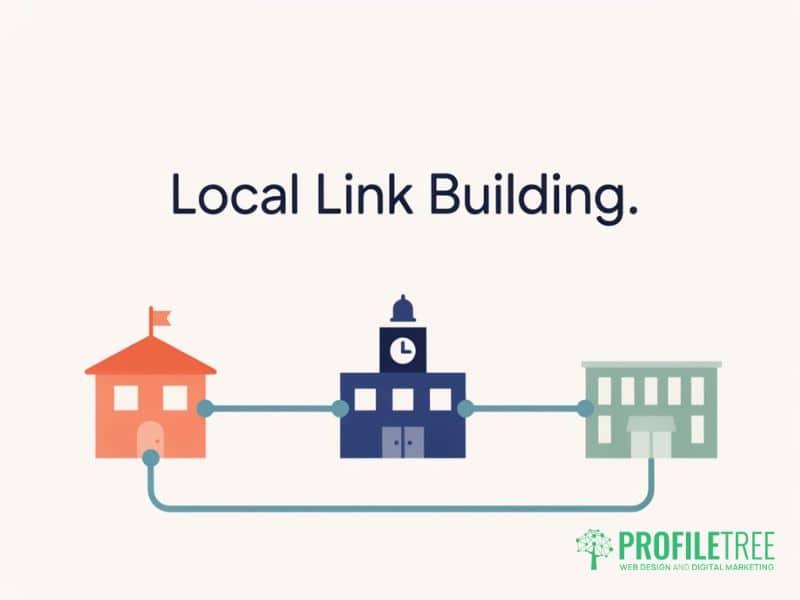
Local links strengthen both trust and nursery SEO rankings, and that matters more in a market this geographically constrained than almost anywhere else. Partner with local primary schools on transition content, connect with health visitors and children’s centres, and support family events with genuine involvement rather than a one-off sponsorship mention.
Directory citations still matter too: Ofsted, Care Inspectorate, CIW, or ETI registration listings, Family Information Service entries, and general directories such as Google Maps should carry identical name, address, and phone details everywhere they appear. Inconsistency between listings, even something as small as “Rd” versus “Road,” quietly undermines local ranking over time, and it’s one of the easiest things to audit and fix in a single afternoon of admin. Community relationships like these are part of SEO for early years work that a generic local SEO checklist tends to miss entirely.
Measuring Nursery SEO Performance: From Rankings to Registrations
Track the full journey from visibility through to registration, because rankings on their own don’t tell the whole story. Google Business Profile views, organic traffic, and keyword positions show whether a setting is visible. Booking requests, enquiries attributed to search, and form submissions show whether that visibility converts. Registrations, occupancy, and waiting list growth show whether it eventually fills places. This is the measurement discipline most daycare nursery SEO work skips, and it’s usually the difference between a setting that assumes SEO isn’t working and one that knows exactly which stage of the funnel needs attention.
Nursery sales cycles run longer than most local businesses; parents often research months ahead and visit more than one setting before deciding, so it’s worth measuring enquiry-to-registration conversion over quarters rather than weeks. Compare each season (the September intake, January’s funded-hours enquiries) against the same period the previous year rather than against last month, since childcare demand moves in a yearly rhythm rather than a steady weekly one. That single change in how a setting reads its own data often reveals that a “quiet” month wasn’t underperformance at all, just the normal shape of the calendar.
FAQs
1. How long does nursery SEO take to show results?
Google Business Profile improvements often show movement within weeks, since these changes affect the Map Pack directly and don’t rely on a full crawl and reindex cycle. Full website and organic ranking improvements typically take three to six months. Nursery searches peak ahead of the September intake and again in January, when funded hours are confirmed, so timing improvements before these windows tend to produce faster, more visible results.
2. Can a nursery manager handle SEO without an agency?
Google Business Profile basics (photos, categories, review responses) are manageable in-house with a little training and a regular slot in someone’s diary. Technical SEO, competitive keyword strategy, and the recruitment SEO work covered above generally need specialist support to compete against established local nurseries.
3. What does nursery SEO typically cost in the UK?
Costs vary with scope, but a realistic monthly range for ongoing nursery SEO sits between a few hundred and a few thousand pounds a month, depending on whether the work covers a single site or a multi-location group. Ask any provider exactly what’s included, and confirm whether their SEO for early years experience extends beyond a single client.
4. How should a nursery respond to a negative Google review?
Respond calmly, thank the parent for the feedback, and invite the conversation offline rather than debating specifics publicly. Don’t discuss an individual child or family situation in a public reply, however tempting it feels to correct the record. A measured, professional response often reassures prospective parents more than the review itself concerns them.
5. Does a strong Ofsted rating actually help search rankings?
Directly, no; inspection ratings aren’t a Google ranking factor in themselves, whether a setting still holds a legacy grade like Good or a report card under the new five-point scale. Indirectly, yes: a prominently displayed strong rating improves the click-through rate from search results and conversion once a parent lands on the page, and both of those feed back into rankings over time.