
SEO for Accountants: How Businesses Find Accountants Today
Table of Contents
When a business owner realises they need professional accounting help, or when someone faces a complex tax situation, they search online. “Accountants near me,” “small business accountant [town],” “tax advisor”, these searches happen constantly as people look for financial professionals they can trust with their money matters.
Accounting is fundamentally a trust profession. Clients hand over intimate details of their financial lives. business performance, personal income, assets, and liabilities. They need absolute confidence in competence and integrity before engaging. That trust-building process increasingly begins online, long before any meeting takes place.
The accounting market spans everything from sole practitioners handling personal tax returns to large firms serving corporate clients. At every level, the challenge is the same: being visible when potential clients search, and building enough trust through your online presence that they choose to make contact.
This guide explores SEO for accountants and how accountants can build search visibility that attracts quality clients, the businesses and individuals who need your expertise and will value a long-term professional relationship.
SEO for Accountants: How People Search for Accountants
Understanding search behaviour reveals when and how to reach potential clients.
The Business Owner Search
Small business owners represent a significant client segment. Their searches often indicate trigger points:
- Starting up: “Accountant for new business,” “company formation accountant,” “limited company setup help”
- Growing pains: “Small business accountant,” “accountant for contractors,” “bookkeeping services”
- Specific needs: “VAT registration help,” “payroll services,” “management accounts”
Business owners search when they recognise they need help, often at transition points where complexity exceeds their capability or time.
The Tax-Driven Search
Tax concerns drive substantial search volume:
- Self-assessment: “Tax return accountant,” “self-assessment help,” “tax advisor near me”
- Specific situations: “Capital gains tax advice,” “inheritance tax planning,” “tax investigation help”
- Deadlines approaching: Searches spike before January 31st (self-assessment deadline), April (year-end), and other key dates
Tax searches often have urgency attached, deadlines create pressure to act.
The Problem Search
Sometimes searches indicate problems:
“HMRC investigation accountant” “Tax penalty help” “Late accounts filing” “Company accounts overdue”
Problem searches represent clients with immediate needs and motivation to engage quickly.
The Industry-Specific Search
Some clients want specialist knowledge:
“Accountant for landlords” “Construction industry accountant” “Accountant for medical professionals” “E-commerce accountant”
Industry searches indicate clients valuing sector expertise over generic capability.
The Service-Specific Search
Clients often know what service they need:
“Bookkeeping services [location]” “Payroll bureau” “Management accounts service” “Year-end accounts preparation”
Service-specific searches capture clients with defined requirements.
The Local Dimension
Despite digital delivery of many accounting services, local presence still matters. Many clients prefer accountants they can meet, especially for initial discussions and complex matters. Local reputation carries weight.
Google Business Profile for Accountants
Your Google Business Profile establishes local visibility.
- Categories: Accountant is the primary category. Add Tax Consultant, Bookkeeping Service, or others as relevant.
- Service areas: Define where you serve. Many accountants serve specific regions rather than single towns.
- Services: List your services, accounts preparation, tax returns, bookkeeping, payroll, VAT, company formation, business advisory.
- Hours: When can clients reach you? Availability during business hours is expected; extended hours during busy periods is valuable.
- Photos: Your office, team, professional environment. Accounting is conservative, photos should convey professionalism and trustworthiness.
- Description: Your approach, specialisms, types of clients you serve, what makes you different.
Building Local Authority
Beyond Google Business Profile:
- Professional directory listings (ICAEW, ACCA, AAT find-an-accountant)
- Local business directory presence
- Chamber of Commerce membership
- Local business network involvement
Local professional presence reinforces credibility and generates referrals.
Your Website: Building Trust Before the First Meeting
Your website must establish credibility and make potential clients confident enough to make contact.
Essential Information
Potential clients need to understand:
- Services: What do you actually do? Be specific about services offered.
- Who you help: What types of clients? Business sizes, industries, personal tax clients?
- Your approach: How do you work? What should clients expect?
- Your team: Who are the people behind the practice? Qualifications matter.
- How to engage: What’s the process for becoming a client?
Service Pages
Create dedicated pages for your main services:
- Accounts and tax returns: Annual accounts, corporation tax, self-assessment
- Bookkeeping: Monthly/quarterly bookkeeping, management accounts
- Payroll: Payroll processing, RTI submissions, pension auto-enrolment
- VAT: VAT returns, registration, advice on schemes
- Business advisory: Business planning, forecasting, growth advice
- Company formation: Setting up limited companies, advice on structure
- Tax planning: Personal and business tax planning, inheritance tax, capital gains
Each page should explain what’s involved, who needs it, and your approach. Avoid jargon that clients won’t understand.
Industry or Client Type Pages
If you specialise, create pages for those specialisms:
“Accountants for Contractors” “Property Landlord Accountants” “Accountants for Small Businesses” “Accountants for Healthcare Professionals”
Specialism pages capture targeted searches and demonstrate relevant expertise.
Location Pages
For local visibility, consider location pages:
Accountants in Belfast” “Small Business Accountant Lisburn
Location pages capture geographic searches from your target areas.
Content That Attracts Clients
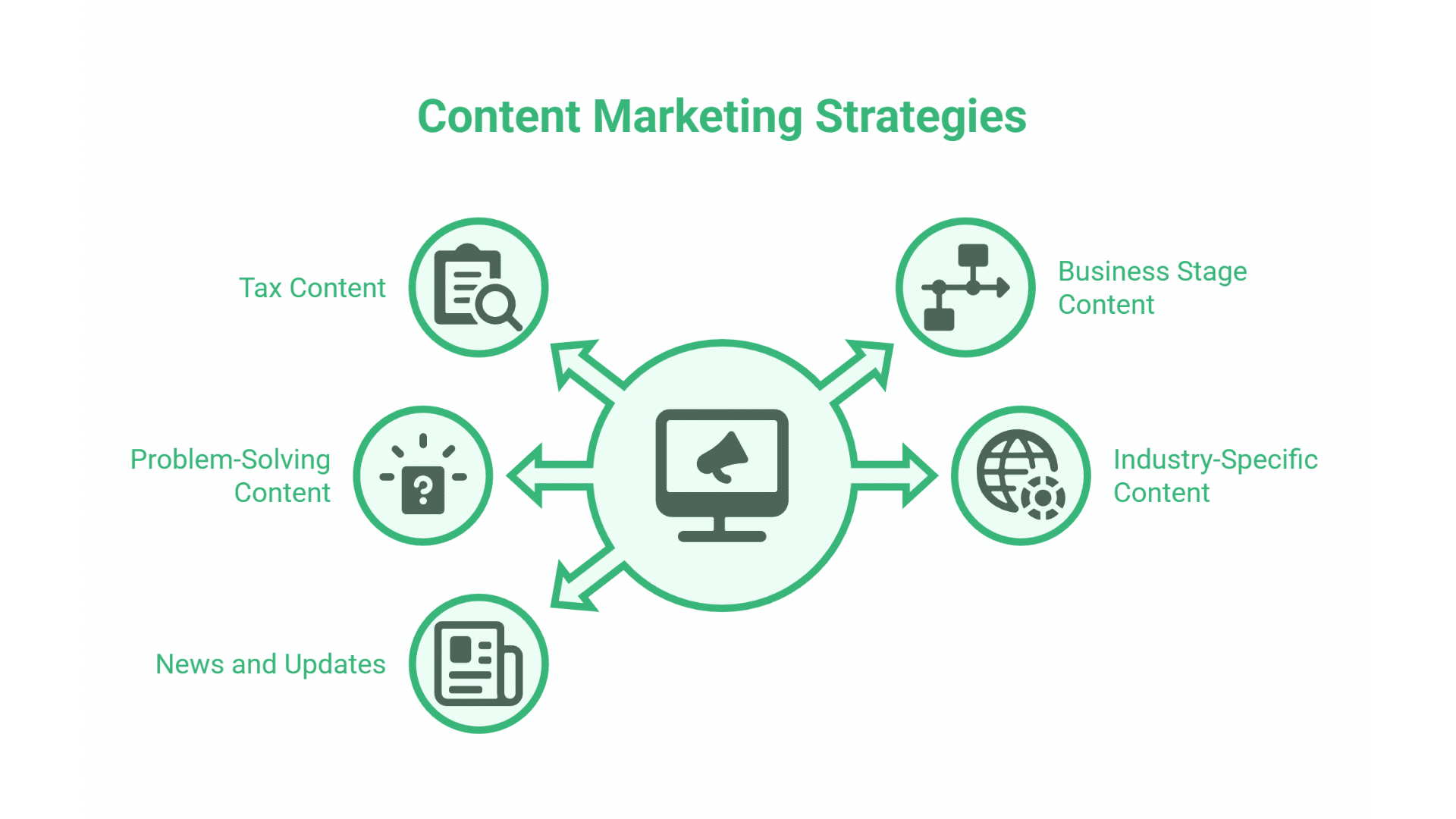
Beyond service pages, helpful content attracts potential clients during their research.
Tax and Deadline Content
Tax information attracts searches:
“Self-Assessment Tax Return Guide” “Corporation Tax Deadlines and Rates” “VAT Registration: When and How” “Making Tax Digital: What You Need to Know”
Tax content captures people researching requirements, often before they realise they need professional help.
Business Stage Content
Content for different business stages:
“Starting a Business: Sole Trader vs Limited Company” “When to Hire Your First Employee” “Growing Your Business: Financial Considerations” “Preparing Your Business for Sale”
Stage-based content reaches clients at transition points when needs change.
Problem-Solving Content
Address common client concerns:
“What to Do If You Miss a Tax Deadline” “Understanding HMRC Penalties” “Cash Flow Problems: Warning Signs and Solutions” “When Does Your Business Need an Accountant?”
Problem content captures clients recognising issues they need help addressing.
Industry-Specific Content
Content for your specialist sectors:
“Tax Considerations for Landlords” “IR35 and Contractors: What You Need to Know” “Financial Management for Medical Practices”
Industry content demonstrates specialist knowledge and attracts relevant clients.
News and Updates
Accounting changes constantly. Commentary on changes demonstrates currency:
“Budget 2024: Key Changes for Small Businesses” “New VAT Rules: What’s Changing” “Corporation Tax Rate Changes Explained”
Timely content shows you’re on top of developments affecting clients.
Building Trust and Credibility
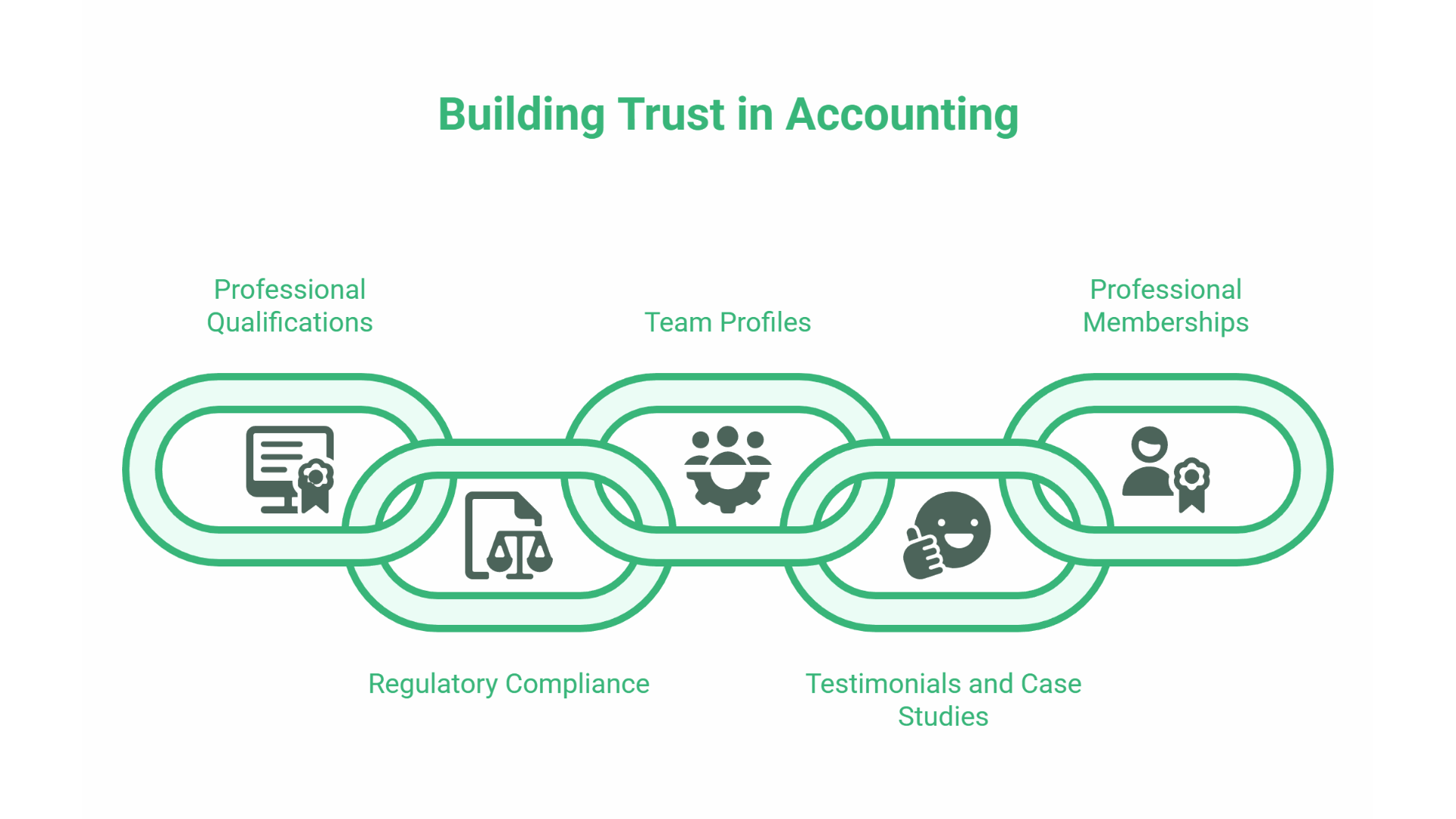
Accounting requires profound trust. Your online presence must establish credibility.
Professional Qualifications
Display qualifications prominently:
- Chartered status (ICAEW, ICAS, Chartered Accountants Ireland)
- ACCA membership
- AAT qualification
- Other relevant certifications
Qualification logos and registration numbers provide verification.
Regulatory Compliance
Accountants are regulated. Show compliance:
- Practice licence details
- Regulatory body membership
- Professional indemnity insurance
- Anti-money laundering registration
Regulatory compliance is mandatory, displaying it builds confidence.
Team Profiles
Introduce your people:
- Qualifications and experience
- Areas of expertise
- Professional background
- Perhaps something personal to humanise
Clients want to know who’ll handle their affairs. Named, qualified professionals are more trustworthy than anonymous firms.
Testimonials and Case Studies
Social proof matters:
- Client testimonials (with permission)
- Case studies showing problems solved
- Industries and client types served
- Length of client relationships
Long-term client relationships demonstrate satisfaction better than one-off praise.
Professional Memberships
Display relevant memberships:
- Professional body membership
- Industry associations
- Local business groups
- Specialist networks
Memberships indicate professional standing and ongoing development.
The Pricing Question
Accounting pricing varies widely and can be opaque. How do you handle this online?
Why Some Transparency Helps
Complete pricing secrecy creates friction:
- Clients can’t assess affordability
- Time wasted on unsuitable enquiries
- Perception of hidden costs
Some indication helps qualify serious enquiries.
Approaches to Pricing Information
- Fixed fees for defined services: “Self-assessment tax returns from £X”
- Pricing factors explained: “What affects accounting fees”
- Free initial consultation: Reduces commitment barrier
- Package descriptions: Showing what’s included at different levels
You don’t need to publish every price, but helping clients understand your pricing approach builds trust.
Competing Effectively
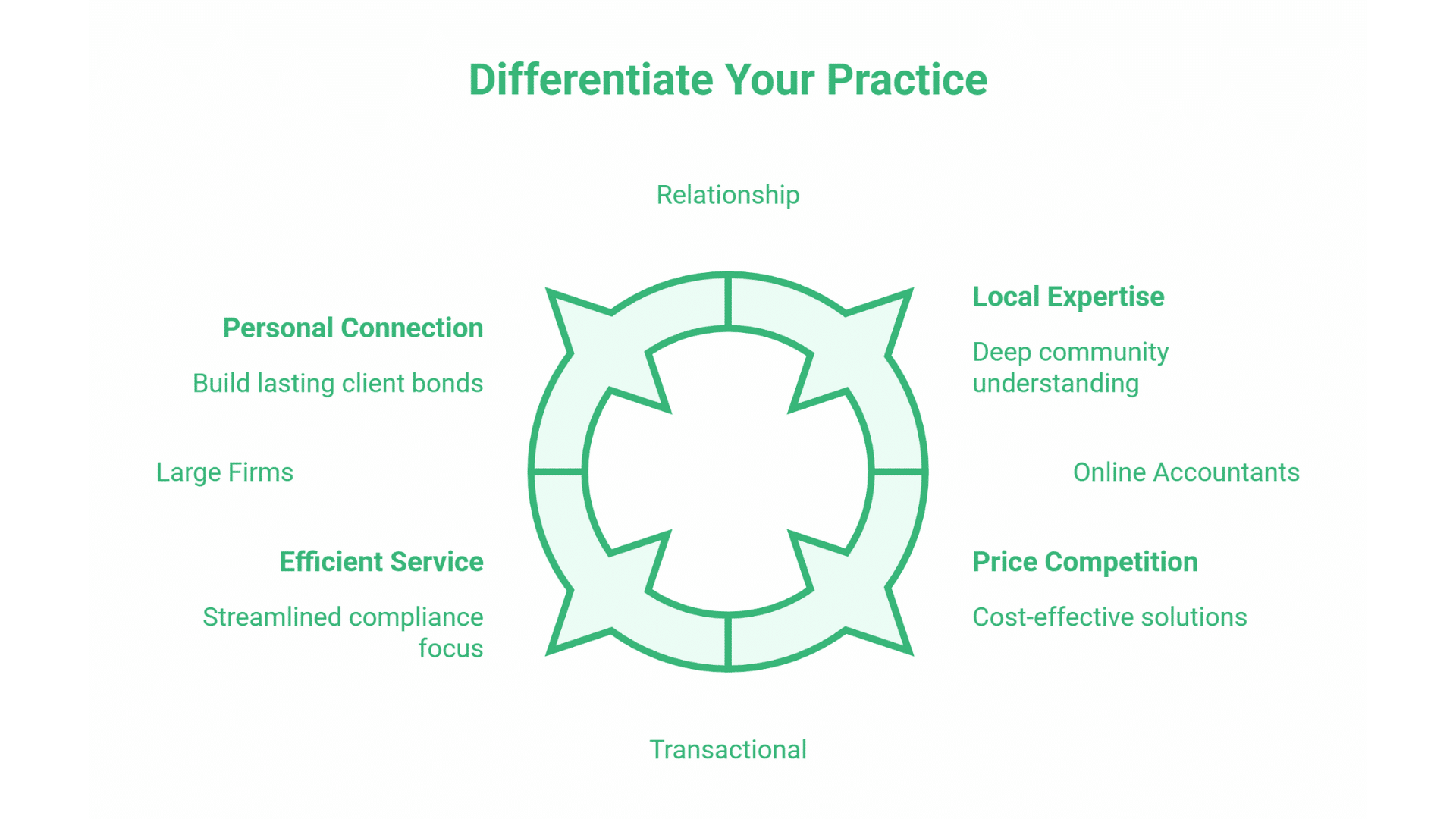
The accounting market is competitive. How do you differentiate?
Against Large Firms
Large firms have resources but can feel impersonal:
- Personal attention from qualified accountants
- Direct partner/principal access
- Flexibility and responsiveness
- Relationship-focused service
- Often better value for smaller clients
Position the benefits of working with a practice where clients matter individually.
Against Online Accountants
Online-only practices compete on price:
- Local presence and accessibility
- Face-to-face availability
- Deeper understanding of client circumstances
- Proactive advice beyond compliance
- Relationship and continuity
Position what’s lost when accounting becomes purely transactional.
Finding Your Position
Consider what makes you distinctive:
- Industry specialisms
- Service approach
- Technology and efficiency
- Advisory focus beyond compliance
- Accessibility and responsiveness
Clear positioning helps you stand out and attract well-matched clients.
Seasonal Considerations
Accounting has pronounced seasonal patterns.
Tax Season
Self-assessment deadline (31 January) creates a January spike:
- Content about self-assessment ready before deadline
- Visibility established in autumn
- Capacity to handle seasonal demand
Year-End Periods
Different clients have different year-ends, but March/April is common:
- Year-end planning content
- Accounts preparation capacity
- Corporate tax deadline awareness
Quieter Periods
Use quieter periods to build visibility for busy times. Content created in summer can rank by January.
Measuring Success
Track metrics connecting to practice growth:
- Visibility: Rankings for accountant + location searches, service-specific terms
- Website traffic: Organic visitors, especially to service pages
- Enquiries: New client enquiries from search
- Client quality: Are enquiries from clients you want to serve?
- Conversion: Are enquiries converting to engaged clients?
- Client value: Lifetime value of search-acquired clients
Quality matters more than quantity. One good client relationship may be worth more than ten price-shopping enquiries.
Getting Started
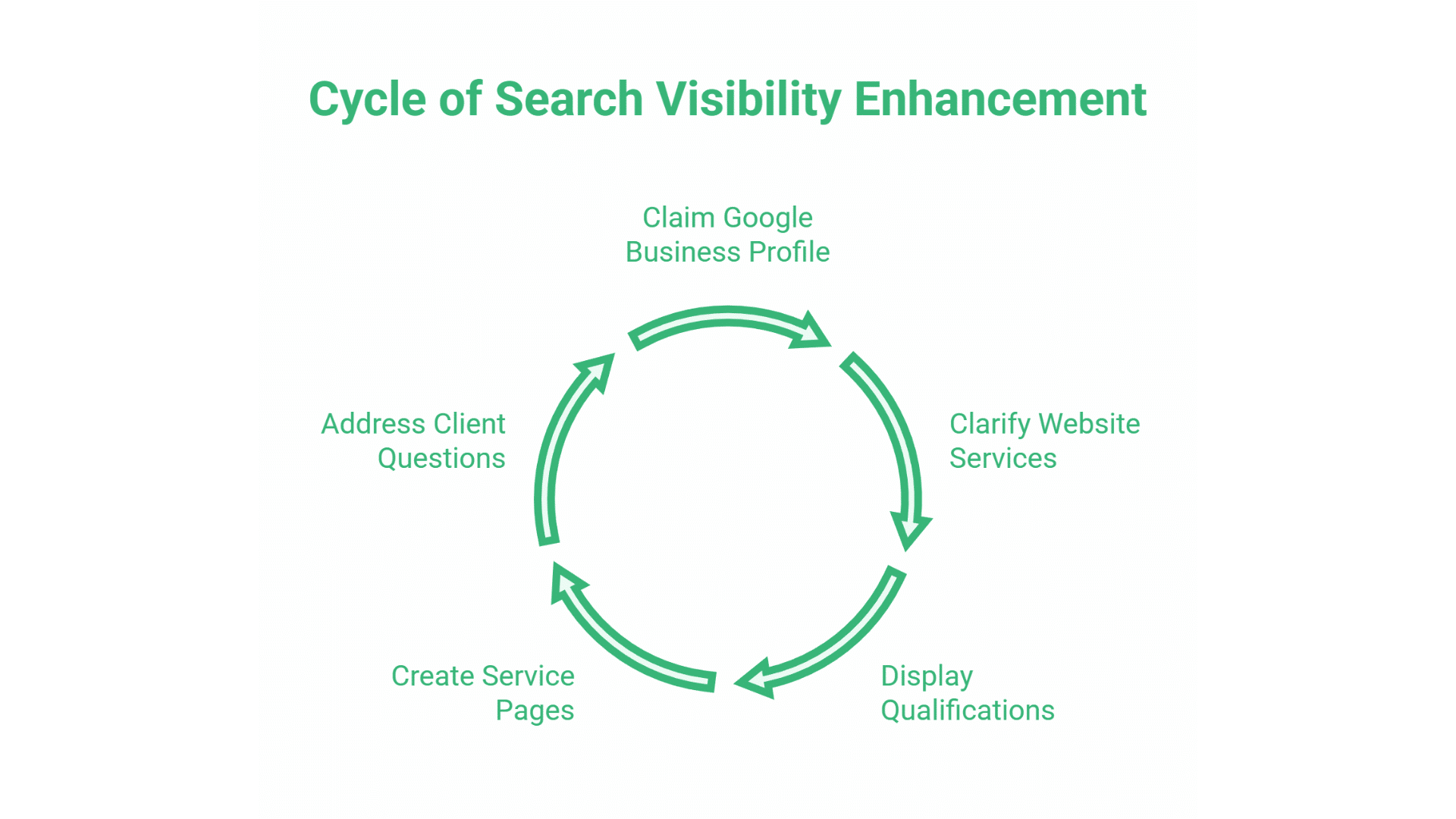
If you’re beginning to address search visibility:
- First: Claim and optimise your Google Business Profile, services, qualifications, professional photos.
- Second: Ensure your website clearly explains your services and who you help.
- Third: Display professional qualifications and regulatory compliance prominently.
- Fourth: Create pages for your main services with helpful, jargon-free content.
- Fifth: Develop content addressing common client questions and concerns.
These foundations build visibility that attracts quality client enquiries over time.
Connecting with Clients Who Value Your Expertise
The people searching for accountants today have real needs, businesses to run, tax obligations to meet, financial decisions to make. They’re looking for professionals they can trust with matters that significantly impact their lives and livelihoods.
When your online presence demonstrates your expertise, communicates your approach clearly, and makes it easy for potential clients to understand how you can help, you attract the clients who’ll value a genuine professional relationship.
If you’re ready to improve your accounting practice’s search visibility and attract more quality clients, ProfileTree’s team works with professional service firms across Northern Ireland, Ireland, and the UK. We understand both the technical requirements of effective SEO and the trust-building essential for professional services. Get in touch to discuss how we can help your practice grow through search.