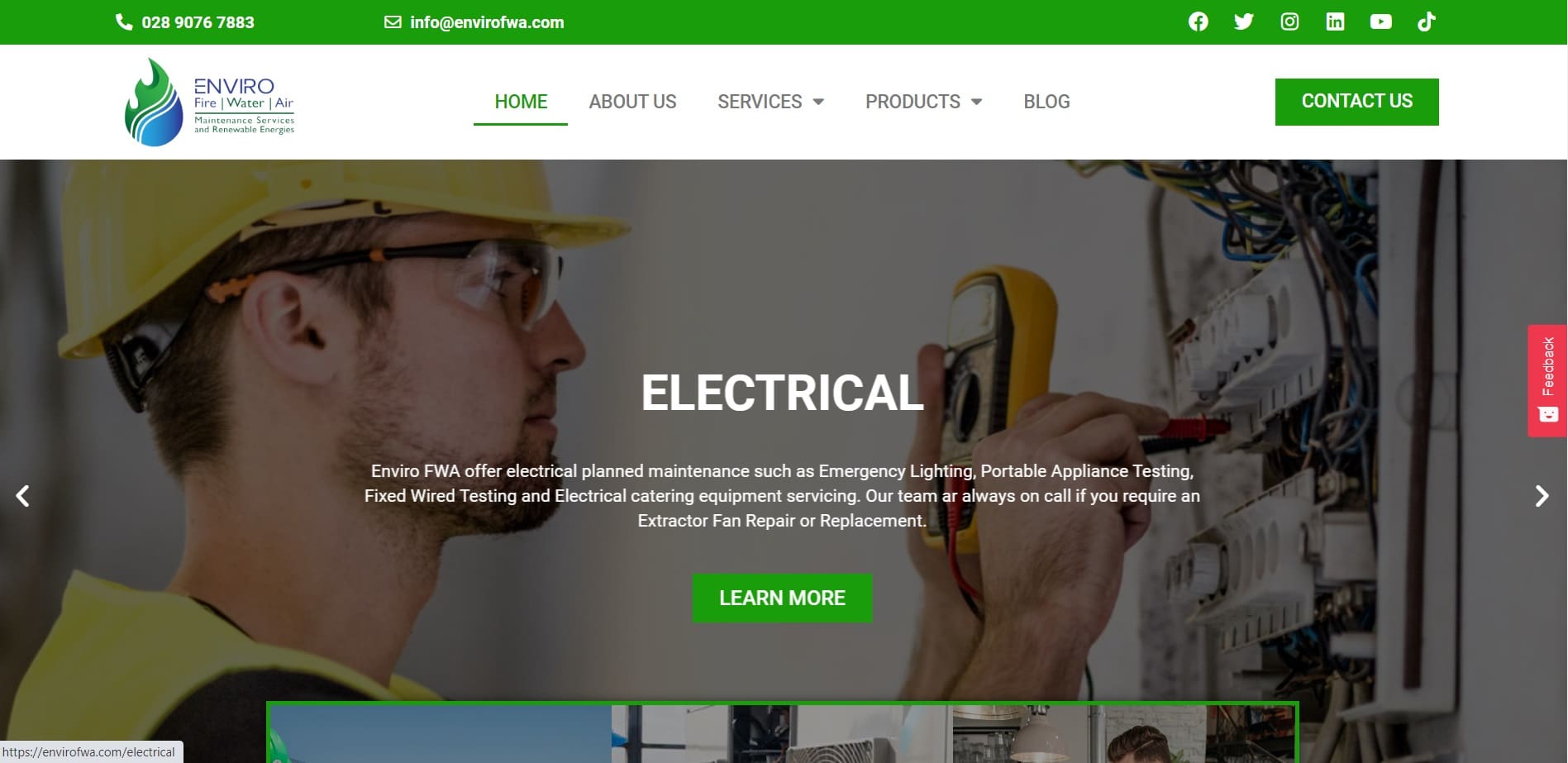
The Challenge Environmental Safety Businesses Face Online
Businesses operating in technical sectors such as fire protection, ventilation, and HVAC often have a credibility problem online. Their services are complex, purchase decisions are high-stakes, and prospects need reassurance before making contact. A slow, outdated website does not provide that reassurance.
At ProfileTree, the pattern we see with established technical service businesses is consistent: strong offline reputations supported by weak digital infrastructure. These businesses win contracts through referrals and repeat business, but the website is not contributing to growth. When a prospect lands on an outdated page with no clear call to action, slow load times, and no trust signals, the visit ends without contact.
Website conversion rate optimisation in this context is not simply about tweaking button colours or running split tests on headlines. It means rethinking the entire user journey, from the moment a prospect arrives on site to the point where they submit an enquiry form or pick up the phone.
About Enviro FWA: The Project
Enviro FWA is a long-established UK provider of fire, water, and air safety solutions. With more than 20 years of industry experience, the team offers specialist knowledge across ventilation systems, fire protection services, and HVAC installations. Their technical expertise is not in question, but their online presence was no longer reflecting it.
When Enviro FWA approached ProfileTree, their website was functional in the loosest sense: it existed, it loaded, and it described their services. But it was not working as a business tool. Bounce rates were high, the user journey was unclear, and the GTmetrix performance score sat at just 17 out of 100. They needed a complete rebuild, with conversion rate optimisation at its centre.

What We Did: The Approach
The rebuild was not a cosmetic exercise. Every decision, from site architecture to page layout to content structure, was made in service of one objective: increasing the rate at which visitors converted into enquiries.
UX Design and Conversion-Focused Layout
We started with the sitemap. The original structure was disorganised, making it difficult for visitors to find the right service within a reasonable number of clicks. A simplified, logical hierarchy replaced it, with service pages accessible within two clicks from the homepage.
Each page was redesigned with strategic CTA placement, improved service categorisation, and trust signals positioned where they would have the most impact. Accreditations, client testimonials, and recognised certification logos were placed near enquiry prompts rather than buried in the footer. The mobile experience was rebuilt from scratch, because a site that performs poorly on mobile cannot convert reliably regardless of how well the desktop version performs.
Technical Performance Improvements
A GTmetrix score of 17 is not just a poor number. It is a conversion barrier. Page speed directly affects both search rankings and user behaviour: visitors encountering slow pages leave before they engage, and search engines penalise sites that fail Core Web Vitals thresholds. Slow load times were costing Enviro FWA leads before the website conversion rate optimisation work could take effect.
Our development team addressed the underlying performance issues, optimising load times, resolving Core Web Vitals failures, and implementing the infrastructure needed to raise the score to 100 out of 100 with a 96% structure rating.
On-Page SEO and Indexability
Alongside the performance work, we ran a full SEO audit and optimised every key page. This included title tag and H1 corrections, descriptive metadata, image alt text, internal linking between service and blog pages, and schema markup for services and contact information.
The goal was qualified traffic: visitors searching for fire protection, ventilation, or HVAC services who were more likely to act once they reached a well-structured, credible site.
Blog Restructuring and CMS Training
The Enviro FWA blog was underutilised and structurally weak. We reorganised it around topic clusters linked to core service pages, added conversion-focused CTAs within each article, and improved metadata for better search discovery.
We also delivered CMS training so Enviro FWA could continue publishing content aligned with SEO and conversion rate optimisation best practice after launch, without needing to return to us for every update.
Results: Website Conversion Rate Optimisation
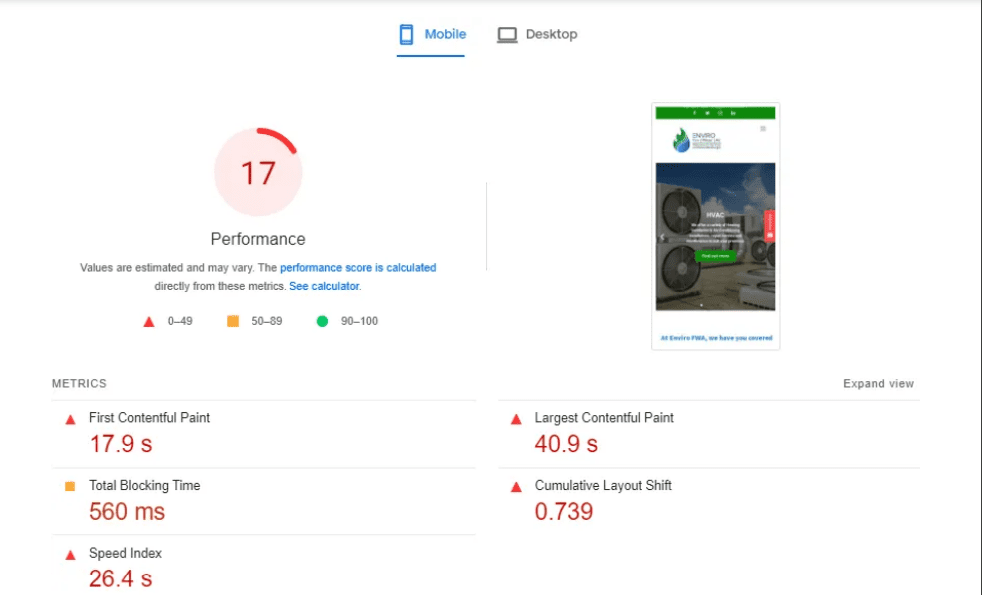
The performance improvement was the most immediately measurable outcome. The GTmetrix score rose from 17 to a 100% performance rating with a 96% structure score. Enviro FWA now has a website that loads quickly, passes Core Web Vitals checks, and presents a professional face to every visitor who arrives from search.
Beyond the technical numbers, the client has a platform built to convert. Simplified user journeys, strategic CTA placement, and clearly positioned trust signals work together to guide visitors towards contact. Enviro FWA described the finished site as accurately reflecting the level of service they provide, which is precisely what a conversion-optimised website should achieve.
How ProfileTree Approaches Website Conversion Rate Optimisation
For businesses in sectors like environmental safety, the website conversion rate optimisation challenge differs from retail or e-commerce. There is no basket, no impulse buy. The visitor is a facilities manager, a procurement officer, or a business owner evaluating a specialist service provider before committing to a significant contract.

That means trust signals carry more weight than they do on most other types of sites. Speed, clarity, and professional presentation are not optional: they are the baseline for being considered at all. Every element of the website must communicate competence before a visitor will make contact.
As Ciaran Connolly, founder of ProfileTree, explains: “With technical service businesses, the website has one job before anything else; to make the prospect feel confident enough to make contact. If the site is slow, unclear, or visually outdated, that confidence never forms.”
Our approach begins with the user journey rather than the visual design. We map how a prospect arrives, what questions they are likely to have at each stage, and where friction is preventing them from making contact. The website redesign follows that map.
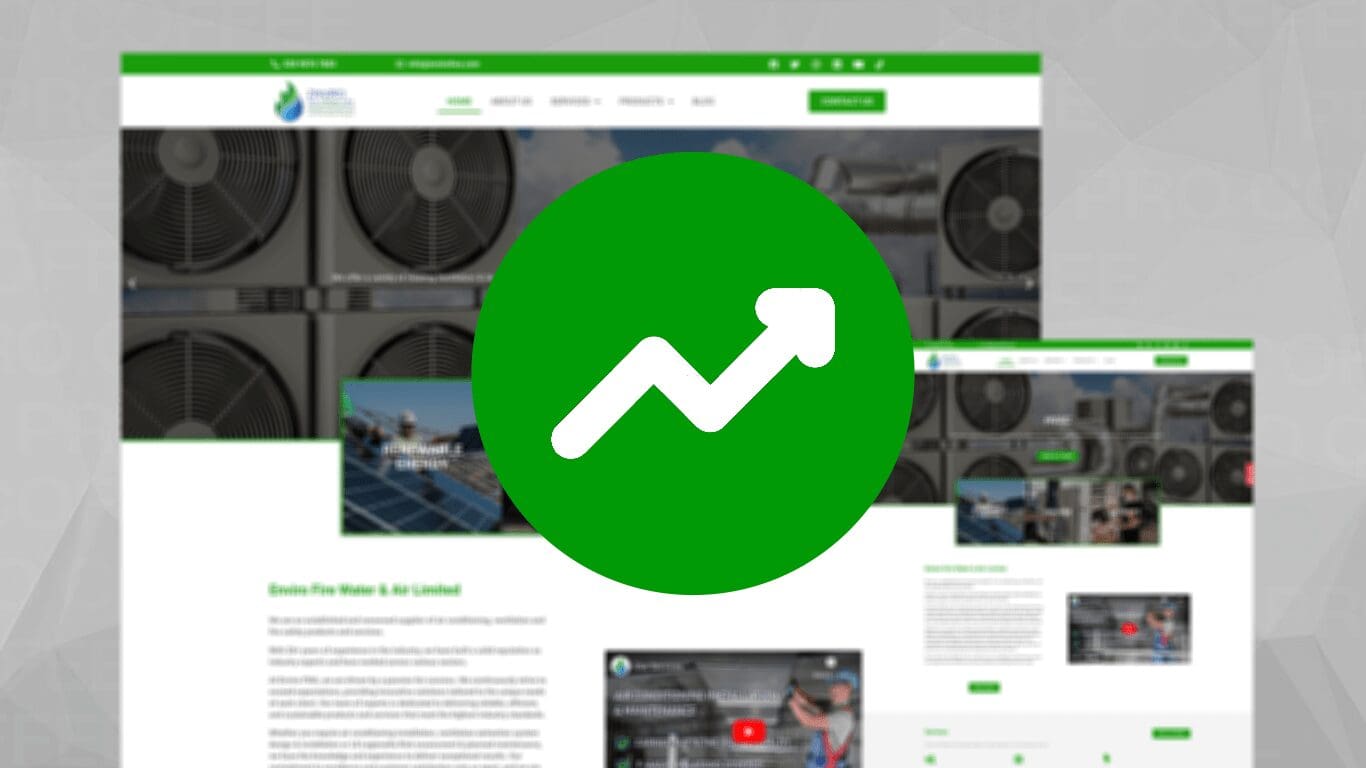
ProfileTree’s website design and conversion rate optimisation services cover businesses across Northern Ireland, Ireland, and the UK. If your website is not generating the enquiries your business is capable of, the conversion journey is usually where the problem starts.
FAQs About Website Conversion Rate Optimisation
How long does a website conversion rate optimisation project take?
The timeline depends on the scope. A full website rebuild with conversion rate optimisation as a core objective typically takes between eight and sixteen weeks from discovery to launch. Targeted work on an existing site, such as improving mobile performance or redesigning key landing pages, can be completed more quickly. ProfileTree works to agreed timelines and provides progress updates at each stage.
What results can I expect from website conversion rate optimisation?
Results depend on the starting point and the quality of traffic arriving at your site. A technically poor site, like Enviro FWA’s with a GTmetrix score of 17, has significant room for measurable improvement. A site that is already technically sound may see more incremental gains. ProfileTree focuses on changes directly tied to the conversion journey rather than surface-level adjustments.
Does website conversion rate optimisation work for B2B service businesses?
Yes, though the approach differs from B2C or e-commerce contexts. B2B prospects require more reassurance before making contact. Trust signals, clear service descriptions, and straightforward contact mechanisms matter more than promotional language. The Enviro FWA project is a direct example of conversion rate optimisation applied to a B2B technical service business.
What is a GTmetrix score and why does it matter for conversions?
GTmetrix measures website performance across speed, structure, and Core Web Vitals. A low score like 17 indicates serious technical problems that affect both search rankings and user experience. Improving that score is often one of the most direct routes to better conversion rates, particularly for businesses whose prospects arrive primarily through organic search.
What makes a good website for a fire safety or HVAC business?
A fire safety or HVAC website needs to demonstrate technical credibility while explaining services clearly to decision-makers who may not know the industry. Visible accreditations, straightforward contact mechanisms on every key page, and fast load times are non-negotiable. The trust threshold is higher than on most B2B sites because contracts are larger and compliance stakes are significant.
How does content contribute to website conversion rate optimisation?
Content and conversion are more closely linked than most businesses realise. A visitor who cannot quickly understand what a business does, who it serves, and why it is credible will leave without converting, regardless of how well the page is designed. For technical service businesses, content that speaks directly to the prospect’s situation is one of the most effective website conversion rate optimisation tools available, which is why the Enviro FWA project included a full review of page copy alongside the technical and design work.
Check Out More Case Studies
If you enjoyed this case study, check out more previous projects: Community Charity Marketing Project | Website Design for Membership Platform | Tourism Marketing for Crumlin Road Gaol.
You can also follow us on our socials for the latest news and articles: Facebook | Instagram | LinkedIn.