
Digital Literacy as a Human Right in the 21st Century
Table of Contents
Digital literacy is the ability to find, understand, evaluate, and use information through digital tools, from a smartphone to a workplace system. In the 21st century, it has shifted from a useful skill to a basic requirement for work, education, and civic life, which is why many bodies now treat access to it as a human right. The gap between those who have these skills and those who do not is known as the digital divide.
Technology now shapes how we communicate, learn, and work, so the ability to use the digital world has become a basic necessity. Yet a clear digital divide still separates those who have access to the tools and knowledge of the digital age from those who do not. That divide is not only a technology gap. It is a barrier to social, economic, and political participation.
As we move further into the 21st century, digital literacy is not a luxury or a nice-to-have skill. It sits closer to a fundamental right, much like access to education or healthcare. Equip people with the skills to access, understand, and use digital technologies, and you help them take part fully in society and shape their own futures.
“Digital skills used to be a bonus. Now they decide who can apply for a job, run a small business, or even book a GP appointment. Treating digital literacy as optional leaves real people behind.” Ciaran Connolly, Director of ProfileTree.
What Digital Literacy Means Today
Digital literacy is more than knowing how to send an email. It covers finding reliable information, judging whether a source is trustworthy, using everyday software and apps, protecting your own data, and communicating responsibly online. These skills now underpin most jobs and most public services.
Why Digital Literacy Matters
The reasons sit across four areas of life. Economically, digital skills help people find work, sell through online marketplaces, and take part in e-commerce. For education, they open access to online resources, learning platforms, and virtual classrooms. For civic life, they let people read information, join public debate, and hold leaders to account. And for personal development, they support learning, creative work, and staying connected.
International Recognition of Digital Rights
The international community has increasingly treated access to information and communication technologies as a rights issue. United Nations declarations and resolutions have stressed the need to close the digital divide and widen digital inclusion. The UN’s work on digital cooperation sets out that direction in more detail.
The Digital Divide: A Growing Challenge
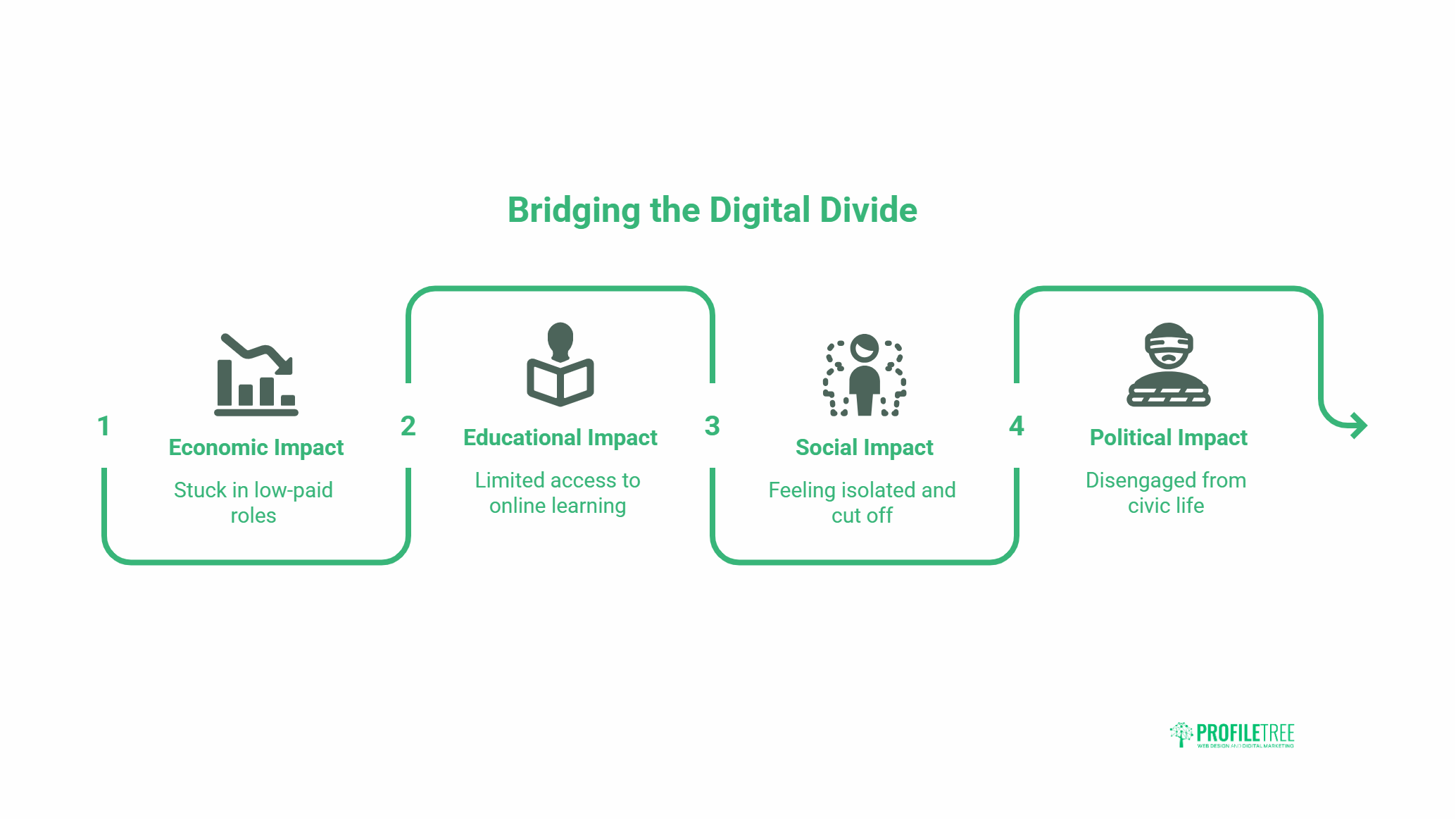
The digital divide is the gap between people who can access and use digital technologies and those who cannot, and it continues to widen. It is a social and economic problem, not only a technical one. People who cannot access or use digital tools are often left out of opportunities and limited in how fully they can take part in society.
The effects run deep. Economically, those without digital skills are often stuck in low-paid roles or shut out of the growing digital economy. In education, the divide can limit access to online learning and hold back results. Socially, people without access can feel isolated, cut off from family, friends, and online communities.
There are political effects too. Citizens increasingly rely on online platforms to find information, take part in debates, and engage with democratic processes. People who cannot use these tools can become disengaged from civic life. According to the UK regulator Ofcom’s media literacy research, gaps in digital confidence remain widest among older and lower-income groups.
Digital Literacy as a Human Right
Recognising digital literacy as a fundamental right helps address the divide and supports a fairer digital future. The case is simple: when basic participation in work, learning, and public life depends on digital access, lacking that access becomes a barrier to other rights people already hold.
Framing it this way also shapes policy. It supports arguments for wider access to technology, funded skills programmes, and inclusive public services, rather than treating digital exclusion as a personal failing.
Challenges and Barriers
Even with growing recognition, several barriers still block digital inclusion. They fall into two broad groups: practical access and social or cultural factors.
| Barrier type | Examples | Who it affects most |
|---|---|---|
| Cost of access | Price of devices and home internet | Low-income households |
| Infrastructure | Patchy or absent broadband | Rural and remote areas |
| Skills gap | Lack of confidence using devices and apps | Older adults, marginalised groups |
| Language | Content not available in a user’s language | Non-native speakers |
| Accessibility | Sites and apps not built for assistive tech | People with disabilities |
Accessibility Issues
The cost of devices and connectivity is often the first barrier, especially in low-income communities. Patchy broadband in rural and remote areas limits access further. On top of that, many people, particularly older adults, simply have not had the chance to build the skills. Language and disability add more friction: content is not always available in a user’s language, and sites or apps that ignore accessibility standards lock out people who rely on assistive technology. This last point is why accessible design matters from the start, and it sits within our website design work.
Social and Cultural Barriers
Beyond access, attitudes play a part. The divide itself can harden existing inequalities. Some people feel embarrassed about their lack of digital skills, which pushes them further to the margins. Cultural norms can also discourage technology use among certain groups. Closing these gaps takes a mix of government policy, public and private partnerships, and community programmes built around local needs.
The Role of Education
Education is the main route to closing the divide. Building digital skills into learning at every level, from early years through to higher education and adult learning, is how a society becomes genuinely digitally capable. Early exposure to basic digital concepts lays a foundation, classroom tools prepare students for digital work, and universities can teach the advanced skills employers need. None of this works without trained teachers, so professional development in digital teaching methods is part of the picture.
Ethical Considerations
Wider digital skills bring real benefits, but they raise questions worth handling carefully. Privacy and data protection matter, and people need to understand how their information is used. Online security awareness protects against everyday threats. Responsible behaviour online, sometimes called digital citizenship, keeps shared spaces usable. And there is the risk of bias in algorithms, which can carry discrimination into automated decisions if left unchecked. Handling these well makes digital inclusion fairer, not just wider.
Case Studies: Bridging the Digital Divide
Several programmes show what works. India’s national digital programme has focused on affordable access, skills training, and online public services at scale. The One Laptop per Child initiative put low-cost laptops and educational software into children’s hands in developing countries. Khan Academy made high-quality lessons free to anyone with an internet connection. Each shows a different lever: access, hardware, and open content.
What Digital Literacy Means for Your Business
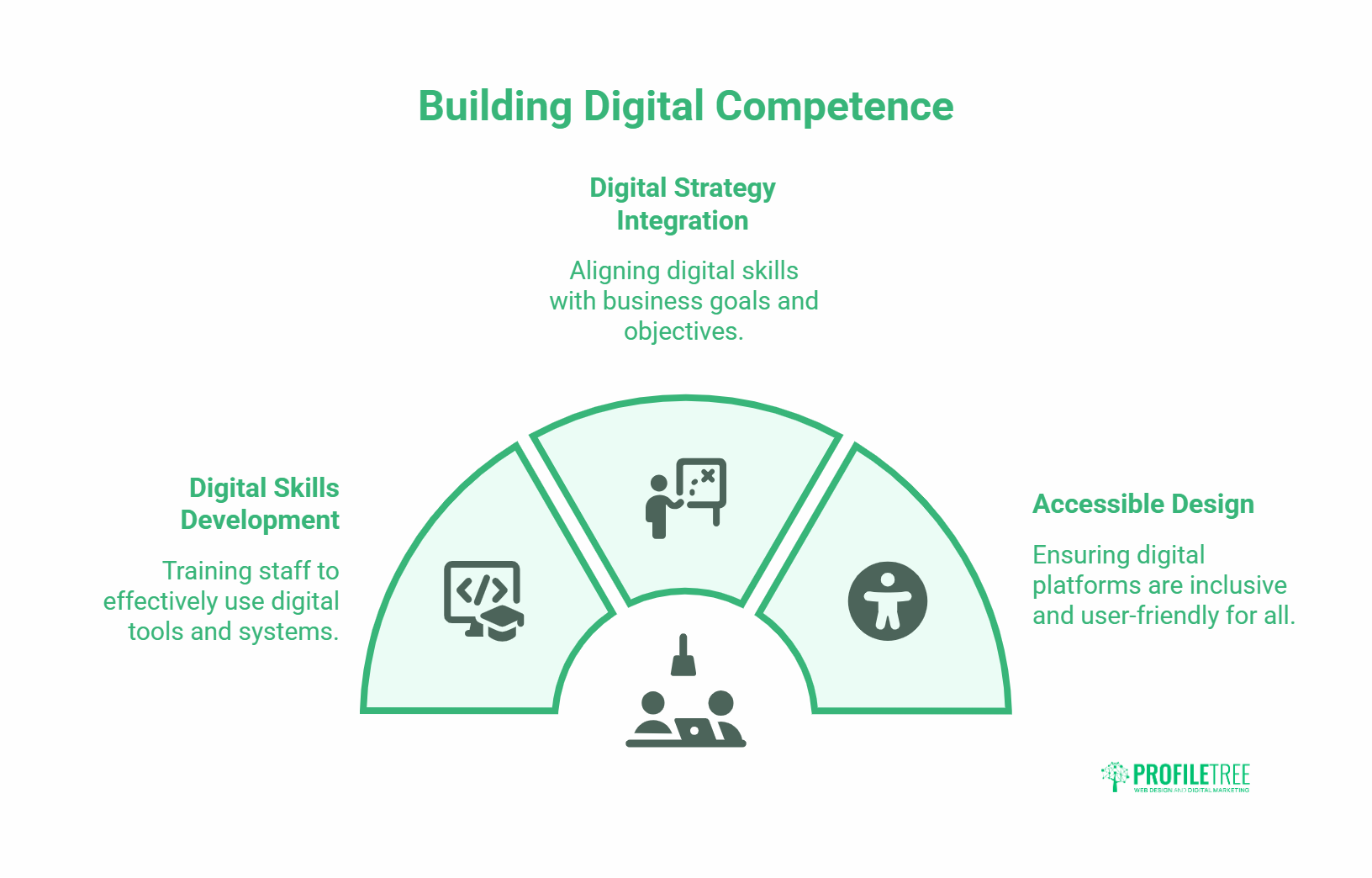
Digital literacy is not only a social issue. It shapes how well a team can use the tools a business already pays for. Staff who are confident with digital systems work faster, make fewer errors, and adopt new software with less friction. Gaps in those skills quietly cost time and money.
For most SMEs in Northern Ireland and the UK, the practical fix is structured training rather than hoping people pick it up. ProfileTree’s digital training helps teams build everyday digital skills and confidence, and our digital strategy work ties those skills to clear business goals. If your customers include people with access needs, accessible design is part of the same commitment to inclusion.
The Future of Digital Literacy
As technology keeps moving, digital skills will matter more, not less. The priorities stay consistent: invest in education at every level, work towards affordable access to internet and devices, design inclusive digital spaces, support responsible use, and keep up with how technology changes daily life. Progress on each one widens who gets to benefit from the digital age.
A Fairer Digital Future
Digital literacy has become a necessity rather than a luxury. Treating it as a fundamental right supports a more equitable and inclusive future. By tackling the barriers to inclusion, investing in education, and backing skills programmes, we help people take part fully in the information society. The goal is straightforward: a world where everyone, whatever their background, has a fair chance to take part in the digital age.
Frequently Asked Questions
What is digital literacy?
Digital literacy is the ability to find, understand, evaluate, and use information through digital tools and devices. It covers everyday tasks like using apps and software, judging whether online sources are reliable, and protecting your own data.
Why is digital literacy important in the 21st century?
Most work, education, and public services now depend on digital access, so people without these skills are left out of opportunities. Strong digital literacy supports jobs, learning, and civic participation.
What is the digital divide?
The digital divide is the gap between people who can access and use digital technologies and those who cannot. It reflects differences in cost, infrastructure, skills, and accessibility, and it tends to deepen existing social and economic inequalities.
How can businesses improve digital literacy in their teams?
Structured training is the most reliable route, rather than expecting staff to learn on the job. Focus on the everyday tools the team already uses, then build toward the skills that match your business goals.
Is digital literacy recognised as a human right?
It is increasingly treated as one. United Nations declarations and resolutions stress closing the digital divide and widening digital inclusion, on the basis that participation in modern life now depends on digital access.