Tourism Video Marketing for a Belfast Heritage Attraction
Updated on: Updated by:
Tourism video marketing for a Belfast heritage attraction gave the site a flagship promotional film, short edits for each social platform and a bank of professional photography from one planned production. ProfileTree produced the campaign to help visitors in Northern Ireland, the Republic of Ireland and further afield picture a visit before they book.
The attraction is Crumlin Road Gaol in north Belfast, a former Victorian prison that now runs guided tours, live events and an on-site restaurant. ProfileTree is a Belfast web design and digital marketing agency, founded in 2011 and based at the McSweeney Centre. The project was delivered by our video production Belfast team. This case study shows how a single, well-planned shoot can support visitor engagement, ticket sales and brand identity across the attraction’s digital and social channels.

Updated on: Updated by:
ClientCrumlin Road Gaol Ltd
Website urlhttps://www.crumlinroadgaol.com/
Categories
Our Approach
We began with a detailed consultation between our digital strategy team and the gaol’s management. The aim was a tourism video campaign that showed the site’s character to a much wider audience, with every shot planned around what would persuade a visitor to book.
The production covered the full range of what the site offers. Drone footage captured the surrounding Belfast cityscape and the nearby Peace Walls, and filming took place across both the Loyalist and Republican wings to represent the site’s full historical scope. Close-up shots picked out heritage features, artefacts and architectural details, while footage of live events, guided tours and visitors gave a real sense of the atmosphere. We also filmed Cuffs Bar and Grill, the on-site restaurant, so the campaign could promote the complete visit.
To match the atmosphere of the location, our team sourced fully licensed professional audio. Sound design played a large part in conveying the site’s mix of solemn history and modern cultural energy. Alongside the video, our photographers produced a bank of high-resolution images for the gaol’s website, print materials and social channels.
What We Delivered
The campaign was built to work as a commercial tool for the attraction, with bookings and online visibility guiding every decision from shot selection to distribution format. The content plan covered four outputs from the same production:
- A flagship promotional video was produced for the homepage and dedicated landing pages.
- Short-form clips were edited separately for Facebook, Instagram, TikTok and YouTube, each in the format that platform favours.
- Short edits were supplied for the attraction’s own advertising aimed at visitors in Northern Ireland, the Republic of Ireland and international markets.
- Video titles, descriptions and metadata were written to support search visibility for tourism-related queries.
Our approach put storytelling first. Each sequence guides viewers through a visit to the gaol, placing them in the position of a guest so they feel the experience before they decide to book.
Results
The project left the attraction with a library of content it can use across every channel it runs. The flagship promotional video was placed on the website, on social media and in the attraction’s own promotion, and platform-specific edits were produced for Facebook, Instagram, TikTok and YouTube.
The photography gave the attraction a complete bank of professional images for its website, print materials and social channels, which keeps its visual branding consistent wherever a visitor meets it. Every piece of content was prepared with written metadata, so the videos support search visibility for tourism-related queries as well as social reach.

What Tourism Businesses in Northern Ireland Get Wrong About Video
The tourism businesses we work with most often already understand that video matters. The mistake they make is treating it as a single deliverable when it works far better as a content system.
A one-off promotional video filmed at a flagship event will get used once, generate a spike of interest and then sit on YouTube gathering modest views. A properly planned tourism video campaign produces content for every stage of the visitor’s decision. Social media content builds awareness, search content helps visitors discover the attraction, and website content turns that interest into bookings.
The second problem is platform mismatch. Video content that works on a website does not work natively on TikTok, and a sixty-second promotional piece with polished narration and a full score suits a homepage far better than a social feed. On Instagram Reels, the same piece will be scrolled past in seconds, so separate short-form edits decide whether the content earns back its production cost.
“YouTube is a search engine with video attached,” says Ciaran Connolly, founder of ProfileTree. “Title and describe each video the way a visitor would search, say what the attraction is in the description, and it keeps working for years. ProfileTree runs its own channels from Belfast on that basis, and we approach every tourism client’s video marketing the same way.”
Why Professional Video Production Matters for an Attraction
Smartphone footage is fine for behind-the-scenes social content. It falls short for a homepage hero video, an advertising placement or content that will represent an attraction to international visitors.
Professional video production brings consistent colour grading, licensed audio, drone footage flown within Civil Aviation Authority rules, and post-production that meets the technical specifications of each platform. It also means the footage can be used across several formats from the start, without a reshoot when it turns out not to crop correctly for Instagram. Our guide on how to produce and edit video for tourism businesses covers the production process in more detail.
The cost of a professionally produced tourism video campaign varies by scope. The figure that matters most to an attraction is the cost of each booking the video helps to win, which is why we agree on how results will be measured before filming begins.
Short Promotional Edits for Tourism
A short promotional edit is a 15- to 60-second piece made for places where attention is limited, such as social feeds, YouTube and any advertising the business runs itself. With so little time to hold a viewer, every shot has to earn its place. An effective short edit for a tourism business has four parts.
- The opening three seconds establish something visually distinctive about the place.
- The piece follows a clear emotional thread and avoids reading as a list of features.
- It closes with a single call to action.
- It is produced in versions that match each platform’s aspect ratio and length requirements.
Tourism Video Ideas for Northern Ireland Attractions
Several content formats consistently perform well for tourism businesses in Northern Ireland and across Ireland. Most attractions can plan two or three of them into the same shoot as their main film.
- Behind-the-scenes content for social media shows the team and the daily operation.
- Seasonal campaigns tie the attraction to events such as Christmas markets, summer walking seasons and Halloween festivals.
- Drone tours show the coast, the glens or a city skyline from the air.
- Heritage and story-led pieces suit historic sites like the gaol.
- Food and drink content works for restaurants, distilleries and food tourism experiences.
- Event highlight reels capture concerts, exhibitions and corporate events.
How ProfileTree Approaches Tourism Video for Northern Ireland Businesses
ProfileTree has worked on video production and digital marketing for tourism and hospitality businesses across Northern Ireland and Ireland. Every tourism video marketing project starts with a content planning session about what the business needs the video to do commercially, and the look of the video follows from that.
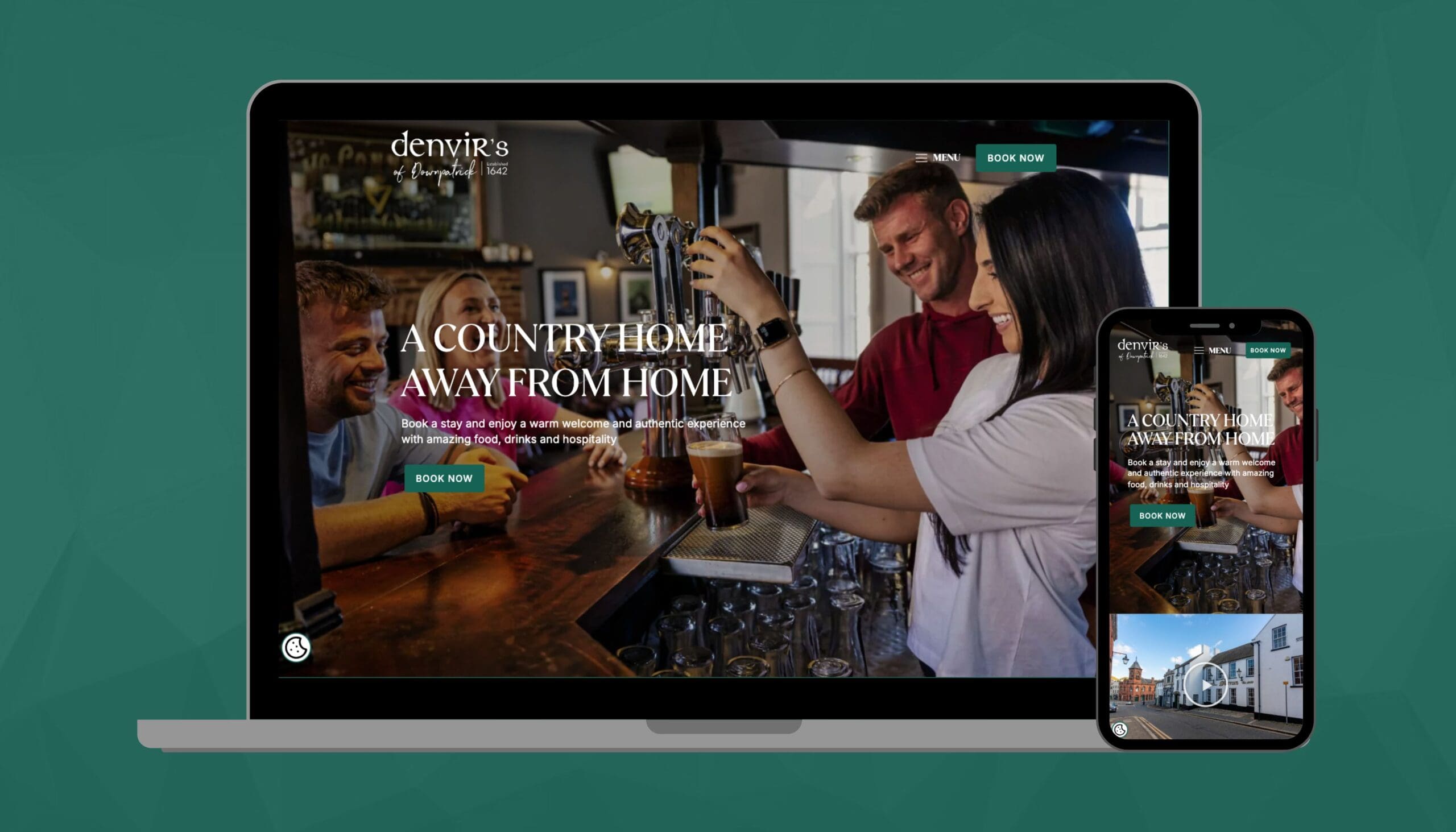
The production process is designed to get the most from a single shoot. We plan for several formats and lengths from the outset, so the same footage works on the website, on social channels, in the client’s own advertising and in any press or PR use. Our work for a historic coaching inn in Downpatrick followed the same approach for a hospitality business.
For tourism businesses considering video for the first time, the most useful starting point is usually one flagship video paired with a set of shorter social edits. For businesses that already have video, a content audit often shows that the footage exists, but the platform-specific versions were never produced.
Plan Your Attraction’s Video Campaign
If your attraction, hotel or tourism business wants video that brings in bookings, our team can plan a shoot that produces a flagship film, social edits and photography together. Speak to our video production team in Belfast about what your next season needs.
FAQs About Tourism Video Marketing
How much does tourism video production cost for a Northern Ireland business?
ProfileTree’s video production starts from £1,200 plus VAT, and each tourism project is quoted on request. The final cost depends on the length of the shoot, the number of locations, whether drone footage is needed and how many finished edits the business wants.
What should a tourism video include to increase bookings?
A tourism video that drives bookings combines a clear sense of place with a visible human experience. Viewers need to see what a visit feels like, so real people in the setting and a specific reason to come matter more than polished views on a sunny day. A strong narrative, a few distinctive visual moments and a clear call to action at the end all help turn interest into bookings.
How long should a tourism video be?
The right length depends on where the video will appear. A homepage hero video works well at 90 seconds to three minutes, while social media content performs best under 60 seconds. Short promotional placements suit 15 to 30 seconds. YouTube allows longer content, particularly for heritage and cultural subjects where viewers arrive with real interest, so a well-planned campaign produces several versions of the same core content.
Can ProfileTree produce drone footage for Northern Ireland tourism businesses?
Yes, drone footage is a standard part of our tourism video production. We plan drone shots during pre-production, including any location permissions or airspace restrictions, and they suit coastal locations, historic sites and properties in scenic settings particularly well.
Do you work with tourism businesses outside Belfast?
Yes, ProfileTree has worked with tourism and hospitality businesses across Northern Ireland, including coastal locations, rural attractions and towns in the north and north-west. We also take on projects in the Republic of Ireland and across the UK, and businesses outside Northern Ireland can read more about our video marketing services.
What is the difference between a tourism video and a tourism commercial?
A tourism video is a longer piece made to inform and inspire, while a tourism commercial is a short piece made for placements where attention is limited. The longer video usually sits on a website, on YouTube or in a PR campaign. Both are often produced from the same shoot, with the commercial cut down from the longer film instead of being filmed separately.