Table of Contents
The Client
TCB Group is an international logistics and freight company with a long track record of delivering supply chain and transportation services across road, air, and sea. They operate from three locations — Belfast, Dublin, and Singapore — and handle freight forwarding, consolidation, consultancy, and warehousing for a diverse client base that includes small businesses and large corporations.
Their expertise in multi-modal logistics, combined with their global footprint, positioned them as a trusted partner for businesses moving goods across borders. What they needed was a website that communicated that authority clearly and consistently to every visitor, regardless of which office or region brought them to the site.
The Objectives
Our logistics website design strategy was built around three core objectives:
- User-friendly design to support a global audience, with intuitive navigation and fast access to key services regardless of device or location.
- Consistent branding to reinforce TCB Group’s identity across all three office locations and service lines.
- SEO optimisation to ensure the site ranked strongly for logistics-related search terms without cannibalising existing pages.
With those aims agreed, we began building a site that was functional, authoritative, and built to grow.
Connecting Global Offices Through Logistics Website Design
TCB Group’s geographic spread created a real design challenge. Clients in Belfast, Dublin, and Singapore needed to reach the right information quickly, without confusion over which office handled which services or which contact details applied to them. A single homepage with a generic contact form was not sufficient.
We built dedicated location pages for each office, giving each hub a clear online identity while maintaining a unified brand experience across the site. Visitors could navigate directly to their relevant office, find the correct contact details, and understand the services available in their region — all within a consistent visual framework.
Dedicated Web Pages
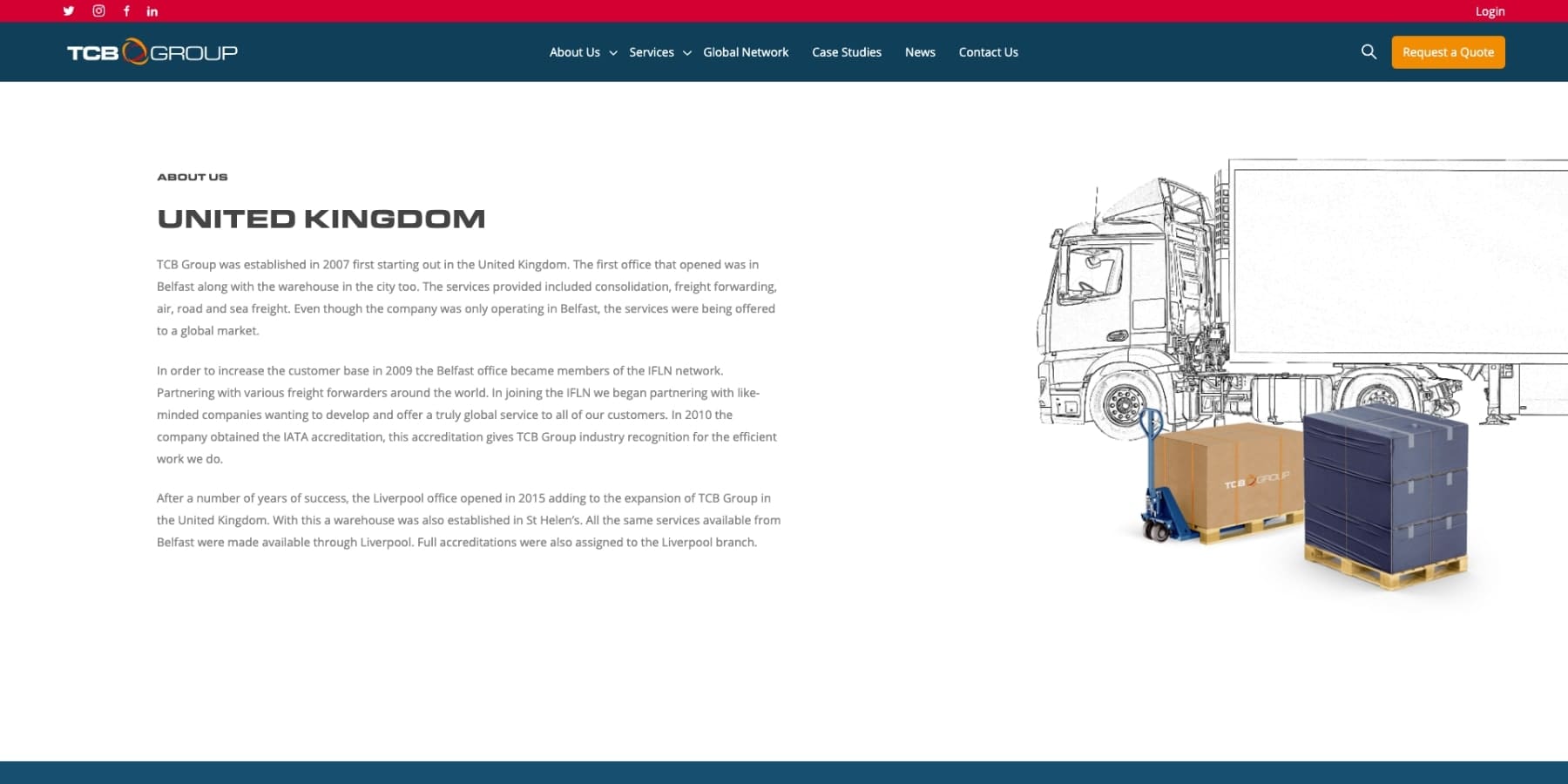
Each office received its own page within the site architecture. The Belfast headquarters, the Dublin office, and the Singapore location each had a distinct page covering local contacts, services available, and regional context. This gave TCB Group a clear signal to search engines about their geographic coverage while making navigation straightforward for international clients.
The page structure used consistent templates across all three locations so that the user experience remained familiar, regardless of which region a visitor was looking for.
Visualised Map
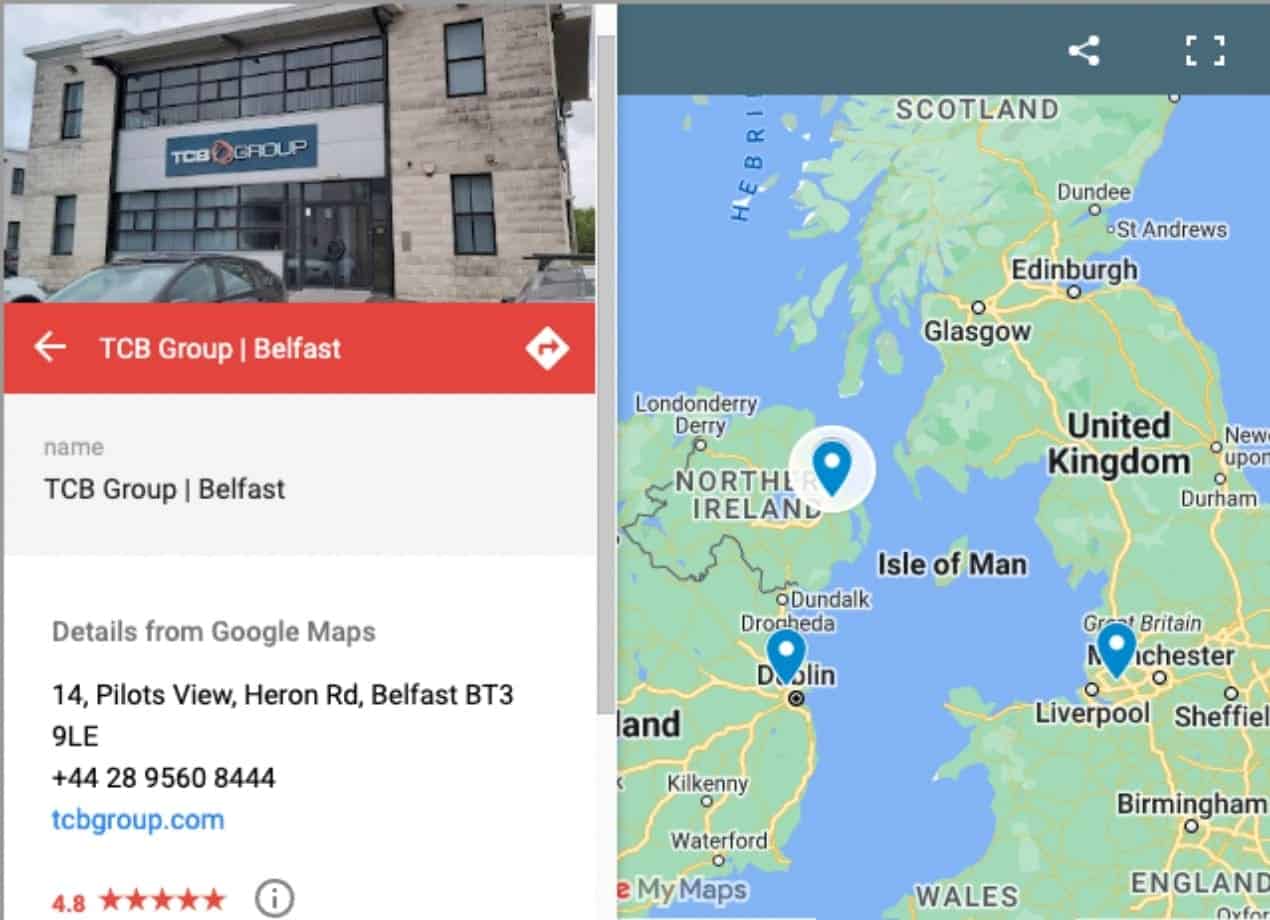
We embedded an interactive map feature that pinned each office location and visualised TCB Group’s global network. For logistics clients, geography matters: knowing where a freight partner operates, and how central they are to a particular shipping route, is part of the buying decision.
The map removed the need for visitors to piece that picture together from text alone. They could see at a glance that TCB Group covered the UK, Ireland, and South-East Asia, and understand what that meant for their own logistics requirements.
Case Studies
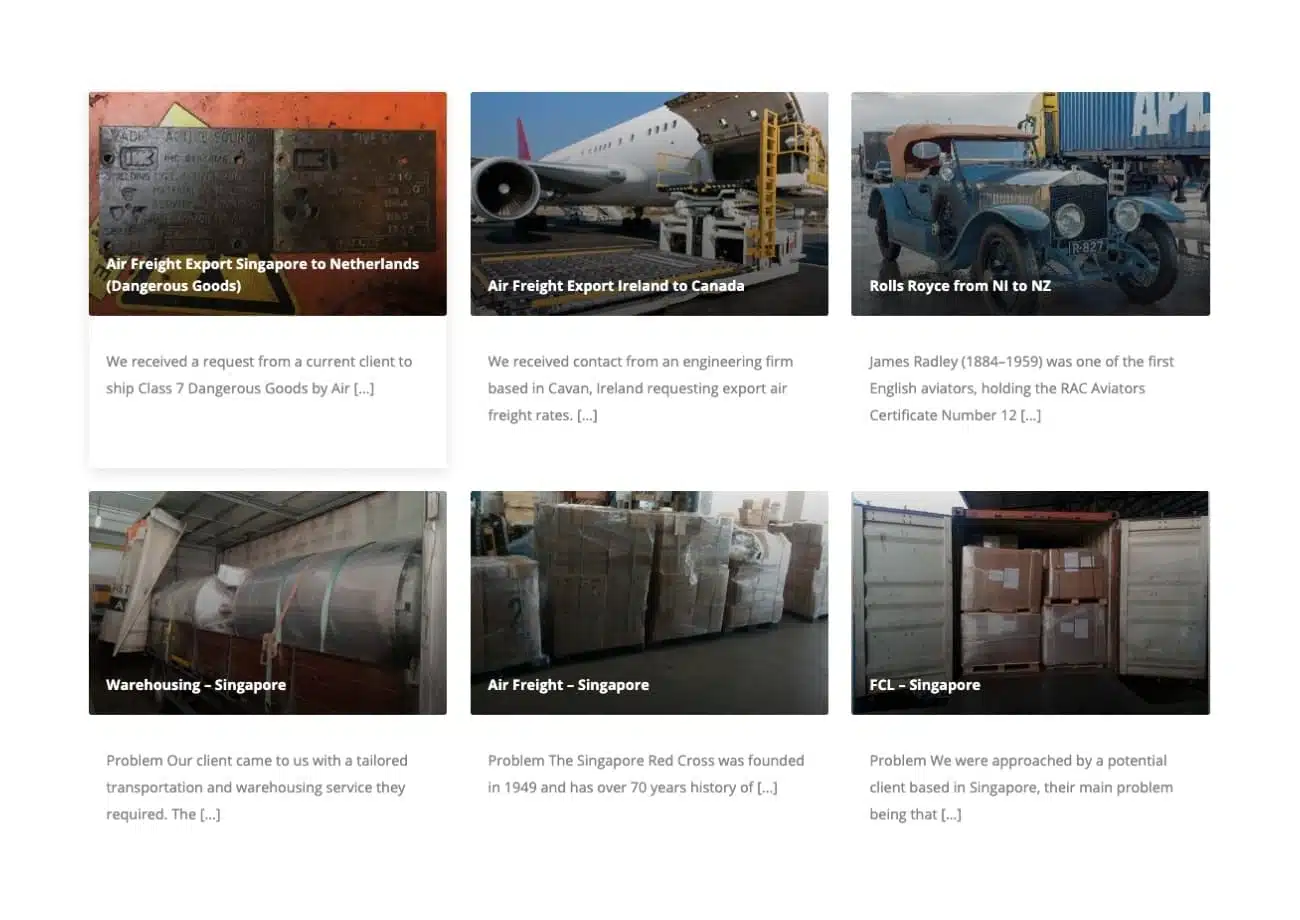
We added a dedicated case studies section that gave TCB Group a platform to demonstrate their expertise with real examples from their operational history. For a company working in complex, high-value logistics, credibility matters as much as capability.
The case studies served two purposes: they gave prospective clients evidence of TCB Group’s track record, and they provided an ongoing channel for fresh content that supported SEO performance. Each new case study added keyword-relevant material to the site and gave visitors a reason to spend more time exploring it.
Ensuring Consistent TCB Group Branding
One of the risks with a multi-location business is that the brand becomes fragmented. Different offices, different materials, different interpretations of the same identity. The TCB Group website needed to hold everything together under one visual language.
Consistent Colour Theme
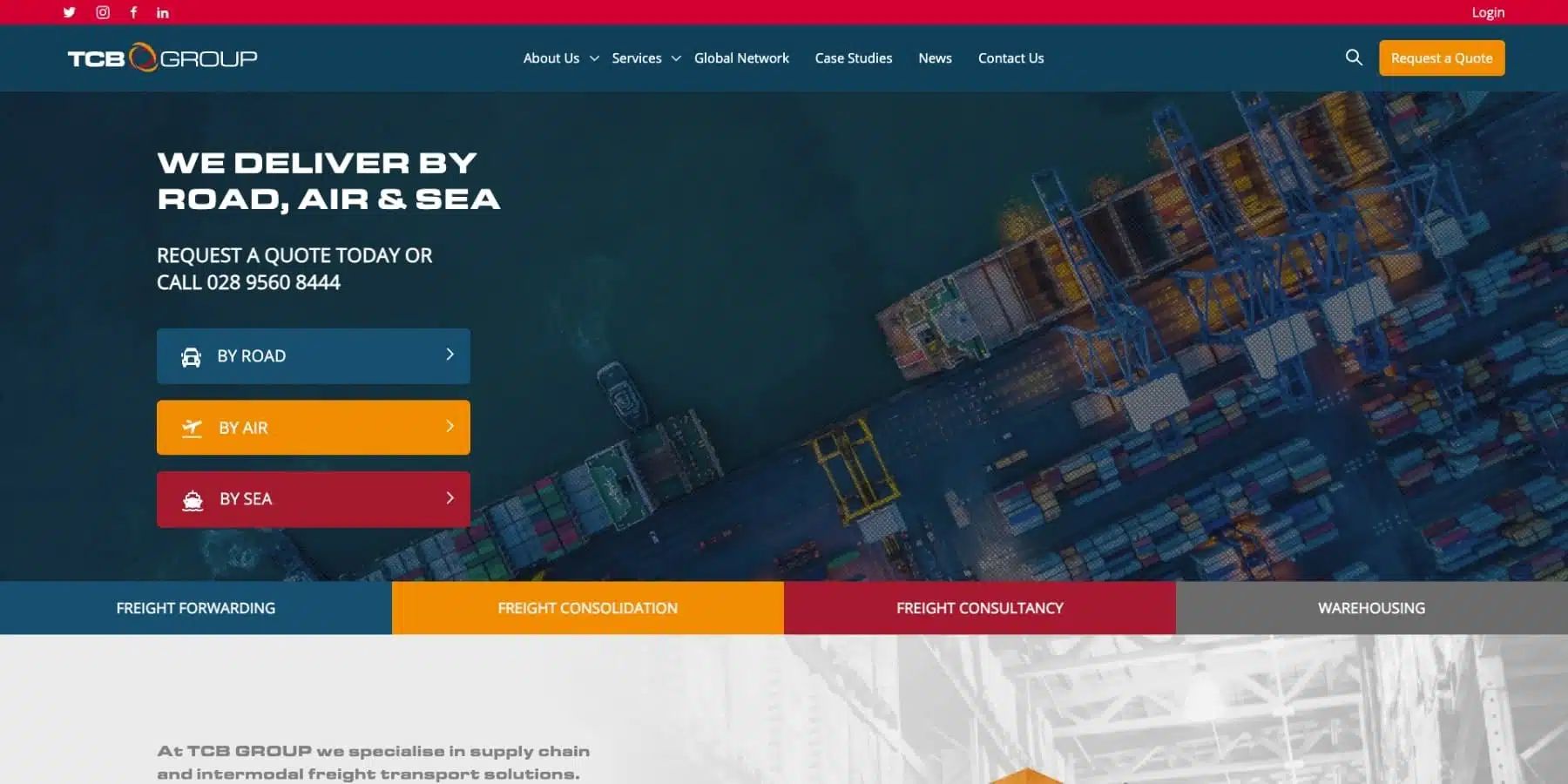
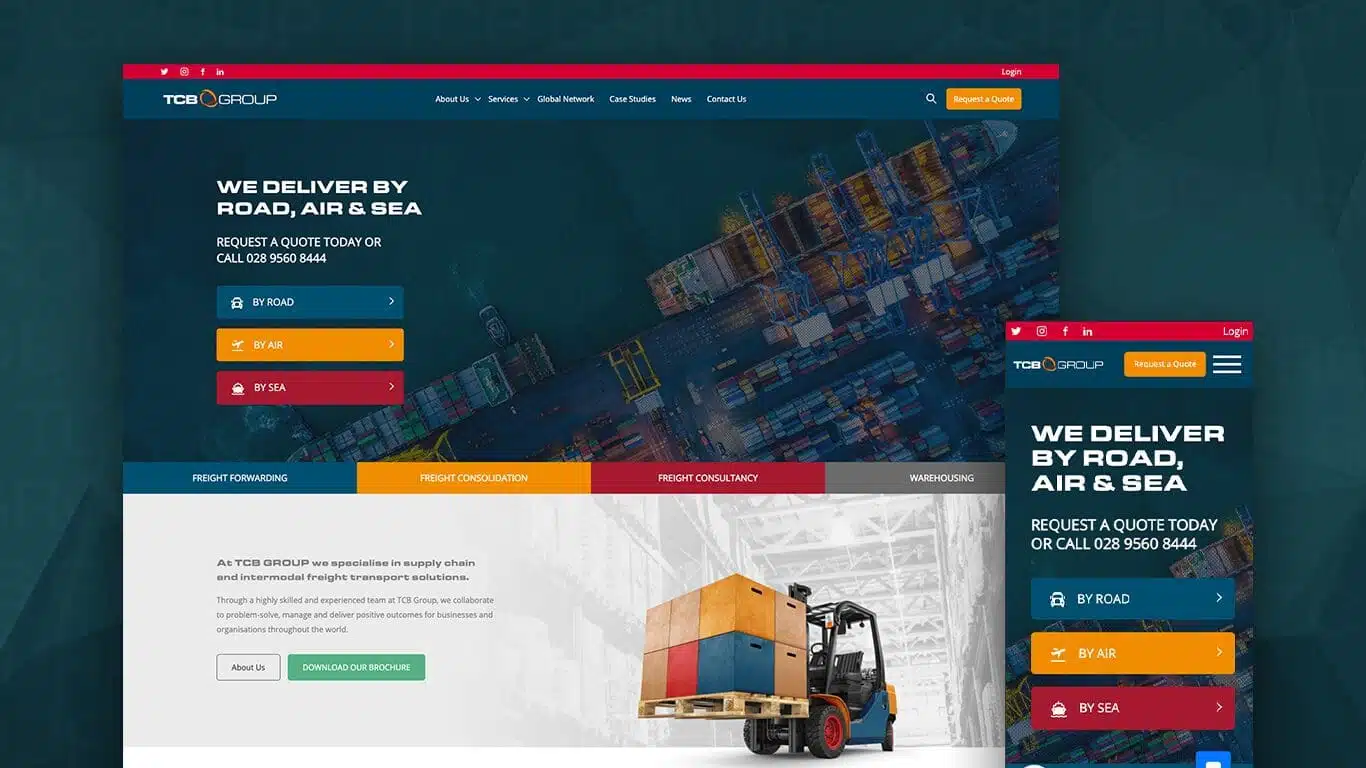
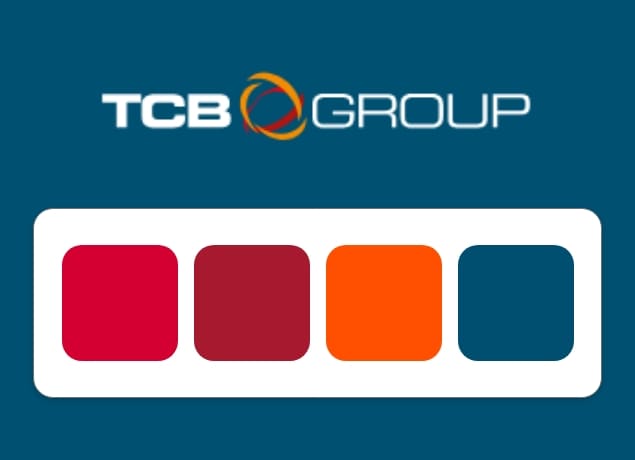
TCB Group’s brand colours are red, yellow, and blue. We carried that palette consistently across every page, using it to define navigation elements, call-to-action buttons, section dividers, and accent details. The result was a site that felt cohesive whether a visitor landed on the Belfast page, the Singapore page, or a freight services overview.
Colour consistency also makes navigation instinctive. When the same visual language appears throughout, users develop a mental model of where things are and how to get there — which reduces friction and keeps visitors on the site longer.
Branded Graphics
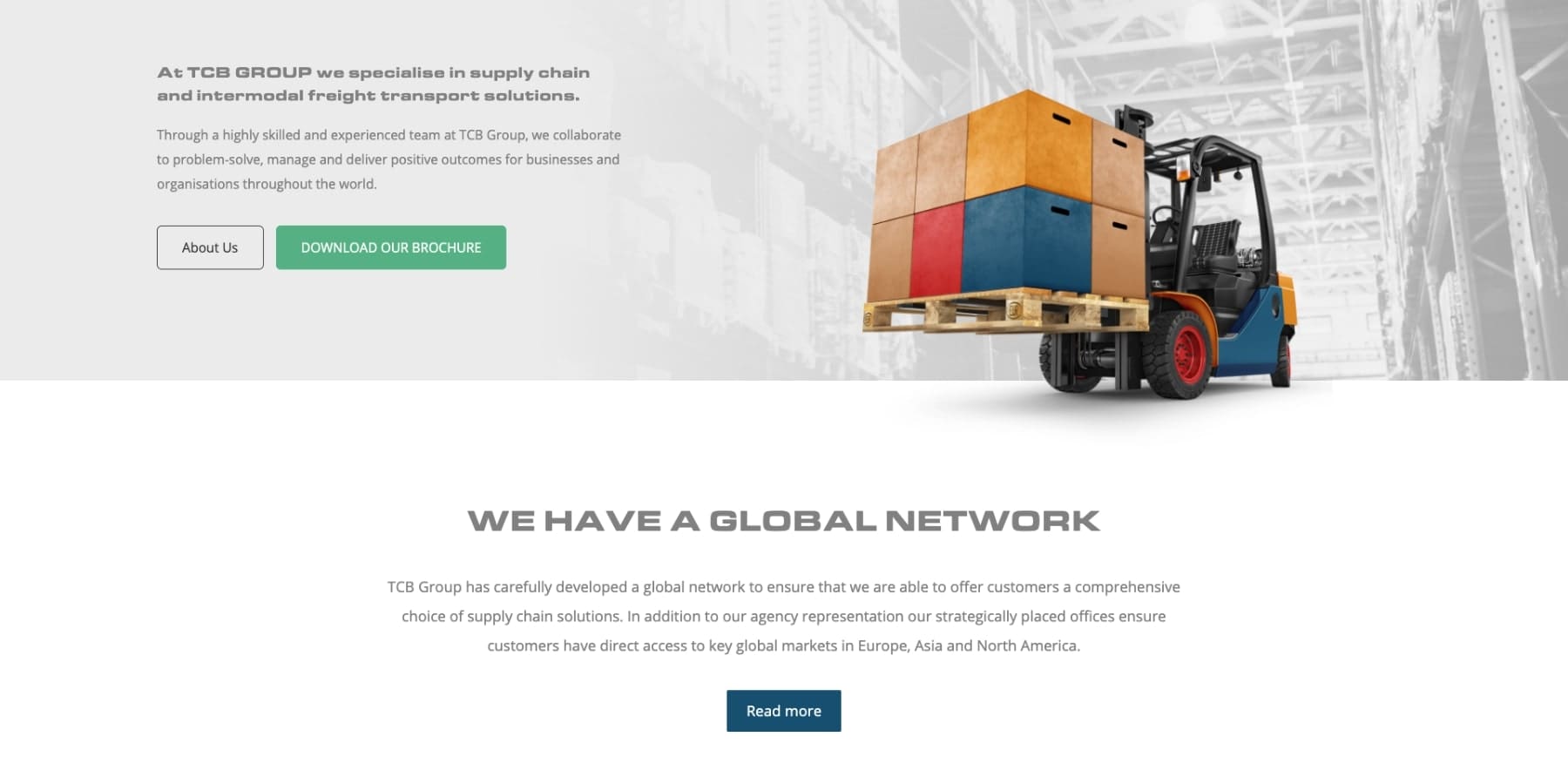
Our design team created a full set of custom branded graphics for the TCB Group site. These visualised the transport methods they offered — road, air, and sea — in a way that was immediately recognisable and on-brand. Rather than relying on stock imagery, which can make logistics sites look interchangeable, the bespoke graphics reinforced TCB Group’s professional identity and helped the site stand out visually from competitors.
The graphics also served a practical purpose: they helped site visitors quickly identify which freight service applied to their shipment, reducing the cognitive load involved in navigating a complex service offering.
SEO-Optimised for Visibility
Building a well-designed logistics website is only half the task. If the right people cannot find it in search results, the investment in design and development delivers far less return. We embedded SEO practices into the build from the start rather than treating them as an afterthought.
Fast Loading Times
We optimised images, code, and server configuration to reduce load times across the site. Page speed is a confirmed Google ranking factor, but it also has a direct impact on user behaviour: slow pages lose visitors before they read a single word. For a logistics company whose clients may be accessing the site on mobile while travelling, performance was non-negotiable.
Quality Backlinks
We worked with TCB Group to build quality backlinks from relevant sources within the logistics and freight sector. Backlinks from authoritative, topically relevant sites signal to search engines that a site is a credible source of information within its field. This supported TCB Group’s broader domain authority and helped their service pages rank more strongly over time.
Keyword Integration
After thorough research into how freight and logistics clients actually search, we integrated relevant keywords throughout the site’s content, headings, metadata, and URL structure. The case studies section was particularly valuable here: each study could be optimised for specific service terms, adding depth to the site’s keyword coverage without forcing artificial phrasing into the main service pages.
Massive thanks to the team at ProfileTree for all their hardwork. Nothing was ever any trouble for them and we are absolutely delighted with the final product they delivered to TCB Group. On behalf of the TCB Group team big thanks to ProfileTree for everything. Absolute pleasure to work with and I couldn’t recommend them highly enough.
Joel Woods (TCB Group)
The Result
The rebuilt TCB Group website gave the company a digital presence that matched their operational scale. Organic traffic to the site increased, engagement rates improved, and client feedback on the new site was consistently positive. The combination of clear navigation, professional branding, and search-optimised content meant TCB Group was better positioned to compete for logistics clients searching online.
For ProfileTree, the project reinforced the value of treating logistics website design as a strategic exercise rather than a visual one. The choices that made the biggest difference — dedicated location pages, custom graphics, integrated case studies, and performance optimisation — were all driven by how freight clients actually use and find websites, not by design trends.
What Makes an Effective Logistics Website Design?
Transport and freight companies face specific challenges online that other industries do not. Complex service structures, multiple locations, international audiences, and high-value buying decisions all place particular demands on how a logistics website should be planned and built.
Based on our work with TCB Group and other clients in the sector, a logistics website that performs well tends to share several characteristics.
Clear Service Segmentation
Freight companies typically offer multiple modes — road, air, sea — alongside ancillary services such as consolidation, warehousing, and consultancy. Visitors need to find the right service quickly. Sites that present all services in a single list or force visitors through a lengthy homepage before reaching relevant content consistently underperform.
Dedicated service pages with clear navigation pathways, ideally supported by homepage hero elements that direct visitors immediately, reduce the friction between landing on the site and finding what a visitor needs.
Geographic Transparency
International logistics clients want to know exactly where a company operates before they make contact. A site that is vague about its geographic coverage loses enquiries to competitors who make their reach immediately obvious.
Dedicated location pages, an embedded map feature, and clear office contact details on each page all contribute to this transparency. They also have SEO value: location pages help a site rank for regional search queries that more generic pages cannot target effectively.
Social Proof That Addresses Business Concerns
In logistics, trust is earned through track record. Case studies and client testimonials that speak specifically to on-time delivery, handling of complex shipments, and responsive customer service address the concerns that are actually on a freight client’s mind.
Generic “we are reliable” statements carry little weight. Specific examples — the type of freight handled, the route involved, the outcome achieved — build the kind of credibility that converts site visitors into genuine enquiries.
Mobile Performance in a Field-Based Industry
Logistics professionals spend significant time away from a desk. A site that performs poorly on mobile creates a practical barrier to contact for clients who may be in a warehouse, at a port, or in transit when they need to reach a freight partner. Page speed, touch-friendly navigation, and click-to-call contact options are not optional features in logistics website design.
Check Out More Work
If you would like to see more examples of our website design work, explore the following case studies:
- Food and Drink Website Design: Amazing Food and Drink Case Study
- Educational Platform Success: LearningMole Leadership
- Website Design for Business Advisory Services: Brexit Plan Case Study