
Local SEO for Electricians: Generate More Calls in Your Area
Table of Contents
Electricians live and die by local search. When a homeowner’s fuse board trips repeatedly, when a business needs emergency lighting repairs, or when someone plans a house rewire, they search for an electrician nearby. The electrical contractors appearing in those search results get the enquiries. Those who don’t appear lose work they’ll never know existed.
Local SEO for electricians puts your electrical business in front of customers actively searching for your services in your area. This guide covers exactly what electricians need to do: optimising your Google Business Profile, structuring your website for local visibility, generating reviews, and standing out in a competitive trade market.
How Customers Find Electricians Online
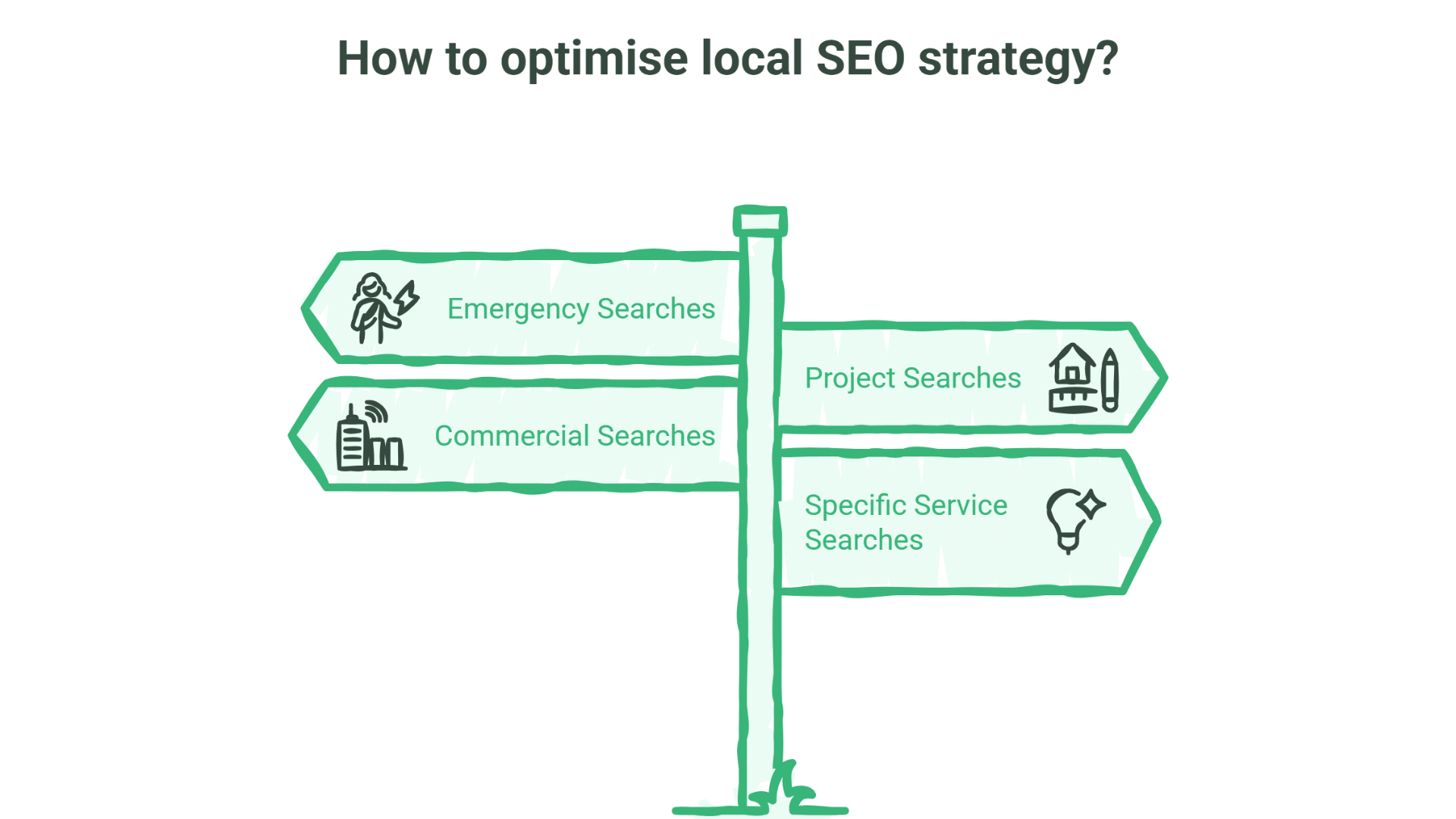
Understanding search behaviour helps you optimise for real customer journeys.
Emergency searches happen in a crisis. “Emergency electrician near me” comes from someone with no power, a burning smell from a socket, or a tripped board they can’t reset. These searchers call immediately; whoever appears first and looks credible gets the job.
Project searches involve research. “Electrician for house rewire” or “EV charger installation” searchers compare options, check reviews, and may request multiple quotes. They need convincing you’re the right choice.
Commercial searches have a different intent. Businesses searching for “commercial electrician” or “electrical contractor” often need ongoing relationships, compliance expertise, and capacity for larger projects.
Specific service searches indicate clear needs. “Fuse board upgrade,” “outdoor lighting installation,” “PAT testing” searchers know what they want. Appearing for these specific terms captures ready-to-buy customers.
Your local SEO strategy must address all these search types.
Google Business Profile for Electricians
Your Google Business Profile determines whether you appear in Google Maps and the local pack, the box of three businesses appearing above standard search results.
Choosing the Right Categories
Category selection directly impacts which searches show your business.
Primary category: “Electrician” captures the broadest relevant search volume.
Secondary categories to add:
- Electrical Installation Service
- Emergency Electrician (if you offer emergency callouts)
- Lighting Contractor
- Electric Vehicle Charging Station Contractor (if you install EV chargers)
- Security System Installer (if you do alarm work)
- Home Automation Company (if you offer smart home installation)
Missing categories means missing searches. An electrician without “Emergency Electrician” selected may not appear for emergency searches, even if they offer 24/7 service.
Service Listings for Electricians
Detail every service you offer. Google uses these to match you with specific searches.
Domestic services:
- Full house rewiring
- Partial rewiring
- Consumer unit upgrades
- Additional sockets and switches
- Lighting installation
- Outdoor and garden lighting
- Smoke alarm installation
- Electric shower installation
- Cooker and hob installation
- EV charger installation
Testing and certification:
- EICR (Electrical Installation Condition Report)
- PAT testing
- Landlord electrical certificates
- New build certification
Commercial services:
- Commercial electrical installation
- Office fit-out electrics
- Shop and retail electrical work
- Industrial electrical maintenance
- Three-phase installation
- Emergency lighting installation
- Fire alarm installation
Emergency services:
- Emergency callout
- Power restoration
- Fault finding
- Electrical repairs
Each service listing is a chance to rank for that specific search term in your area.
Photos That Build Trust
Electricians should include photos showing:
- Professional appearance: Van signage, uniform, ID badge. Customers want to know who’s entering their home or business.
- Certification credentials: NICEIC, NAPIT, ELECSA, or other scheme logos and certificates. These signal competence and compliance.
- Work examples: Neat consumer unit installations, well-organised wiring, completed projects. Before and after shots of rewires show the transformation.
- Team photos: Put faces to the business. Even sole traders benefit from a professional headshot.
- Equipment: Professional tools and testing equipment demonstrate serious capability.
Aim for 50+ photos with regular additions showing recent work.
Service Area Configuration
Electricians travel to customers, making service area configuration important.
Set realistic boundaries. Include areas you’ll genuinely travel to for typical jobs. Being too broad dilutes relevance; too narrow misses customers.
Consider job type economics. You might travel an hour for a £3,000 rewire but not for a £75 socket installation. Set your service area based on the work you actively want.
Hide your address if home-based. Service-area businesses can appear in local results without displaying a physical address, protecting privacy while maintaining visibility.
Website Optimisation for Electricians
Your website converts searchers into enquiries and supports your Google rankings.
Service Page Structure
Create individual pages for major services rather than cramming everything onto one page.
Rewiring page targeting “electrician rewire [location]” and “house rewiring [location].” Cover when rewiring is needed, what’s involved, how long it takes, and typical investment ranges.
Consumer unit page targeting “fuse board upgrade [location]” and “consumer unit replacement.” Explain why old boards need replacing, what a modern unit includes, and certification provided.
EV charger page targeting “EV charger installation [location].” Cover charger types, installation process, grants available, and running costs. This growing market deserves dedicated attention.
Commercial electrician page targeting “commercial electrician [location]” and “electrical contractor [location].” Address compliance, capacity for larger projects, and the sectors you serve.
EICR page targeting “electrical certificate [location]” and “EICR [location].” Explain legal requirements, what testing involves, and who needs certificates.
Each page should include location references, clear calls to action, and schema markup.
ProfileTree’s website design services create electrician websites built for local search performance.
Location Pages
Serving multiple areas? Create dedicated pages for each significant location.
[Town] electrician page with locally relevant content – areas within that town you cover, any local knowledge worth sharing, testimonials from local customers.
Avoid thin pages that simply swap town names. Google penalises doorway pages with no unique value. Each location page needs genuine, helpful content.
Mobile Experience
Most searches for electricians happen on mobile devices, especially emergency searches.
Speed matters. Pages must load in under 3 seconds. Emergency searchers won’t wait.
Phone number prominence. Click-to-call button visible immediately on mobile, no scrolling required.
Easy navigation. Clear service categories, simple contact forms, obvious next steps.
Trust signals above the fold. Certifications, review ratings, years of experience – visible without scrolling.
Your website development should prioritise mobile performance above all else for a trade business.
Schema Markup for Electricians
Structured data helps Google understand your business. Implement:
- LocalBusiness schema (Electrician type) including name, address, phone, service area, opening hours.
- Service schema for each service offered with descriptions.
- Review schema to display star ratings in search results.
- FAQ schema for common questions about electrical work.
Proper schema can earn rich results that improve click-through rates.
Building Reviews for Electrical Businesses
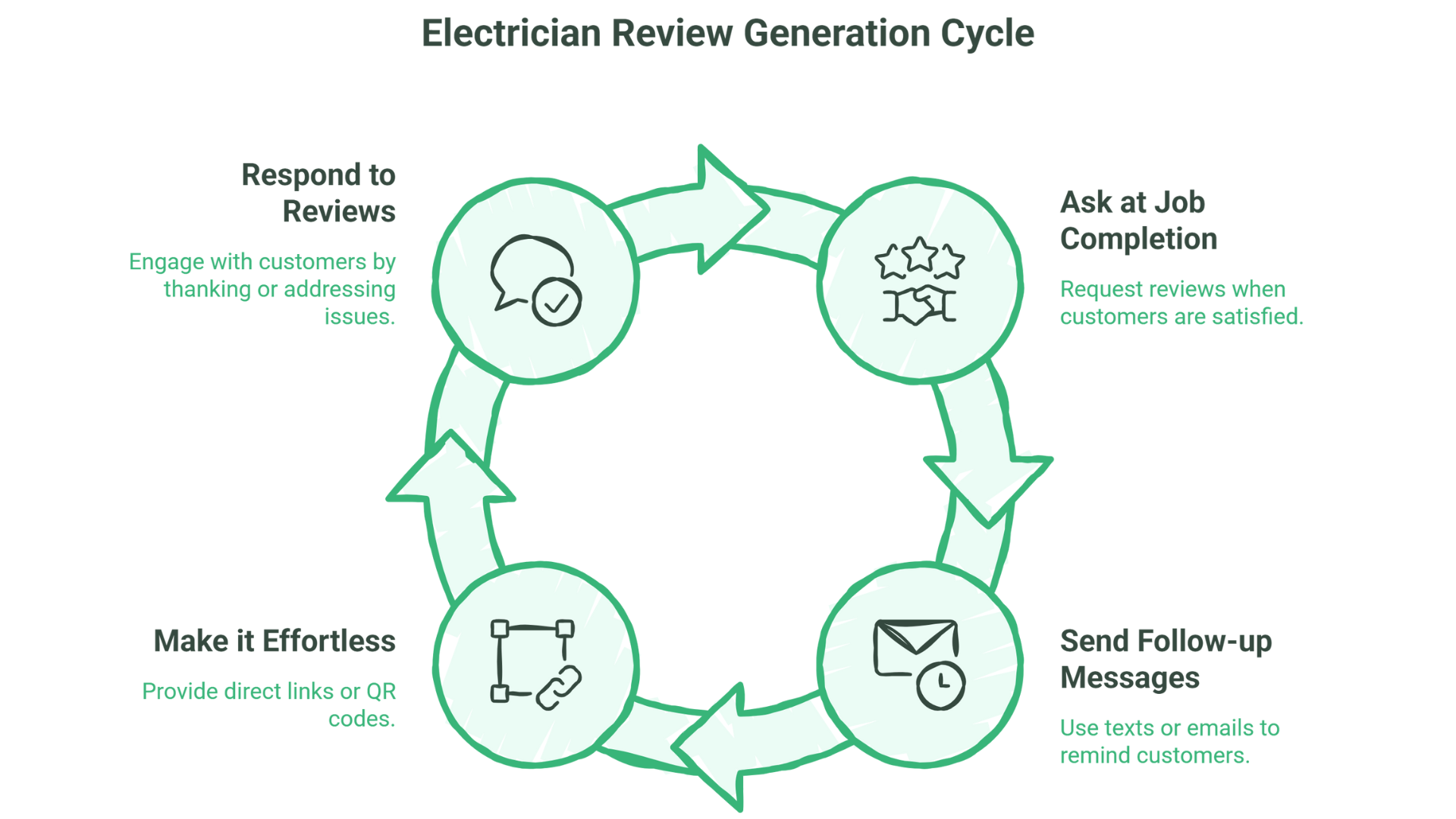
Reviews determine whether searchers choose you or scroll past.
Why Electricians Need Reviews
Trust is everything. Electrical work involves safety, compliance, and significant cost. Customers need reassurance before hiring.
Emergency choices are fast. Someone searching “emergency electrician” at 9pm picks based on reviews because they don’t have time for thorough research.
Specific review content helps rankings. Reviews mentioning “rewiring,” “consumer unit,” or your town name reinforce relevance for those terms.
Generating Reviews Consistently
Ask at job completion. When you’ve just solved someone’s problem, they’re most willing to help. Ask directly: “Would you mind leaving us a Google review?”
Send follow-up messages. A text or email the day after the job with a direct link to your Google review page captures reviews you’d otherwise miss.
Make it effortless. Send the direct link; don’t make customers search for your business. QR codes on invoices work well for on-site requests.
Respond to every review. Thank positive reviewers; address negative reviews professionally. Responses show engagement and care.
Handling Certification and Compliance in Reviews
Reviews mentioning your certification body, compliance, and professionalism carry extra weight for electrical work. When customers mention NICEIC registration, certificates issued, or passed inspections, these terms reinforce your legitimacy to both Google and future customers.
Encourage satisfied customers to mention what you did: “John installed a new consumer unit with full certification” is more valuable than “Good job.”
Citations for Electricians
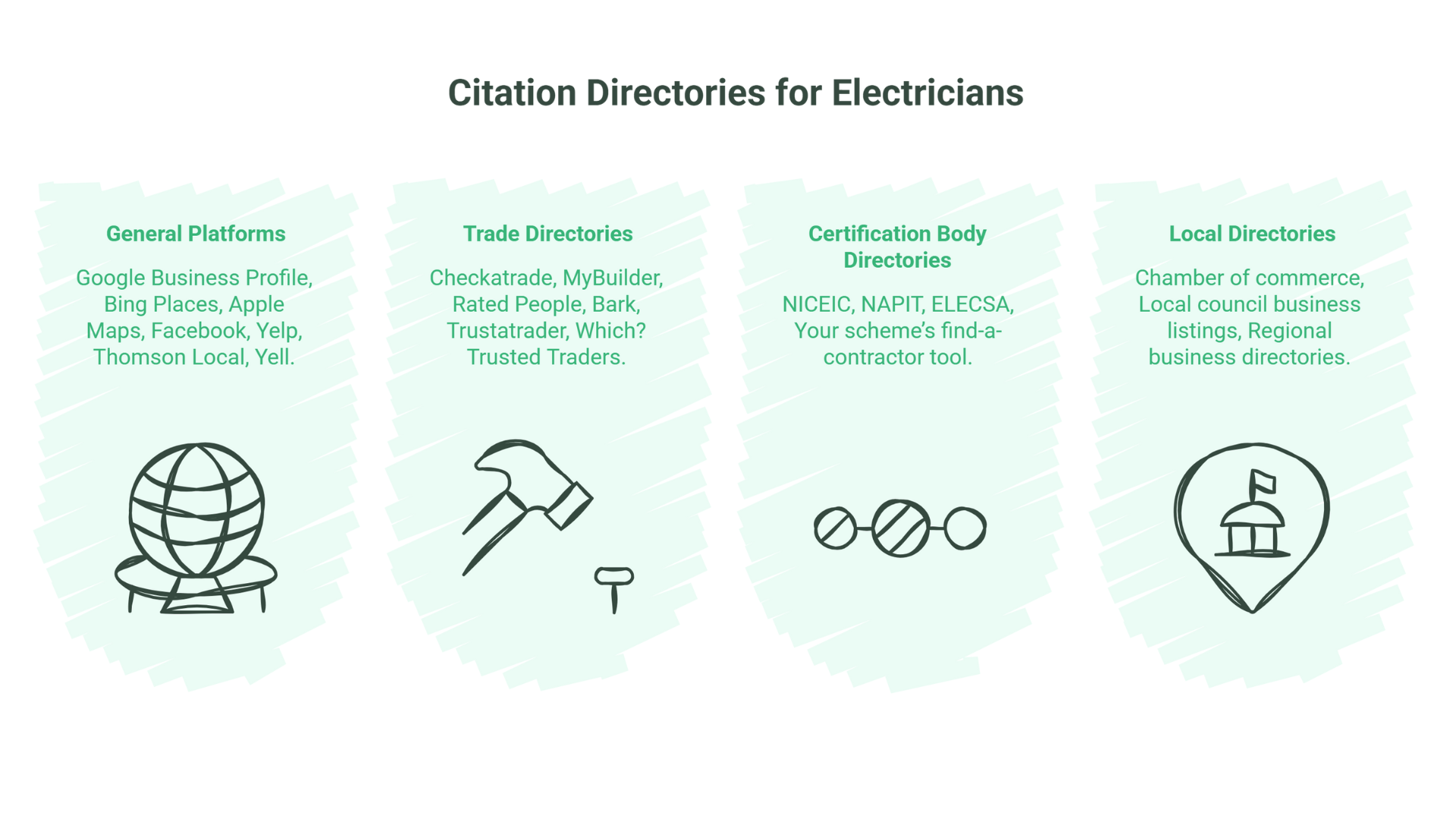
Citations are listings on directories and platforms that mention your business.
Priority Directories for Electricians
General platforms:
- Google Business Profile
- Bing Places
- Apple Maps
- Yelp
- Thomson Local
- Yell
Trade directories:
- Checkatrade
- MyBuilder
- Rated People
- Bark
- Trustatrader
- Which? Trusted Traders
Certification body directories:
- NICEIC (if registered)
- NAPIT (if registered)
- ELECSA (if registered)
- Your scheme’s find-a-contractor tool
Local directories:
- Chamber of Commerce
- Local council business listings
- Regional business directories
Citation Consistency
Your Name, Address, and Phone number (NAP) must be identical everywhere. Variations confuse Google:
- Trading name vs. registered name
- Rd vs. Road
- Phone with or without area code
Audit existing citations and correct inconsistencies. New citations should use your standardised NAP format.
Content Marketing for Electricians
Content attracts visitors searching for electrical information who may become customers.
Content Topics That Work for Electricians
Problem and symptom content:
- Why does my fuse keep tripping?
- Signs your house needs rewiring
- What causes flickering lights?
- When to upgrade your consumer unit
Cost and decision content:
- How much does a house rewire cost?
- Consumer unit upgrade costs explained
- Is rewiring covered by insurance?
- How to choose an electrician
Compliance and regulation content:
- Electrical certificate requirements for landlords
- Part P building regulations explained
- Do I need an electrician, or can I DIY?
Emerging technology content:
- EV charger installation guide
- Smart home electrical requirements
- Solar panel electrical considerations
This content captures informational searches and positions you as an expert.
ProfileTree’s content marketing services help electricians build content that ranks and generates leads.
Standing Out From Competing Electricians
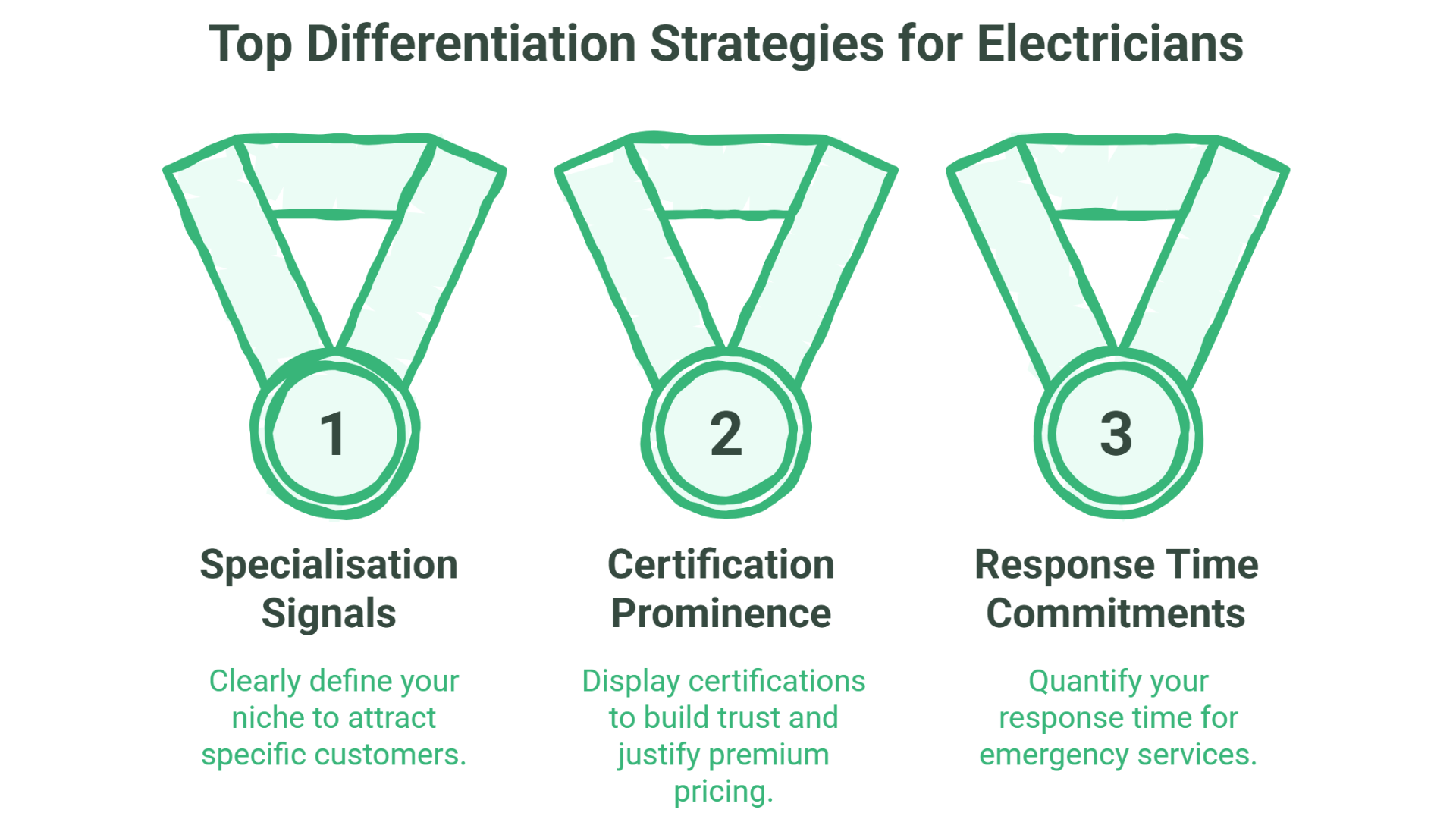
Most areas have multiple electricians competing for the same searches. Differentiation matters.
Specialisation Signals
If you specialise, make it clear:
- EV charger specialist: Dedicated page, relevant certifications, case studies
- Commercial focus: Portfolio of commercial projects, compliance credentials
- Smart home expert: Brand partnerships, integration experience
- Heritage property specialist: Experience with older wiring, sympathetic approaches
Generalists compete with everyone. Specialists attract customers seeking specific expertise.
Certification Prominence
Display certifications prominently:
- NICEIC, NAPIT, or ELECSA scheme membership
- Part P competent person status
- Manufacturer certifications (Tesla Powerwall installer, specific EV charger brands)
- Additional qualifications (18th Edition, inspection and testing)
These credentials differentiate you from unregistered competitors and justify premium pricing.
Response Time Commitments
For emergency work, response time matters enormously. If you offer fast response, quantify it:
- “90-minute average emergency response”
- “Same-day callouts, 7 days a week”
- “Evening and weekend availability”
Vague claims don’t differentiate. Specific commitments do.
Electricians who dominate local search share common traits,” observes Ciaran Connolly, ProfileTree founder. “They treat their Google Business Profile as seriously as their van signage. They ask every satisfied customer for a review. They keep their website updated with fresh content. It’s not complicated; it’s consistent execution of fundamentals.”
Frequently Asked Questions
How competitive is local SEO for electricians?
Competition varies significantly by location. City centres and affluent suburbs are highly competitive; smaller towns and rural areas are less so. Check your area by searching “electrician [your town]”; count competitors in the local pack and examine their review counts and profile completeness. This reveals what you’re up against.
Should I focus on emergency or project work for SEO?
Both, but differently. Emergency searches are high-intent and immediate; ranking for these delivers quick-converting leads. Project searches involve more research but higher job values. Your strategy should include emergency optimisation (fast site, prominent phone number, emergency category) and project optimisation (detailed service pages, portfolio content).
How important is NICEIC/NAPIT registration for local SEO?
Scheme registration isn’t a direct ranking factor, but it matters indirectly. Registered electricians appear in scheme directories (citations). Certification logos build trust, improving click-through rates. Registration enables certain categories of work that generate reviews and content opportunities. Being registered generally supports local SEO, even though Google doesn’t rank registered electricians higher automatically.
How long before I see results from local SEO?
Google Business Profile optimisations often show impact within 2-4 weeks. Website improvements and citation building typically take 2-4 months. Competitive keywords in busy areas may take 6+ months. Less competitive terms and smaller towns show results faster. Consistent effort over 6-12 months typically delivers substantial improvement.
Should I target domestic, commercial, or both?
Depends on your business goals. Domestic work offers steady volume and simpler projects. Commercial work offers larger contracts but more competition and complexity. SEO-wise, targeting both requires more content and separate service pages. Many electricians focus SEO on domestic work (higher search volume) while building commercial through referrals and direct outreach.
How do I compete with electricians who have hundreds of reviews?
You don’t need to match their total; you need sufficient reviews to appear credible and recent reviews to appear active. 30-50 reviews with a 4.5+ rating compete effectively in most markets. Focus on consistent review generation rather than catching up on the total count. A competitor with 200 reviews but none in 6 months looks less active than you, with 50 reviews, including 10 this month.
Is it worth paying for leads from Checkatrade or MyBuilder?
These platforms provide citations (helping SEO) and direct leads (separate value). They’re worth testing if lead costs and quality work for your business model. However, don’t rely on them for SEO; their primary value is lead generation. Invest in your own local SEO to reduce dependence on paid lead platforms over time.