
Strategic Marketing 101: Complete Guide to Long-Term Growth Planning
Table of Contents
Strategic marketing separates businesses that drift from those that dominate their markets. For companies across Northern Ireland, Ireland, and the UK, having a clear strategic direction means the difference between reacting to competitors and setting the pace in your industry.
This guide explains how to build strategic marketing plans that generate measurable business growth. We’ll cover the frameworks ProfileTree uses with clients, examine what separates tactical execution from strategic thinking, and provide practical steps you can implement immediately.
What Strategic Marketing Is
Strategic marketing focuses on sustainable competitive advantages rather than short-term campaign wins. It answers three questions: where should your business compete, how will you compete, and when should you enter or exit markets.
The distinction matters because tactical marketing—such as running ads, posting on social media, and sending emails—only works when guided by a strategy. Without strategic direction, these activities become what industry professionals call “random acts of marketing”: disconnected efforts that consume budget without building towards clear business objectives.
ProfileTree works with SMEs and organisations to develop strategic marketing approaches that align digital capabilities with commercial goals. This means starting with business objectives and working backwards to identify the marketing activities that will achieve them.
The Strategy Deficit in UK Marketing
Most agencies offer tactical services: SEO, PPC, web design, and content creation. These services matter, but they’re outputs, not outcomes. A strategy deficit occurs when businesses invest in multiple marketing channels without understanding how they connect to revenue growth, customer lifetime value, or market positioning.
According to research by the Chartered Institute of Marketing, businesses with documented marketing strategies achieve 313% higher success rates than those operating without a clear strategic direction. Yet 58% of UK SMEs lack formal marketing plans.
The gap between tactical activity and strategic planning creates predictable problems:
- Marketing budgets are spread across channels with no clear priority
- Campaigns that generate activity but not qualified leads
- Inconsistent messaging that confuses rather than clarifies your value
- Difficulty proving marketing’s contribution to business growth
- Reactive rather than proactive market positioning
“The biggest mistake we see businesses make is treating marketing as a collection of tactics rather than a business function,” says Ciaran Connolly, Director at ProfileTree. “Strategic marketing means understanding your market position, identifying growth opportunities, and building capabilities that competitors can’t easily replicate.”
Strategic Marketing vs Tactical Execution
Strategic marketing defines what success looks like and why it matters. Tactical marketing executes the plan. Both matter, but strategy comes first.
Strategic Questions:
- Which customer segments offer the highest lifetime value?
- What market position can we sustain over the long term?
- How do we allocate resources across growth opportunities?
- What capabilities do we need to build a competitive advantage?
Tactical Questions:
- Which keywords should we target this month?
- What budget should we allocate for paid social media?
- How many blog posts should we publish weekly?
- Which email subject lines generate higher open rates?
Strategic marketing requires an understanding of your business model, the competitive landscape, and market dynamics. It asks what you want to achieve before determining how to achieve it. Tactical marketing focuses on execution quality and channel optimisation.
Creating Your Strategic Marketing Plan
Building an effective strategic marketing plan requires a systematic analysis and a transparent decision-making process. The process takes time but produces a roadmap that guides all your marketing activities.
Step 1: Business Research and Analysis
Strategic planning starts with understanding your business from the ground up. You need clarity on what products or services drive your revenue, which customers generate the highest margins, and what capabilities differentiate you from competitors.
Begin by analysing your current performance:
Revenue Analysis: Identify which products, services, or customer segments generate your revenue. Look for patterns in your most profitable work. Many businesses discover that 20% of their offerings generate 80% of their profit.
Competitive Position: Map where you sit relative to competitors on dimensions that matter to customers—price, quality, speed, expertise, innovation, or customer service. Honest issues of assessment are more than flattering evaluations.
Capability Audit: List the internal strengths that enable your business—technical skills, relationships, intellectual property, processes, or market knowledge. These become the foundation for sustainable competitive advantages.
Growth Constraints: Identify what currently limits your growth. Is it lead generation, conversion rate, delivery capacity, market awareness, or pricing? Understanding constraints helps prioritise where marketing can deliver the most significant impact.
For digital agencies and service businesses in the UK and Ireland, this analysis often reveals that marketing focuses on attracting any customer rather than the right customers. Strategic marketing means choosing which opportunities to pursue and which to decline.
Step 2: Market Research and Audience Definition
Understanding your market means knowing who buys from you, why they buy, and what influences their decisions. This goes deeper than demographic data.
Customer Segmentation: Group customers by shared characteristics, needs, or behaviours. B2B businesses often segment their customers by company size, sector, or decision-making structure. B2C businesses can segment their customers by life stage, values, or usage patterns.
Jobs to Be Done: Identify the specific problems customers hire your product or service to solve. A business that buys web design services might be seeking to enhance brand credibility, drive lead generation, or improve operational efficiency. Understanding the job helps you position your offering correctly.
Buyer Journey Mapping: Document the path customers take from awareness to purchase. Where do they research? Who influences their decisions? What concerns slow them down? This intelligence shapes your content strategy and channel selection.
Market Trends: Monitor shifts in your industry, technology, regulation, or customer behaviour that create opportunities or threats. For UK businesses, this includes changes to data privacy regulations, the adoption of AI, and evolving consumer expectations regarding sustainability and transparency.
ProfileTree conducts this research using a combination of customer interviews, analytics review, and market intelligence. The goal is to move beyond assumptions to an evidence-based understanding of your market.
Step 3: Setting Marketing Goals and Strategies
Clear goals translate business objectives into marketing outcomes. Vague goals, such as “increase brand awareness,” provide no guidance. Specific goals, such as “generate 50 qualified enterprise leads per month by Q3,” create accountability.
Goal-Setting Framework:
Use SMART criteria (Specific, Measurable, Achievable, Relevant, Time-bound) but add one more: Valuable. Every marketing goal should connect directly to business value.
Examples of strategic marketing goals:
- Increase average deal size by 35% by attracting larger customers
- Reduce customer acquisition cost from £2,400 to £1,800 within 12 months
- Achieve 40% of revenue from recurring customers rather than one-time projects
- Establish market leadership position in local SEO services across Northern Ireland
Strategy Selection:
Once you’ve set your goals, identify the strategies most likely to help you achieve them. Strategy describes your approach, not the specific tactics you’ll use.
Content Marketing Strategy: Build authority and attract customers through valuable content that addresses their needs. This approach works particularly well for service-based businesses, where trust and expertise significantly influence purchasing decisions. ProfileTree utilises content marketing to showcase its technical expertise in areas such as SEO, AI implementation, and web development.
SEO Strategy: Optimise your digital presence to rank for terms that matter to your business. For local businesses across Northern Ireland and Ireland, this includes local SEO tactics that help you dominate regional searches. National businesses require comprehensive SEO strategies that effectively compete for key commercial terms.
Video and Animation Strategy: Utilise visual content to explain complex services, showcase your work, or establish your brand’s personality. Video works across channels—your website, YouTube, social media, and email campaigns.
Digital Training and AI Implementation: Position your business as a partner that helps clients adapt to technological change. This strategy is effective for agencies seeking to transition from execution-only relationships to advisory roles.
Partnership and Referral Strategy: Build relationships with complementary businesses or past clients who can generate qualified introductions. This strategy often delivers the highest-quality leads at the lowest acquisition cost.
Each strategy requires different capabilities and timeframes to deliver results. Most businesses require a combination of strategies to work together.
Step 4: Implementation and Resource Allocation
Strategic plans fail when they stay theoretical. Implementation means assigning a budget, defining responsibilities, and establishing timelines.
Budget Allocation: Distribute your marketing budget across strategies based on expected return, not equal distribution. If SEO consistently delivers your best leads, allocate resources accordingly. If video content generates high engagement but low conversion rates, consider reducing investment until the conversion problem is solved.
Team Structure: Define who owns each strategy and what success looks like. For smaller businesses, one person might manage multiple areas, but clarity on ownership prevents work from falling through gaps.
Timeline Development: Create a realistic timeline that accounts for the lag between activity and results. SEO improvements may take 6-12 months to take effect fully. Paid advertising can generate leads immediately, but requires an ongoing budget. Content marketing builds momentum over time.
Technology Stack: Identify the tools required to execute your strategy—analytics platforms, CRM systems, design software, or marketing automation. ProfileTree helps clients select the most suitable technology based on their specific needs, rather than relying on the latest trends.
Measurement Framework: Establish how you’ll track progress towards goals. This includes both leading indicators (such as traffic, engagement, and lead volume) and lagging indicators (such as conversion rate, customer acquisition cost, and revenue impact).
Four-Pillar Strategic Framework for UK Businesses
ProfileTree uses a four-pillar framework when developing strategic marketing approaches for clients. This framework adapts to various business models while maintaining a focus on sustainable growth.
Pillar 1: Market Intelligence and Predictive Analysis
Strategic marketing requires looking beyond your internal data to understand market dynamics, competitive movements, and emerging opportunities.
Data Integration: Combine your internal performance data (CRM, analytics, sales reports) with external market intelligence. For UK businesses, this includes monitoring Office for National Statistics data on business conditions, sector-specific reports, and competitive analysis.
Competitive Intelligence: Track what competitors communicate, where they invest, and how they position themselves. This isn’t about copying their approach but understanding the competitive landscape you operate within.
Customer Feedback Systems: Develop mechanisms to gather qualitative feedback from customers, identify lost opportunities, and inform market research. This feedback reveals gaps between your perception and market reality.
Trend Analysis: Identify shifts in customer behaviour, technology adoption, or market structure that create opportunities. UK businesses currently face significant opportunities around AI adoption, but many cannot implement effectively. This creates openings for agencies offering AI training and implementation services.
Market intelligence prevents reactive marketing. Instead of responding to competitor moves, you anticipate changes and position proactively.
Pillar 2: Brand Positioning and Differentiation
Precise positioning communicates what you do, who you serve, and why customers should choose you—weak positioning forces you to compete primarily on price.
Value Proposition Development: Define the specific value you create for customers. This goes beyond listing features to explaining outcomes. A web design agency doesn’t sell websites—they sell improved credibility, more qualified leads, or operational efficiency through digital systems.
Target Customer Refinement: Identify the customer segments where your value proposition creates the most significant impact. ProfileTree specialises in serving SMEs across Northern Ireland, Ireland, and the UK, as these businesses often require sophisticated digital marketing capabilities but lack internal expertise.
Competitive Differentiation: Identify what you offer that competitors cannot easily replicate. This might be specific expertise, geographic focus, service delivery model, or the combination of capabilities you bring together.
Messaging Framework: Develop consistent messaging that communicates your position across channels. This includes your core value proposition, key differentiators, and proof points that build credibility.
Strong positioning makes all other marketing more effective because it provides clarity on who you’re talking to and what you’re offering them.
Pillar 3: Full-Funnel Architecture and Attribution
Strategic marketing maps the entire customer journey, from initial awareness to conversion and retention. This requires understanding how different channels and touchpoints contribute to results.
Funnel Stage Definition: Map the stages customers move through:
- Awareness: Learning about your category or their problem
- Consideration: Evaluating potential solutions
- Decision: Selecting a provider
- Retention: Becoming a repeat customer
- Advocacy: Referring others to your business
Channel Strategy: Identify which marketing channels serve each funnel stage most effectively. SEO and content marketing typically build awareness. Case studies and demonstrations support consideration. Transparent pricing and strong calls to action facilitate informed decisions. Email marketing and customer service drive retention.
Attribution Modelling: Understand how different touchpoints contribute to conversions. First-party data becomes increasingly important as cookie-based tracking declines. This involves establishing direct relationships through email lists, account-based marketing approaches, and owned content platforms.
Conversion Optimisation: Identify friction points that prevent customers from moving through your funnel. This may be due to unclear messaging, complicated processes, insufficient trust signals, or information gaps.
ProfileTree helps clients build full-funnel strategies that generate leads and convert them efficiently. This often means improving website conversion rates, developing nurture sequences, or creating content that addresses specific objections.
Pillar 4: Sustainable Growth and Performance Measurement
Strategic marketing focuses on sustainable growth metrics rather than vanity metrics that appear impressive but fail to drive business value.
Key Performance Indicators: Define metrics that connect to business outcomes:
- Lead quality: Percentage of leads that match your ideal customer profile
- Conversion rate: Percentage of leads that become customers
- Customer acquisition cost: Total marketing investment divided by new customers
- Customer lifetime value: Total revenue generated per customer relationship
- Payback period: Time required to recoup customer acquisition investment
ROI Forecasting: Model expected returns from marketing investments before committing budget. This requires understanding your conversion rates, average deal size, and customer retention patterns.
Testing and Optimisation: Build systematic testing into your marketing approach. This means A/B testing landing pages, trying different messaging approaches, or experimenting with channel mix to improve results over time.
Reporting Cadence: Establish a regular reporting schedule that tracks progress toward strategic goals. Monthly reports track execution. Quarterly reviews assess strategic direction. Annual planning incorporates learnings into next year’s strategy.
This pillar transforms marketing from a cost centre into an investment with measurable returns. When you can demonstrate that £1 spent on marketing generates £5 in profit within 18 months, securing budget becomes straightforward.
Marketing Strategies for UK Business Growth
Different strategies are suited to other business models and market conditions. Most successful businesses employ multiple methods that work together.
Content Marketing and SEO
Content marketing builds authority and attracts customers through helpful information. When combined with SEO, it creates sustainable traffic that compounds over time.
ProfileTree publishes comprehensive guides on topics ranging from web design to AI implementation. This content serves multiple purposes: it attracts potential customers searching for solutions, demonstrates technical expertise, and supports our position as thought leaders in digital marketing.
Content Types:
- How-to guides that teach practical skills
- Industry analysis that provides perspective
- Case studies that demonstrate results
- Tool comparisons that help buyers make decisions
- Research reports that generate industry discussion
SEO makes this content discoverable. For businesses serving local markets, local SEO tactics help you rank for “web design Belfast” or “digital marketing Northern Ireland.” For businesses targeting national or international markets, broader SEO strategies compete for terms with higher search volume.
The advantage of content marketing and SEO is that they create assets that continue generating value over time. A well-ranking article published this year will continue to generate traffic and leads for years to come.
Video Production and Visual Content
Video content continues growing in importance across all marketing channels. It works particularly well for explaining complex services, showcasing personality, or demonstrating processes.
ProfileTree produces video content for clients and utilises video in our own marketing efforts. Video serves different purposes at different funnel stages:
- Awareness Stage: Educational content that addresses common questions or challenges. These videos attract viewers through search or social platforms.
- Consideration Stage: Product demonstrations, behind-the-scenes content, or customer testimonials that build trust and credibility.
- Decision Stage: Detailed explanations of how services work, pricing discussions, or comparison content that addresses final objections.
YouTube serves as a powerful search engine and content platform. Businesses that build YouTube channels create another owned asset that generates long-term value.
Animation works particularly well for abstract concepts or technical explanations. It allows you to visualise ideas that would be difficult to film and creates distinctive brand assets.
Digital Training and AI Implementation
The gap between technological capability and practical implementation creates opportunities for agencies that help businesses adopt new tools and approaches.
ProfileTree offers AI training and implementation services because we recognise that SMEs struggle to transition from AI awareness to AI adoption. Strategic marketing around this service focuses on practical outcomes rather than technical features.
This approach works for several reasons:
- Perceived Risk: Business owners recognise AI’s potential but worry about the complexity of implementation. Training and consulting services reduce perceived risk by providing expert guidance.
- Competitive Pressure: Businesses are concerned about falling behind as they observe competitors gaining efficiency through AI adoption. This creates urgency around getting started.
- Capability Gap: Most SMEs lack internal AI expertise. They need partners who can assess their needs, recommend appropriate solutions, and help with implementation.
Marketing this service requires demonstrating practical knowledge through content, case studies, and clear explanations of how AI solves specific business problems.
Web Design and Development for Business Growth
Web design works as a strategic marketing tool when it focuses on business outcomes rather than aesthetics. ProfileTree designs websites optimised for ranking, traffic, leads, and sales—not just visual appeal.
Strategic web design starts with understanding what success looks like:
- Lead Generation: Design that guides visitors towards conversion actions through clear messaging, strategic calls-to-action, and reduced friction in forms and processes.
- SEO Foundation: Technical structure that supports search visibility through proper information architecture, page speed optimisation, mobile responsiveness, and structured data.
- User Experience: Navigation and content organisation that helps visitors find information quickly and builds confidence in your business.
- Conversion Optimisation: Design elements that address visitor concerns, build trust, and make taking action feel natural rather than pressured.
Most web design projects fail to achieve business objectives because they prioritise appearance over function. Strategic web design balances both.
Regional Strategic Marketing Across the UK
Strategic marketing approaches vary by region due to differences in competitive intensity, customer behaviour, and market maturity.
Northern Ireland Market Dynamics
Northern Ireland offers specific opportunities and challenges for businesses. The market is large enough to support specialist companies, but small enough that reputation and relationships matter significantly.
Market Characteristics:
- Strong preference for local suppliers in many sectors
- Growing technology and digital sectors
- Cross-border opportunities with the Republic of Ireland
- Less competitive than major UK markets like London or Manchester
Strategic marketing in Northern Ireland often emphasises local credibility, personal relationships, and sector-specific expertise. Businesses that establish a strong local reputation can dominate their niche.
ProfileTree’s Belfast location allows us to understand the local business environment while serving clients across the UK and Ireland. We see how businesses succeed through combining local market knowledge with digital capabilities that extend their reach.
Beyond London: Regional Business Hubs
Manchester, Birmingham, Leeds, Edinburgh, and other UK cities offer growing opportunities for businesses that combine local presence with national capabilities.
Regional Advantages:
- Lower operating costs than in London
- Strong local business communities
- Growing investment in digital infrastructure
- Less saturated markets in many professional services
Strategic marketing in regional hubs often focuses on establishing category leadership within the region while building national visibility through content and digital channels.
The “Northern Powerhouse” initiative, spanning Manchester, Leeds, and Liverpool, creates opportunities for businesses serving the connected region rather than individual cities.
Success Measurement and Marketing Performance
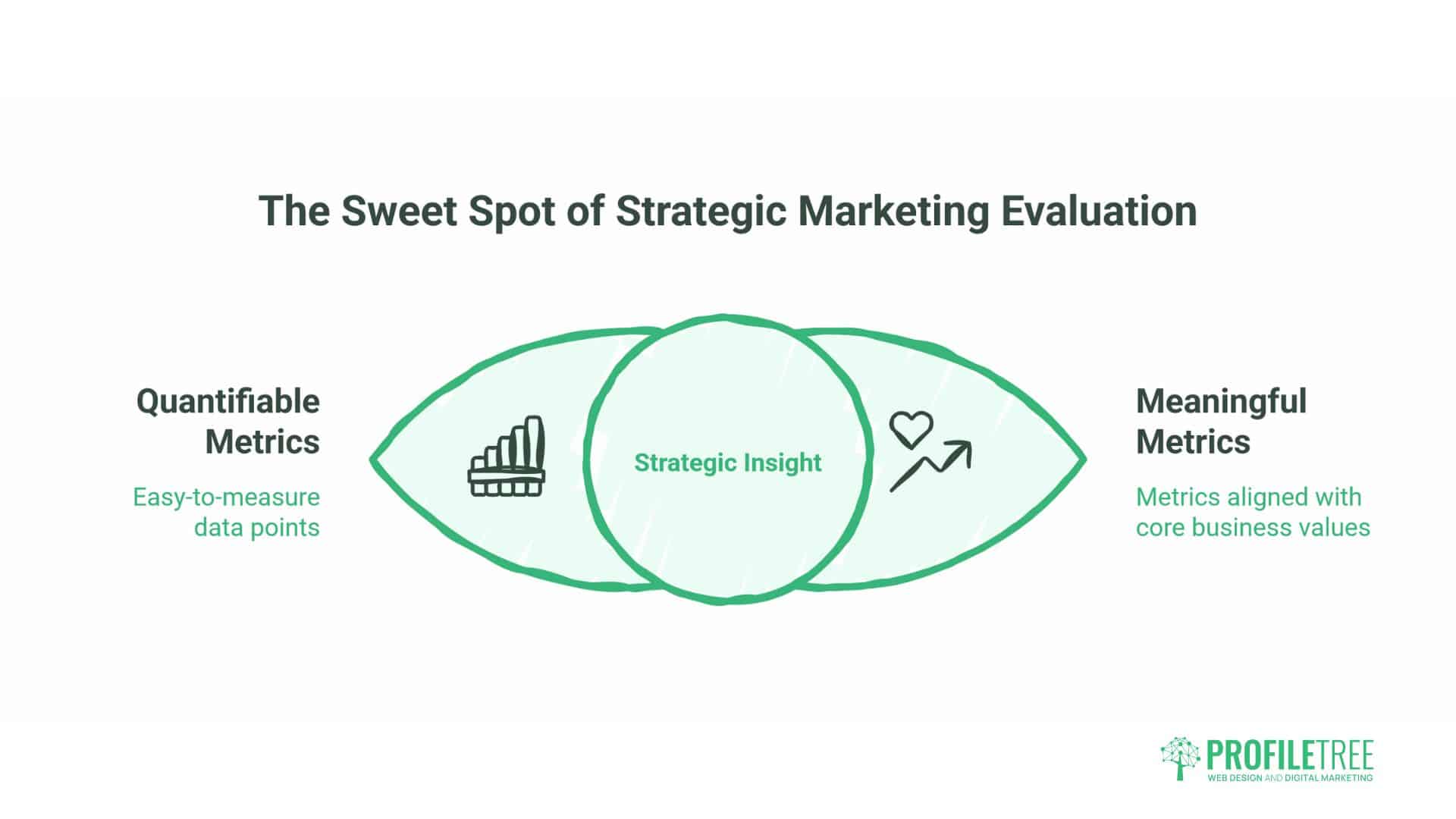
Strategic marketing requires measuring what matters, not just what’s easy to measure.
Key Metrics That Drive Business Growth
Different metrics are essential at various stages of business growth and in other business models.
Traffic Metrics:
- Organic search traffic: Visitors from search engines
- Direct traffic: Visitors who know your brand
- Referral traffic: Visitors from other websites
- Social traffic: Visitors from social platforms
Traffic matters when it consists of potential customers, not random visitors. A B2B consultancy generating 500 monthly visitors from targeted search terms often outperforms a business generating 5,000 visitors from broad, low-intent queries.
Lead Generation Metrics:
- Lead volume: Total number of potential customers
- Lead quality: Percentage matching your ideal customer profile
- Cost per lead: Marketing investment divided by leads generated
- Lead-to-customer conversion rate: Percentage that becomes paying customers
These metrics connect marketing activity to the sales pipeline. They reveal whether you’re attracting the right audience and whether your offer resonates with them.
Revenue Metrics:
- Customer acquisition cost: Total marketing and sales investment per new customer
- Customer lifetime value: Total revenue generated per customer relationship
- Marketing contribution to revenue: Percentage of new customers sourced through marketing
- Return on marketing investment: Revenue generated per pound spent on marketing
These metrics prove marketing’s business impact. They transform marketing from a cost centre into a measurable investment.
Standard Success Rates and Benchmarks
Understanding typical performance helps set realistic expectations and identify when you’re underperforming or overachieving.
Content Marketing: According to HubSpot research, 60% of marketers who publish content consistently achieve their marketing goals. However, “success” varies significantly. Some businesses generate hundreds of qualified leads each month through their content. Others build brand awareness that contributes to sales over a longer time frame.
Email Marketing: Industry benchmarks indicate average open rates of around 21% and click-through rates of approximately 2.6%. However, these averages mask significant variation by industry, list quality, and email relevance. Well-segmented emails to engaged audiences often achieve open rates of 40% or higher.
Search Engine Optimisation: SEO success varies dramatically by the competitiveness of target keywords and starting position. New websites typically require 6-12 months to rank competitively for moderately complex keywords. Established websites can achieve results faster.
Paid Advertising: Average conversion rates across industries range from 1% to 5% for pay-per-click advertising, with average customer acquisition costs around £33. However, these benchmarks provide limited value because they aggregate vastly different business models and competitive environments.
The most valuable benchmarks come from your own historical performance. If your email open rates improved from 18% to 28% over six months, you’re moving in the right direction regardless of industry averages.
Strategic vs. Tactical Performance Indicators
Strategic marketing focuses on indicators that connect to business objectives:
Strategic Indicators:
- Market share growth in target segments
- Customer retention and lifetime value trends
- Brand awareness among target audiences
- Capability development that creates a competitive advantage
Tactical Indicators:
- Campaign-specific metrics like click-through rates
- Channel performance, like organic traffic or social engagement
- Content performance, like page views or video completion rates
- Technical metrics like page load speed or mobile usability
Both matter, but strategic indicators guide decision-making while tactical indicators guide execution. When strategic indicators show success but tactical metrics underperform, you may need better execution. When tactical metrics appear strong but strategic indicators are disappointing, you may be optimising the wrong activities.
Evaluating Strategic Marketing Partners
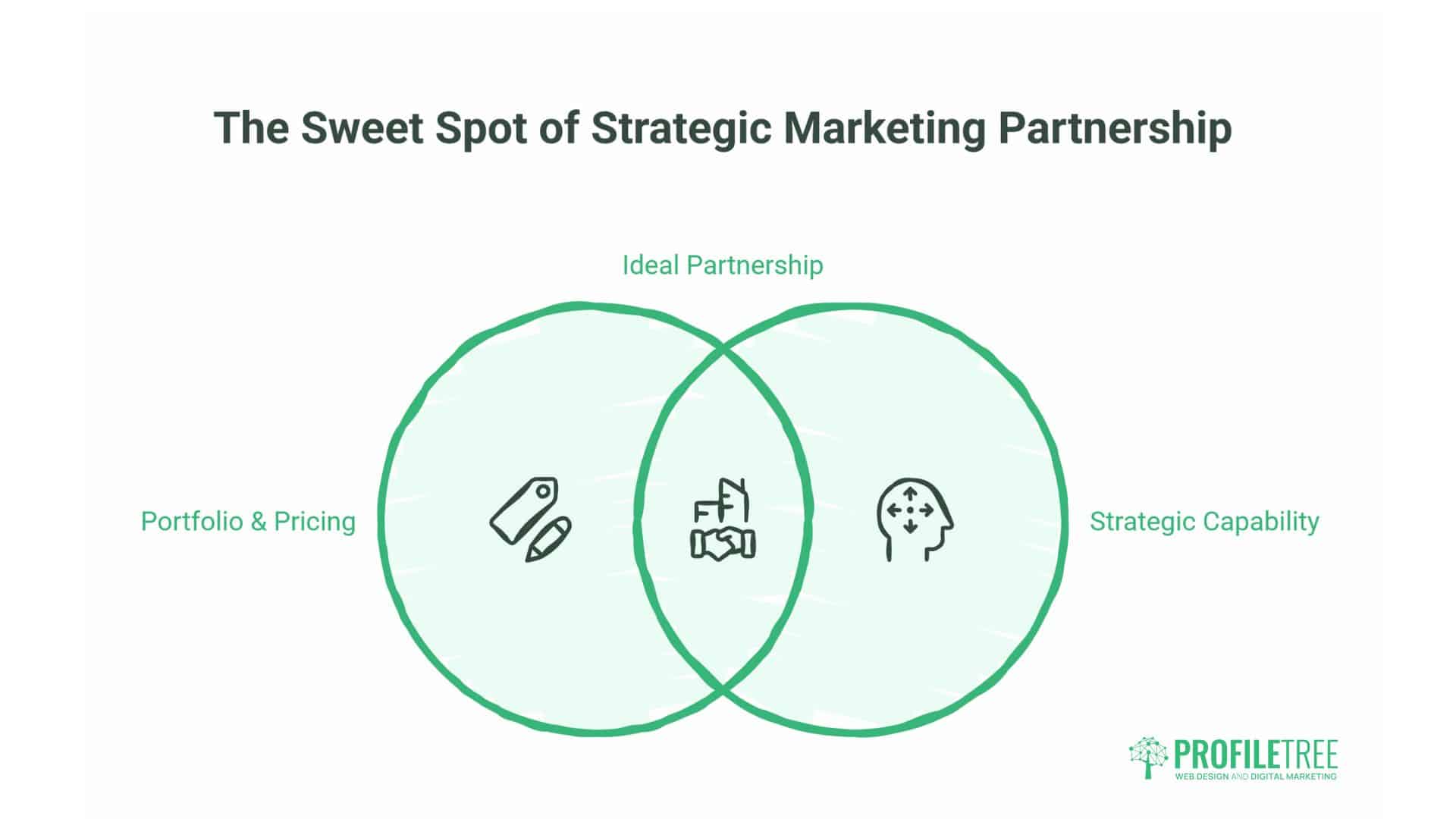
Selecting a strategic marketing partner requires looking beyond portfolios and pricing to assess strategic capability.
Questions to Ask Potential Partners
Strategy and Approach:
- How do you develop a marketing strategy for clients?
- Can you show examples of strategic recommendations that changed client direction?
- How do you balance long-term strategy with short-term results?
- What happens when the initial strategy doesn’t deliver the expected results?
Experience and Expertise:
- Which industries or business models do you specialise in?
- Can you provide case studies with specific results?
- What size businesses do you typically work with?
- Do you have experience with our particular challenges?
Capabilities and Resources:
- What services do you provide in-house versus outsourcing?
- How large is your team, and what expertise do they bring?
- What technology stack do you use?
- How do you stay current with the evolution of marketing?
Working Relationship:
- How do you structure client relationships?
- How frequently will we communicate?
- How do you handle disagreements about direction?
- What do you need from us to be successful?
Technical Capabilities That Matter
Modern strategic marketing requires technical capabilities that many agencies lack.
Analytics and Data Analysis: The ability to extract insights from data, identify patterns, and make evidence-based recommendations. This includes proficiency with Google Analytics, Search Console, CRM systems, and data visualisation tools.
SEO and Technical Website Optimisation: Understanding how search engines work, what factors influence rankings, and how to build websites that perform well technically and commercially.
AI and Automation Implementation: Practical knowledge of how AI tools can improve marketing effectiveness, from content creation to customer segmentation to predictive analytics.
Conversion Rate Optimisation: The ability to systematically test and improve website and landing page performance through understanding psychology, design, and persuasion principles.
ProfileTree combines these technical capabilities with strategic thinking. We help clients understand what’s possible, what’s practical, and what’s likely to generate the best return on investment.
Warning Signs in Agency Selection
Some warning signs suggest an agency lacks strategic capability:
Pitch focused entirely on tactics: Agencies that lead with “we’ll do SEO, PPC, and social media” without understanding your business objectives often lack strategic depth.
Unrealistic promises: Claims of “guaranteed first-page rankings” or “viral content” suggest either dishonesty or a lack of experience with how marketing actually works.
No discovery process: Agencies that can quote a price and recommend tactics before understanding your business cannot provide strategic guidance.
Template approaches: Marketing that feels like a standard package, adapted slightly for your business, rarely addresses your specific situation effectively.
Poor communication: If an agency struggles to explain its approach clearly during the sales process, it’ll likely struggle with ongoing communication.
Look for agencies that ask difficult questions, challenge your assumptions, and demonstrate understanding of business fundamentals, not just marketing mechanics.
Common Strategic Marketing Mistakes
Understanding common failures helps you avoid them.
The Random Acts Problem
Many businesses run multiple marketing activities without connecting them to a strategy or to each other. You might have SEO efforts focused on one audience, social media targeting another, and sales conversations emphasising different value propositions.
This fragmentation wastes budget and confuses potential customers. Strategic marketing requires consistency across channels, with each activity supporting shared objectives.
Optimising Tactics Before Strategy
Businesses often try to improve execution before clarifying strategy. They A/B test email subject lines when the fundamental offer doesn’t resonate with their audience. They optimise website conversion rates when they’re attracting the wrong visitors.
Get the strategy right first. Tactical optimisation multiplies the impact of a good plan but cannot fix strategic problems.
Measuring Activity Instead of Outcomes
Publishing three blog posts weekly, posting daily on social media, or sending regular emails represents activity. But activity doesn’t equal results.
Strategic marketing measures yield outcomes, including leads generated, customers acquired, revenue influenced, and an improved market position. Activity metrics matter only when they connect to outcomes.
Copying Competitors Without Understanding Context
Competitors’ marketing approaches reflect their strategy, capabilities, and market position. What works for them may fail for you because your context differs.
Strategic marketing involves understanding your own position and developing approaches that leverage your specific strengths, rather than imitating others.
Insufficient Budget and Patience
Strategic marketing requires investing enough to achieve critical mass and waiting long enough for results to compound. Businesses often underfund their marketing efforts and then abandon approaches before they can be effective.
Set realistic budgets based on your objectives and competitive environment. Commit to timeframes that allow strategies to work. Most strategic approaches require 6-12 months to show meaningful results.
Future-Proofing Your Strategic Approach
Strategic marketing must adapt to changing technology, customer behaviour, and competitive dynamics.
AI and Marketing Transformation
Artificial intelligence is transforming the way marketing works, encompassing research, content creation, personalisation, and analysis. Strategic marketing in 2026 and beyond requires understanding AI’s capabilities and limitations.
Opportunities:
- Automated customer segmentation based on behaviour patterns
- Content generation at scale for SEO and social media
- Predictive analytics that forecast customer behaviour
- Personalisation that adapts messaging to individual preferences
- Efficiency gains that reduce costs while maintaining quality
Challenges:
- AI-generated content that lacks originality or strategic thinking
- Over-reliance on automation that reduces human insight
- Privacy concerns around data collection and personalisation
- Competitive pressure as all businesses adopt similar tools
ProfileTree helps clients implement AI practically through training and consulting that focuses on business outcomes rather than technology for its own sake. We see AI as a capability that enhances strategic marketing rather than replacing strategic thinking.
First-Party Data and Privacy Changes
The decline of third-party cookies and increasing privacy regulation changes how businesses track and target customers. Strategic marketing must adapt by building direct relationships.
Building First-Party Data Assets:
- Email lists that provide direct communication channels
- Customer accounts that track behaviour and preferences
- Content hubs that attract and engage target audiences
- Community platforms that facilitate ongoing relationships
This shift favours businesses that create genuine value and build authentic relationships over those that rely on tracking and retargeting.
Platform and Channel Diversification
Relying heavily on any single platform creates risk. Strategic marketing requires diversification across owned, earned, and paid channels.
- Owned Channels: Your website, email list, and content platforms you control. These provide the most stability and the lowest ongoing costs.
- Earned Channels: SEO, PR, referrals, and word-of-mouth that others generate on your behalf. These provide credibility and often high-quality leads.
- Paid Channels: Advertising, sponsored content, and paid partnerships that provide predictable reach and faster results but require ongoing investment.
The optimal mix depends on your business model, competitive position, and stage of growth. Most successful businesses build strong owned channel foundations and supplement with paid channels for faster growth.
FAQs
How often should we revisit our strategic marketing plan?
Conduct comprehensive strategic reviews annually, with quarterly check-ins to assess progress and adapt tactics. Monitor key metrics monthly to catch problems early. Major market changes, competitive moves, or significant business shifts warrant immediate review regardless of schedule.
What budget should we allocate to strategic marketing?
Budget depends on your growth objectives, competitive intensity, and current market position. B2B service businesses typically invest 5-15% of revenue in marketing. Businesses in growth mode or competitive markets may invest 15-20%. The key is allocating enough to achieve critical mass in chosen strategies rather than spreading the budget too thinly.
How long will it take to see results from strategic marketing?
Content marketing and SEO typically show meaningful results within 6-12 months. Paid advertising and email marketing to existing audiences can generate results immediately but require ongoing investment. Strategic positioning and brand-building may take 1-3 years to materialise fully. Different strategies work on different timeframes.
Should we hire an agency or build an internal marketing capability?
This depends on your business size, growth stage, and the strategic importance of marketing to your organisation. Many SMEs lack the volume to justify full-time specialists across all marketing disciplines. Agencies provide access to diverse expertise and established processes. However, businesses that rely on marketing for a core competitive advantage often require internal capabilities. Hybrid approaches work well—maintaining strategic direction internally while outsourcing specialised execution.
Taking Action on Strategic Marketing
Strategic marketing transforms businesses by aligning marketing activities with business objectives and building sustainable competitive advantages.
For businesses across Northern Ireland, Ireland, and the UK, this means moving beyond tactical execution to develop a clear strategic direction. It means understanding your market, defining your position, and building marketing capabilities that support long-term growth.
ProfileTree works with businesses at all stages of strategic marketing maturity—from those starting with basic planning to those optimising sophisticated approaches. Our services encompass the capabilities required for modern strategic marketing, including web design focused on business outcomes, SEO that generates qualified traffic, video production that builds brand awareness, content marketing that demonstrates expertise, and AI training that fosters future capabilities.
The businesses that succeed strategically approach marketing as a business function rather than a creative exercise. They measure what matters, invest appropriately, and adapt based on results rather than assumptions.
Your next steps depend on your current situation. If you lack a formal marketing strategy, start by conducting the business and market research described in this guide. If you have a strategy but struggle with execution, focus on building the right capabilities or partnering with specialists who can deliver. If you’re executing well tactically but not seeing business impact, revisit your strategic direction.
Strategic marketing is not complicated, but it requires discipline, patience, and a willingness to focus on what works rather than what’s fashionable. Start with clear business objectives, thoroughly understand your market, make evidence-based decisions, and commit to approaches long enough for them to be effective.
If you need help developing strategic marketing approaches that drive business growth, contact ProfileTree today to discuss how we can support your objectives.