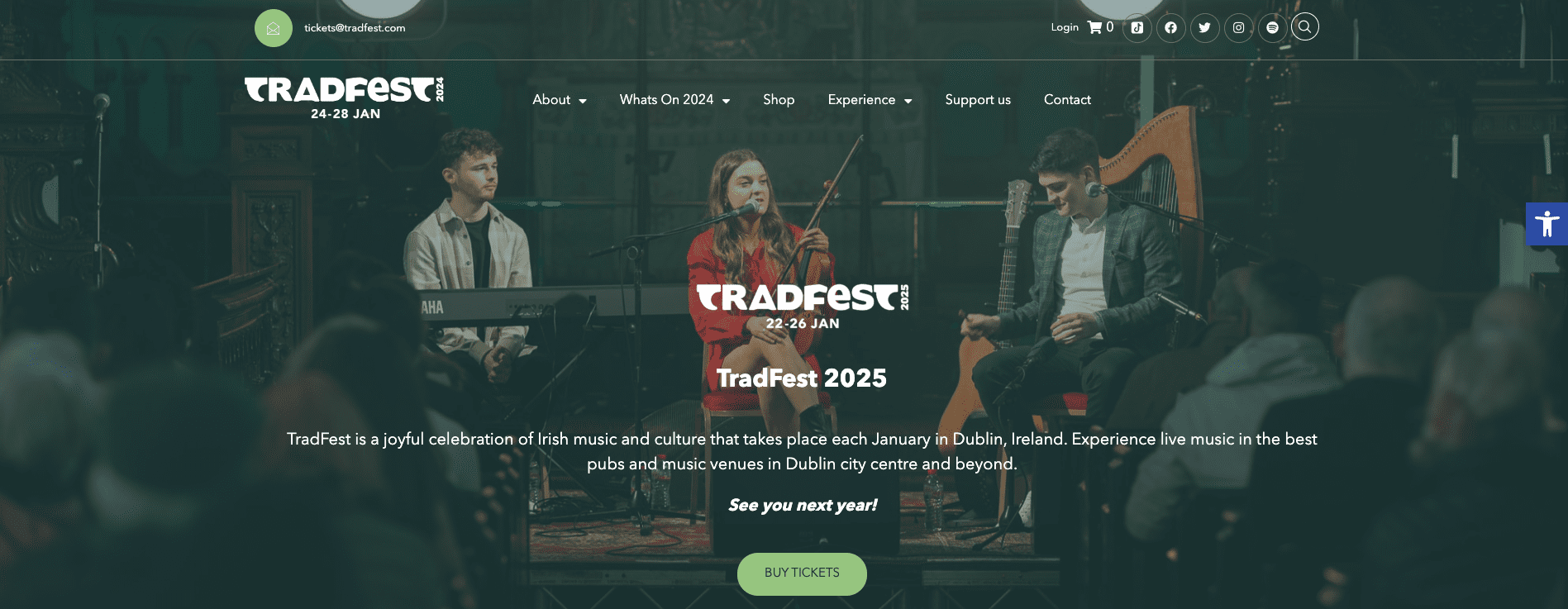
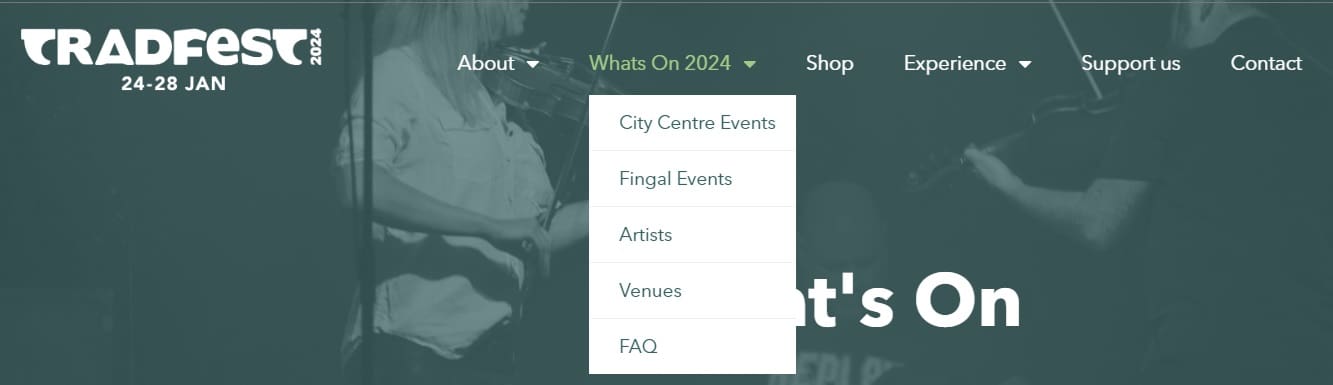
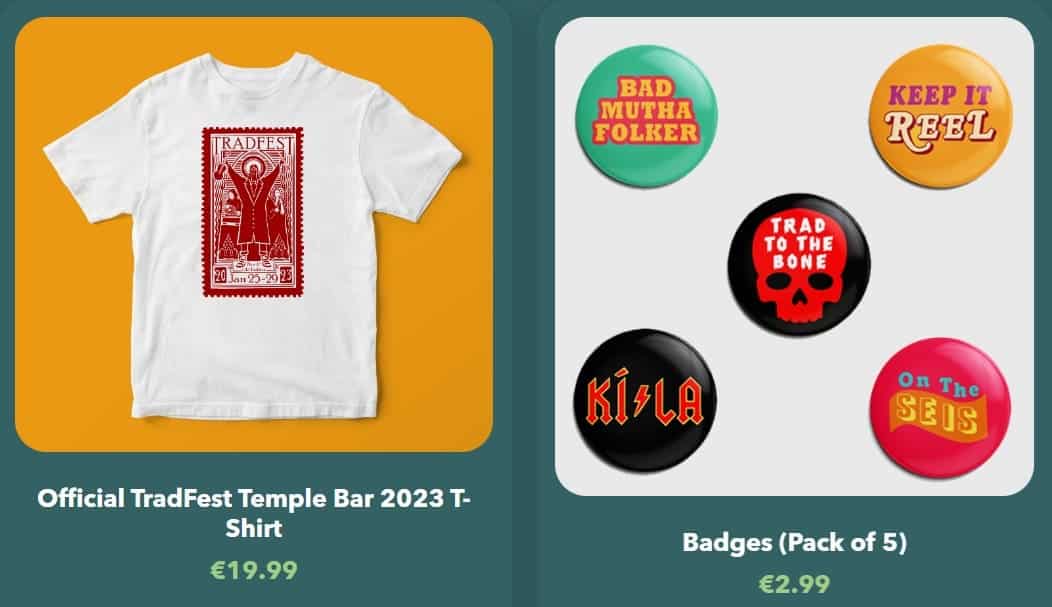
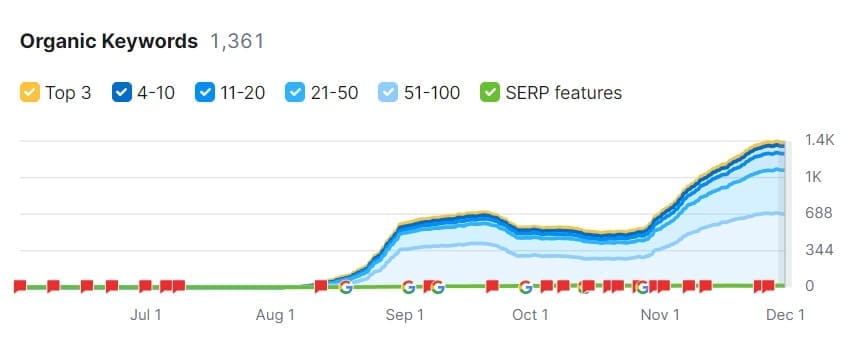
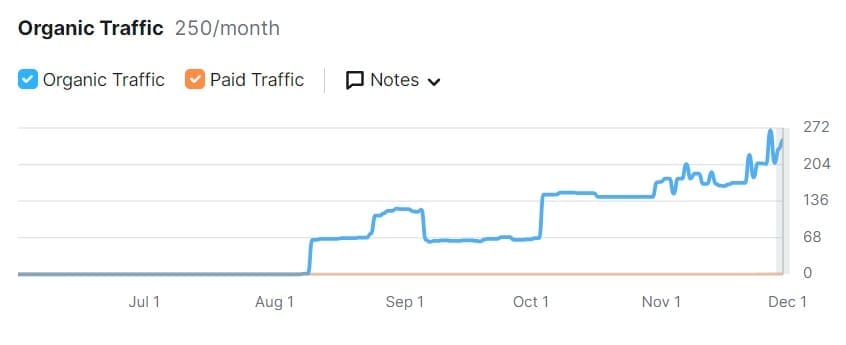
Following the launch, TradFest recorded its highest year of ticket sales to date. The rebuilt booking flow reduced checkout friction, and the QR code entry system improved gate management at the event. The site grew to 1,361 organic keywords within months of launch, with ranking improvements across relevant event and cultural queries. Organic traffic increased noticeably within four months, with session duration up and bounce rates down compared to the previous site, indicating visitors were finding what they were looking for. The merchandise shop and promotional pop-ups provided additional revenue alongside ticket sales.
How ProfileTree Approaches Website Design for Events
Every event website project starts with the same question: what does this site need to do between now and the event, and what does it need to do on the day? For most festivals and event organisers, those are two different answers that need to be built into the same site.
In the months before an event, the site is a marketing tool. It needs to rank for relevant searches, convert casual interest into ticket purchases, and keep audiences engaged through promotional content, merchandise, and updates. It needs to handle a traffic spike when the lineup is announced or tickets go on sale, without slowing down or breaking the checkout.
On the day, it becomes an operational tool. Ticket scanning needs to be reliable at speed. Information about venues, schedules, and transport needs to be easy to find on a mobile screen in a crowd. The site cannot afford to be slow or confusing when it matters most.
We build event websites on WordPress with e-commerce and ticketing systems that the organising team can manage themselves. That means updating the programme, adding sponsors, publishing artist announcements, and adjusting promotions without agency involvement. The goal is a site that supports the event at every stage, not just at launch.
If your organisation needs a website built around how events actually work, our event website design services cover the full process from strategy and build through to ticketing integration and ongoing support.
Frequently Asked Questions
What should an event website include to sell tickets effectively?
The most important elements are a clear programme with dates, venues, and pricing visible early in the page hierarchy; a ticketing system that completes in as few steps as possible; and mobile performance that holds up under a traffic spike. Secure checkout, accessible navigation, and a confirmation and QR code delivery system are non-negotiable. Supporting features like artist or speaker profiles, FAQs about the event, and a news or announcements section help convert visitors who are still deciding, and give the site content to rank for beyond the event name itself.
How do QR code ticketing systems work for festivals?
When a ticket is purchased online, the system generates a unique QR code for that transaction and delivers it to the buyer by email or directly to a digital wallet. At the event, door staff scan the code using a mobile or fixed reader. A valid code produces an instant confirmation; an invalid or already-scanned code flags immediately. This removes the need for printed tickets, speeds up entry at busy periods, and reduces the risk of duplicated or counterfeit tickets — all of which matter significantly for multi-venue festivals managing concurrent arrivals.
How long does it take for an event website to start ranking in search?
For a rebuilt site with solid technical SEO and well-structured content, you would typically expect to see movement in rankings within two to four months. Branded search tends to stabilise quickly. Rankings for competitive generic terms like ‘traditional music festival Dublin’ take longer, as they depend on both on-page signals and the site building authority over time. Starting SEO work at least six months before the event, rather than in the weeks before it, makes a meaningful difference to how much organic traffic you can generate when it counts.
Can festival merchandise be sold through the same site as tickets?
Yes, and there are good reasons to combine them. A visitor who comes to the site to buy a ticket is already engaged — offering merchandise at checkout or through a separate shop section captures revenue from that existing intent. For TradFest, we built the merchandise shop alongside the ticketing system within the same WordPress installation, allowing the organising team to manage both through a single dashboard. Promotions like discount codes and seasonal offers can apply across both, and inventory is tracked in one place.
What makes event website design different from a standard business website?
The core difference is that an event website has a hard deadline and a specific commercial objective: sell as many tickets as possible before a fixed date. That shapes every decision. The ticketing flow is the primary user journey, not a secondary feature. The site needs to handle sudden spikes in traffic around major announcements. The content calendar runs to the event date and then needs to pivot quickly to post-event content and the next edition. A standard brochure site does not have those pressures, and an event website designed like one will underperform.
How much does an event website typically cost in Ireland or the UK?
Project cost depends on the scope: the number of events or programme items, whether e-commerce and merchandise are included, the complexity of the ticketing integration, and whether PPC management is part of the brief. Simpler festival sites with standard ticketing integration start at a lower investment; sites with full e-commerce, multilingual content, or custom features involve more work. We provide transparent scoping and a specific quote based on what the event needs. The best starting point is a conversation about your programme, your audience, and what the site has to do.