The Challenge EPoS Software Companies Face Online
Software businesses occupy a difficult position in digital marketing. They are often selling something genuinely sophisticated to a demanding audience, yet their websites say almost nothing.
The EPoS sector is a clear example of this pattern. Many providers have strong technical capability, experienced teams, and real client deployments they could be sharing. Yet their digital presence often amounts to a sparse holding page or a generic brochure site that communicates little of their actual value. When a retail operations manager or IT lead searches for a cloud-based point of sale system, they are evaluating multiple options simultaneously. A company that cannot be found, or that looks unpolished when found, loses that opportunity before any conversation begins.
“The businesses we work with in this space often know their product is better than the competition,” says Ciaran Connolly, founder of ProfileTree. “But if their website is sparse, their content is thin, and they have no SEO strategy, none of that matters to the buyer who already found someone else.”
For web design for a cloud-based EPoS provider specifically, the stakes are particularly high. Retail clients manage tight margins, rely on system uptime, and make purchasing decisions carefully. They need to see credibility immediately through product clarity, visible client names, and a site that simply works and feels trustworthy from the first page view. Understanding what makes an effective B2B technology website is the starting point for any project in this sector.
About Three IT Services: The Project
Three IT Services is a technology company that delivers cloud-based EPoS and business intelligence solutions to global brands and independent merchants, with a product suite covering retail store systems, loyalty and gift card management, head office inventory, and e-commerce integration. Their hospitality arm serves restaurants, bars, hotels, and golf courses through a separate point of sale platform.
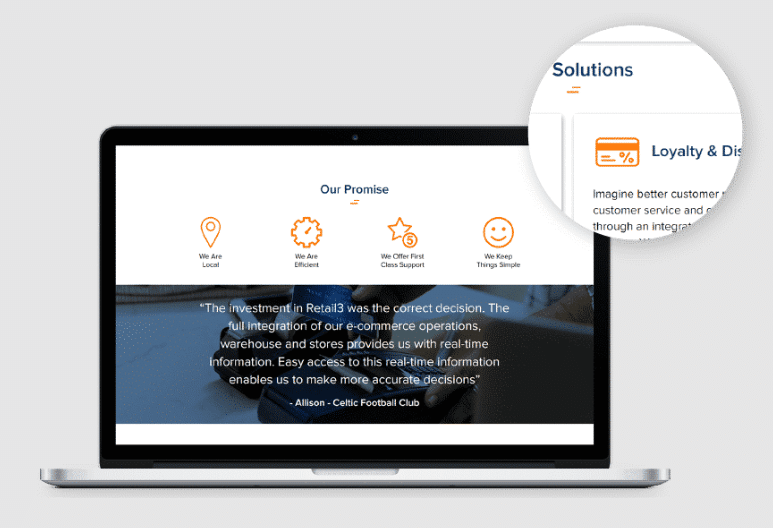
When they first approached ProfileTree, the business had strong credentials (over 50 years of combined team experience, a working product trusted by clients including Celtic Football Club) but no website, no visual brand, and no digital strategy.
The brief was straightforward in scope, if not in execution: deliver web design for a cloud-based EPoS provider starting from an entirely blank slate.
What We Did: The Web Design and Digital Marketing Approach
ProfileTree approached this web design for a cloud-based EPoS provider as a full digital build, not a series of disconnected deliverables. Brand, website, content, and SEO were treated as one integrated system from day one.
Brand Identity and Visual Design
Three IT Services had no logos, no consistent visual language, and no defined identity. Before any web design work began, ProfileTree developed a brand identity that reflected the nature of their product: clean, professional, and built around the reliability and precision that retail and hospitality clients expect from a technology partner.
Every visual decision was made with the B2B buyer in mind. The resulting brand positioned Three IT Services as an established, specialist provider rather than a generic software vendor.
Web Design and Development
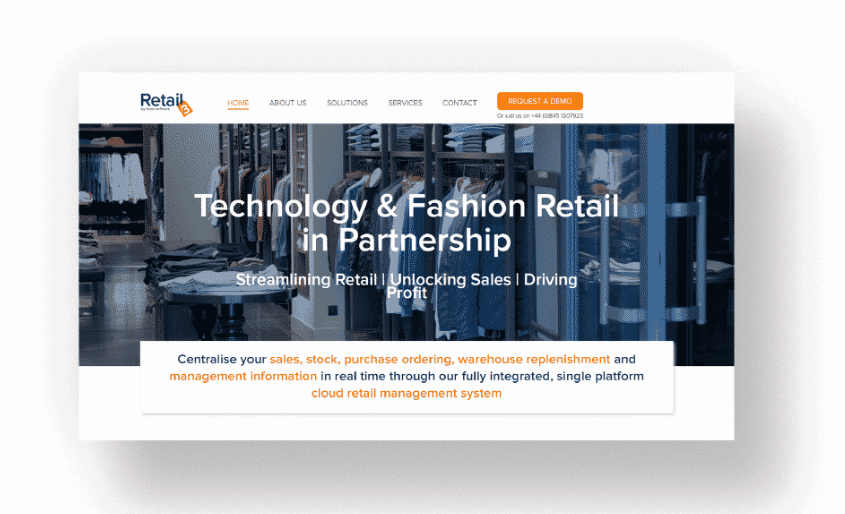
The new website was built to convert visitors from the retail and hospitality sectors into qualified enquiries. The structure reflected the way these buyers actually evaluate software, with clear product explanations across the full R3 product family, integration details, and visible credibility signals including client names and testimonials throughout.
Specific technical decisions included:
- Responsive layout across all modern devices, including tablets used commonly on retail floors
- Intuitive navigation for users unfamiliar with technical terminology
- Enquiry forms integrated at each logical decision point within the user journey
- Site speed and server performance optimised from day one
Technical SEO was built into the site architecture rather than added as an afterthought. Schema markup for Organisation, Product, and FAQ was applied, images were formatted for performance, and mobile usability was tested across all content blocks.
Content Strategy and SEO
An early content audit shaped the keyword and topic priorities. Rather than targeting the broadest possible terms, the focus was on long-tail, intent-driven queries that retail managers and IT leads would realistically search.
Persona development identified two distinct buyer types: the retail operations manager evaluating a new system, and the IT lead assessing integration requirements. Content was structured to answer the questions each audience brings to the research process.
Evergreen content was prioritised over trend-led material to build rankings that would hold over time. Video integration was also recommended alongside written content, including product walkthroughs and team interviews to give prospective clients a direct view of the product in use.
Social Media and Outreach Strategy
Three IT Services had no social presence when the project began: no profiles, no posting history, and no established audience to build from. ProfileTree identified the channels where retail operations managers and IT leads actually spend professional time, concentrating effort there rather than spreading it thinly across every platform.
Content themes followed the buying process. Early posts addressed common problems with legacy POS systems to reach buyers who were not yet actively searching for a new solution. Mid-stage content covered product features and integration capability for those already weighing up their options. This kept social activity pulling in the same direction as the website rather than running separately from it.
At project close, ProfileTree handed the Three IT Services team a content calendar, scheduling guidance, and training covering platform best practice and basic analytics. The aim was to leave them genuinely self-sufficient, not reliant on ongoing agency support to maintain a consistent presence.
Results: Web Design for A Cloud-based EPoS Provider
Three IT Services moved from no online presence to a complete, functional digital operation. The new website gave the business a credible, conversion-focused platform. Organic search visibility was established across terms relevant to their target audience, and the content strategy provided a clear road map for ongoing growth.
The social media strategy gave the internal team a structure they could follow without specialist resource. Training sessions with the ProfileTree team ensured the client could manage day-to-day output while maintaining consistency with the brand and content guidelines built during the project.
The rebrand and website together positioned Three IT Services as a specialist rather than a generalist, which is the distinction that matters most when retail buyers are shortlisting technology partners.
How ProfileTree Approaches Web Design for A Cloud-Based EPoS Provider
EPoS software serves a demanding audience with little tolerance for poor digital experiences. Retail and hospitality businesses run on tight margins, depend on system reliability, and evaluate technology purchases carefully. The website of an EPoS provider must communicate credibility, product clarity, and client proof within the first few seconds of a visit.
ProfileTree’s approach combines brand and design, technical web development, and SEO-led content strategy as a single integrated process. Working across these together from the start means every decision supports the others. A well-designed site with no SEO is invisible. A highly ranked page with weak design loses conversions. Content without a technical foundation cannot scale.
For niche B2B software companies, this matters more than in broader markets because the audience is smaller and each missed first impression carries a higher cost. You can explore our web design services for technology and software businesses to see how this approach applies to your sector.
Follow us on our socials for the latest news and articles: Facebook | Instagram | LinkedIn.
FAQs About Web Design for A Cloud-based EPoS Provider
What should a web design for a cloud-based EPoS provider include?
A cloud-based EPoS provider website needs to make a complex product immediately understandable to non-technical buyers. That means clear product explanations, integration and compatibility details, visible social proof such as client names or case studies, and a straightforward enquiry path. Credibility signals matter particularly because buyers are assessing whether to trust a system they will rely on daily.
How long does it take to build a software company website from scratch?
For a project starting with no brand, no content, and no technical foundation, a realistic timeline for a complete build is eight to sixteen weeks. This accounts for brand development, site design and development, content creation, SEO setup, and testing. Rushing any phase tends to create problems that cost more to fix later.
Does a B2B software company need a content strategy from day one?
Yes. Organic search takes time to build, and content created early in a company’s digital life compounds over time. A B2B software company that waits until the website is established before starting content is typically six to twelve months behind where it could be. Starting with an SEO-led content plan alongside the website build produces significantly better outcomes at the twelve-month mark.
What type of content works best for promoting EPoS software?
For web design for a cloud-based EPoS provider and the content that supports it, product-specific material that answers real buyer questions performs best. That includes blog posts covering integration questions, comparison content for businesses weighing up their options, and video content showing the product in use. Generic technology content that could apply to any software company rarely ranks or converts for a specialised product.
How does SEO differ for niche software versus general software products?
Niche software like EPoS systems has a smaller search volume but a much higher-intent audience. Someone searching for a cloud-based point of sale system for a retail business is at a different stage in their buying journey than someone searching broadly. This means lower-volume, specific keywords are often more valuable than high-volume generic terms, and content should be structured around the specific questions that the audience brings to the research process.
More Case Studies
If you would like to see more about our previous case studies, check out the following articles: