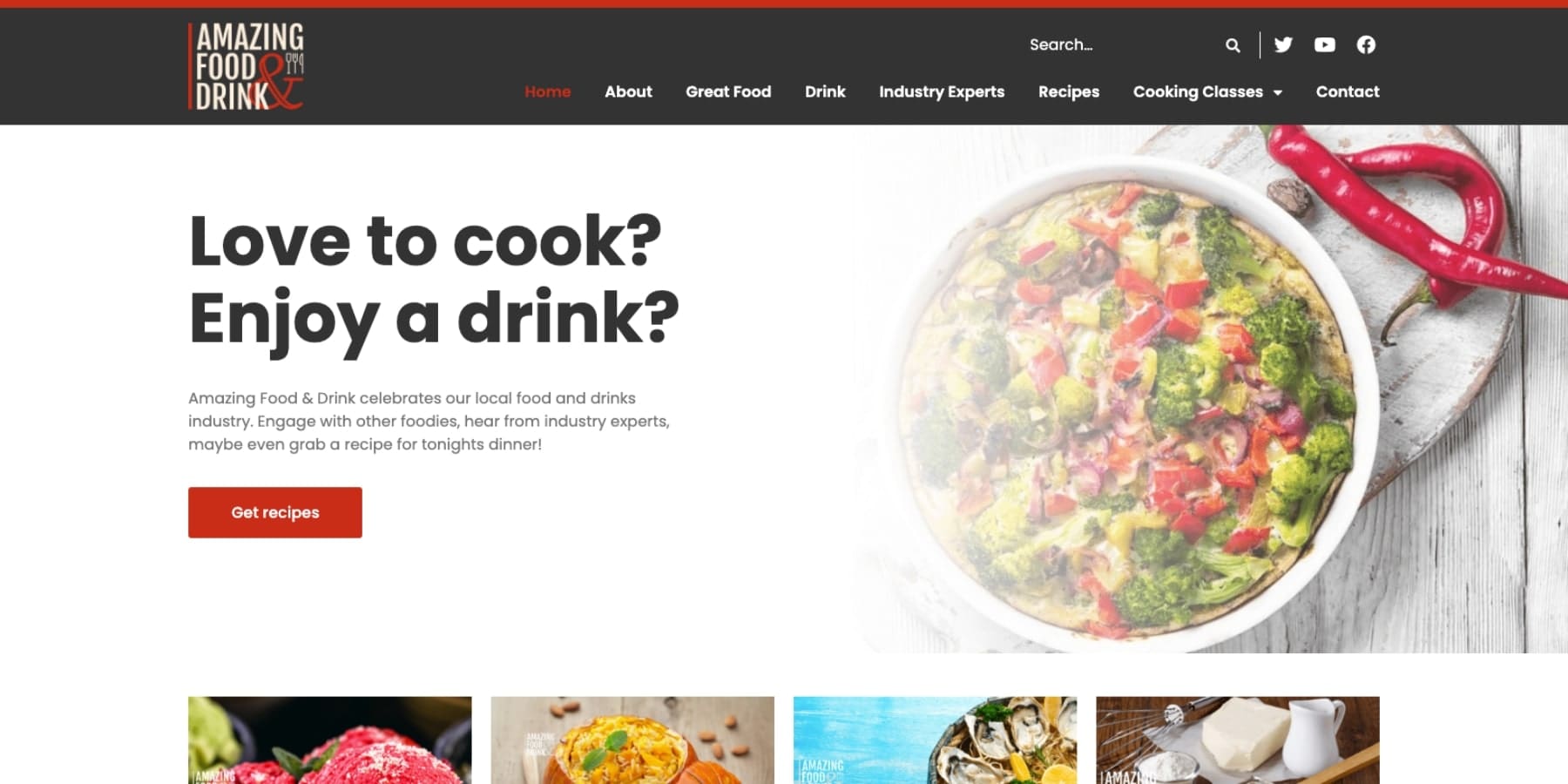
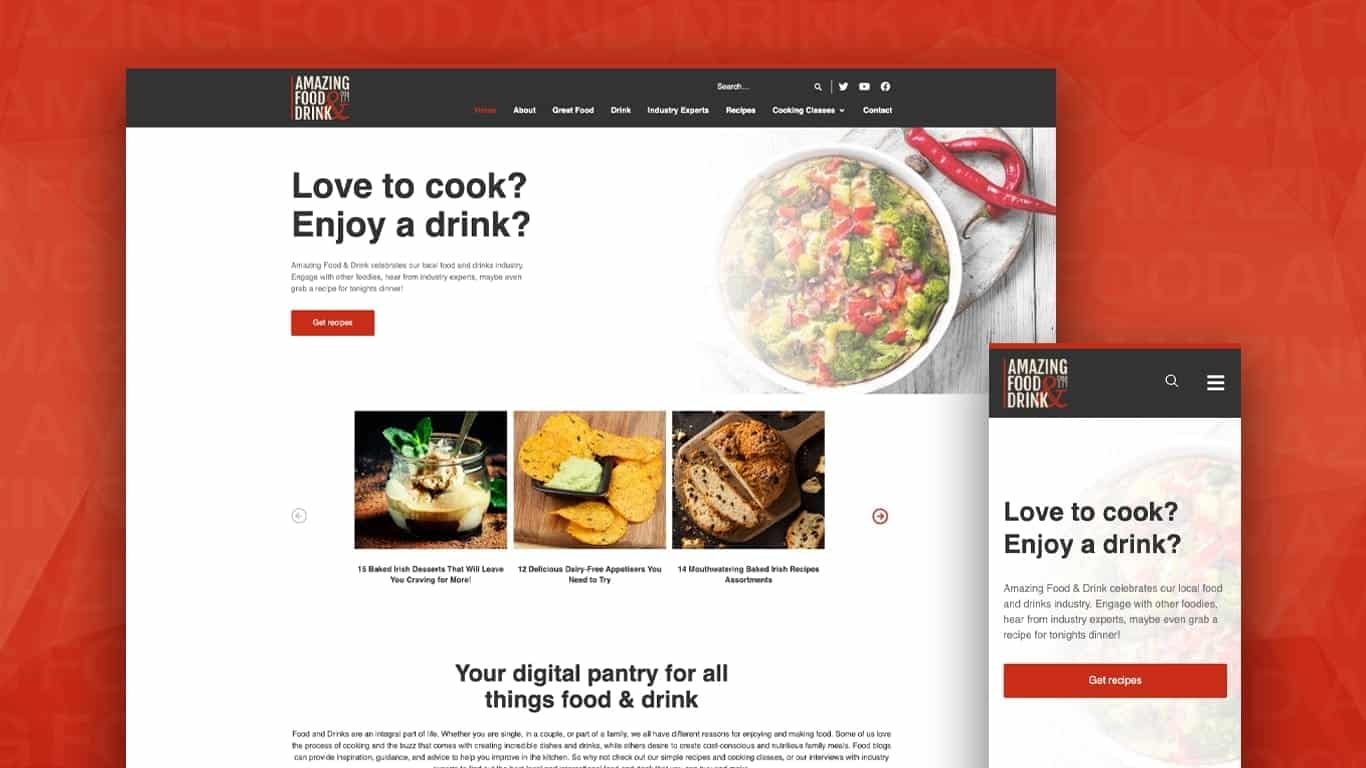
ProfileTree designed and built a WordPress website for Amazing Food and Drink, an Irish content channel dedicated to showcasing local artisan food and drink producers. This case study covers the web design approach, content architecture decisions, and how the site was structured to support both video-first storytelling and ongoing organic growth.
The Challenge Food and Drink Businesses Face Online
Food and drink businesses have a visibility problem that standard website templates cannot solve. The issue is not getting a site live. Any business can get a five-page brochure site built in a week. The real challenge is building a digital presence that works as hard as the product does: one that shows up in search for the right queries, converts visitors who are ready to buy or engage, and gives the business team the tools to keep it fresh without developer involvement every time.
The food and drink sector faces three particular web design challenges. First, the product is visual by nature, but most websites in the sector are built around text-heavy templates that fail to do justice to what is actually being sold or showcased.
Second, businesses in food and drink often have multiple content streams running simultaneously (product pages, recipes, producer stories, event listings, blog content) and a site that cannot handle that volume cleanly becomes difficult to manage and hard for visitors to use. Third, when video is central to the brand, as it increasingly is for food channels and artisan producers, the site architecture needs to support video embedding, fast loading times, and mobile-first viewing without any of those elements fighting each other.
What we have found, working with food and drink clients across Ireland and the UK, is that the technical foundation matters as much as the design. A visually appealing site built on the wrong CMS becomes a bottleneck. Content cannot be updated by the team. New videos cannot be embedded cleanly. The site slows down as media accumulates. Choosing WordPress with a properly configured architecture from the start avoids these problems and gives the business a platform that genuinely scales. That understanding shapes how we approach every video content strategy project we take on in this sector.
About Amazing Food and Drink: The Project
Amazing Food and Drink is an Irish content channel dedicated to going behind the scenes with local artisan food and drink producers. Operating across YouTube and Instagram, the channel features producers including Carlingford Oysters, Hinch Distillery, and Stock Kitchen and Bar, giving audiences an inside look at the craftsmanship and story behind Irish-made products. The audience spans food enthusiasts, other business owners looking to showcase their products, and tourists wanting to discover authentic Irish produce.
Before working with ProfileTree, the channel had a strong and growing video presence but no website that could function as a proper home base for that content. There was no platform to organise videos by producer or category, no structure for recipes or cooking tutorials, no way to capture the wider community of food enthusiasts who discovered the channel and wanted somewhere to explore further.
The brief had three clear goals: build a WordPress site that could host and organise video content without compromising page speed, create a scalable CMS architecture so the team could add new episodes and producer profiles without developer involvement, and design an experience that reflected the channel’s visual identity and artisan focus.
What We Did: The Web Design Approach
WordPress Architecture and CMS Configuration
The site was built on WordPress with a custom theme configured around the channel’s content structure. Category templates were set up for the main content streams (Great Food, Drink, Industry Experts, Recipes, and Cooking Classes) so that new content could be added by the team using consistent layouts without needing to build new pages from scratch each time. The navigation structure was designed to reflect how the audience actually moves through the content, starting from the homepage and drilling down into specific producer stories or recipe categories.
Video-First Design and Performance
Because video is the core product of the Amazing Food and Drink channel, every design decision was made with video performance in mind. YouTube embeds were configured to load efficiently without degrading page speed scores. The layout places video content prominently alongside contextual text (producer background, product information, behind-the-scenes detail) so that each page works both for visitors who watch the video and for those who prefer to read. Mobile responsiveness was built in from the start given that the majority of food content is consumed on mobile devices.
Storytelling Through Structured Content
The design brief required showcasing individual producers as the focus, not just the channel itself. Producer profile pages were structured to tell the full story: the inspiration behind the product, the production process, and what makes each business distinct. This storytelling approach extended to the site’s written content, which was built around the same principles the channel applies to its video: show the craft, name the people, and give the audience something they would not find anywhere else.
SEO Foundation and Content Scalability
The site was built with organic growth in mind from day one. URL structures were kept clean and descriptive. Each category page was set up with proper heading hierarchy and meta data. The recipe and cooking class sections were structured to capture long-tail search traffic from people looking for specific dishes or techniques. Internal linking between producer profiles, recipes, and related blog content was built into the CMS templates so that publishing a new episode automatically strengthened existing pages.
Results
The Amazing Food and Drink website gave the channel a permanent, organised home for content that had previously existed only across social platforms. The site’s CMS structure meant the team could publish new producer episodes and recipe content independently, reducing the time between filming and publication.
Page speed performance was maintained despite the volume of embedded video content, which is a consistent technical challenge for media-heavy food and drink sites. The mobile experience matched the desktop in quality, consistent with audience behaviour in the sector.
The site has continued to grow as a content platform since launch, with new producers, recipes, and cooking class content added through the team’s own publishing workflow. For specific traffic and engagement figures, please refer to the client directly.
How ProfileTree Approaches Web Design for Food and Drink Businesses
Web design for food and drink businesses is a different brief from a standard service business site. The product is sensory. The story matters as much as the specification. And the content never stops: new products, new seasons, new producers, new events. A site that cannot keep up with that publishing pace quickly becomes outdated, and an outdated food and drink site sends exactly the wrong signal.
When ProfileTree works with food and drink businesses, the starting point is always the content architecture: what types of content does the business produce, how often, and who on the team will be managing it after launch. The CMS setup, the category structure, and the page templates are all built around those answers rather than around a generic theme. The visual design follows from that foundation rather than driving it.
Video integration is treated as a core design requirement, not an add-on. If video is part of the brand, the site architecture is built to handle it properly from the start: optimised embeds, clean layouts that work with and without video, and page structures that serve both the viewer and the search engine.
“Food and drink businesses often come to us with great content and no proper home for it,” says Ciaran Connolly, founder of ProfileTree. “Our job is to build a digital platform that makes that content work harder: easier to find, easier to move through, and easier for the team to keep growing without needing us in the room every time.”
For food and drink businesses, content channels, and artisan producers looking to build a proper digital presence, our website design services for food and drink businesses cover strategy, build, and ongoing support.
Frequently Asked Questions
What CMS is best for a food and drink website?
WordPress is the most practical choice for most food and drink businesses and content channels. It handles multiple content types well (recipes, producer profiles, blog posts, video embeds, event listings) and gives non-technical teams the ability to update and publish content without developer input. The plugin library covers everything from recipe card formatting to e-commerce functionality, which matters if the business sells products directly. The main alternative worth considering is Shopify if the site is primarily a direct-to-consumer sales platform, but for content-led food brands, WordPress offers more flexibility and lower long-term cost.
How do you make a food and drink website load quickly with lots of video content?
The key is not hosting video directly on the site. Embedding from YouTube or Vimeo means the video file itself loads from their servers rather than yours, which keeps page load times manageable. Beyond that, image compression and next-generation formats (WebP rather than JPEG) make a significant difference on food sites where photography is heavy. Caching plugins, a quality hosting provider, and a content delivery network all contribute to keeping load times under two to three seconds, which is the threshold where visitor drop-off rates rise sharply on mobile devices.
Can a food content channel rank in Google without a lot of written content?
Video-only content is difficult for Google to index fully because the search engine cannot watch a video the way a person can. Written content alongside each video (producer background, process description, product information, recipe steps) gives Google the text signals it needs to understand what the page is about and match it to relevant search queries. The good news is that this written content does not need to be long-form editorial; structured, factual descriptions of 200 to 400 words per video page are enough to provide that indexable context. Over time, this creates a compounding organic asset from content the business was already producing.
How much does it cost to build a food and drink website in Ireland?
A properly built WordPress website for a food and drink business in Ireland typically ranges from £3,000 to £12,000 depending on scope, with the main variables being the number of page templates required, the complexity of the CMS configuration, whether e-commerce is included, and the volume of initial content migration. A content channel with multiple categories and ongoing publishing needs sits towards the higher end of that range compared to a simpler five-page brochure site. Ongoing support, hosting, and maintenance add £100 to £500 per month depending on the level of service required. These are indicative figures; the right starting point is a scoping conversation to establish what the site actually needs to do.
How do you design a website that showcases food producers without looking like a generic recipe blog?
The difference is in the structure and the story. Generic recipe blogs are organised around ingredients or dish types. A site built to showcase producers is organised around people, places, and processes. Each producer gets their own profile that tells the story of how they work, not just what they sell. Photography and video are treated as primary content rather than decoration. The navigation reflects the way a curious food enthusiast actually moves through the content: by producer, by region, by product category. That structural approach, combined with photography that prioritises authenticity over stock-image polish, produces something that looks and feels different from a standard food blog.
Do food businesses in Northern Ireland need a separate website from their social media presence?
Yes, and the distinction matters more than most food businesses realise. Social media platforms control the algorithm, the audience reach, and the format. A business that exists only on Instagram or YouTube is building on rented land: platform rule changes, algorithm updates, or account restrictions can eliminate visibility overnight. A website owned by the business is a permanent digital asset that cannot be taken away. It also captures search traffic that social platforms do not: someone Googling ‘artisan whiskey distillery Northern Ireland’ will find a well-optimised website before they find an Instagram account. For food businesses in Northern Ireland, where the local provenance story is a genuine commercial differentiator, a website that tells that story in full is worth the investment.
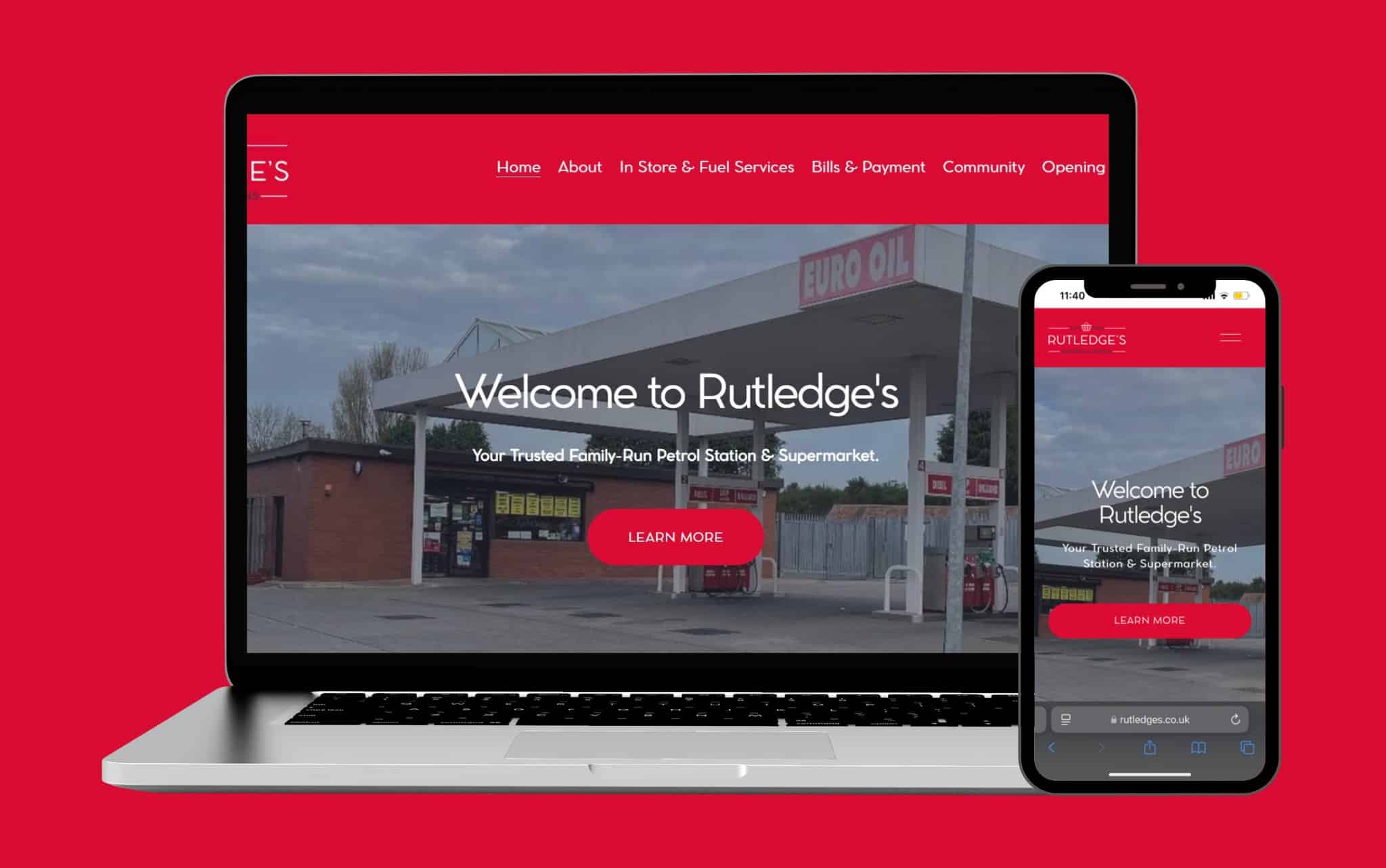
ProfileTree, a Belfast-based web design and digital marketing agency, delivers website design for a petrol station and supermarket across Northern Ireland and Ireland. This case study covers a full website build for Rutledge's in...
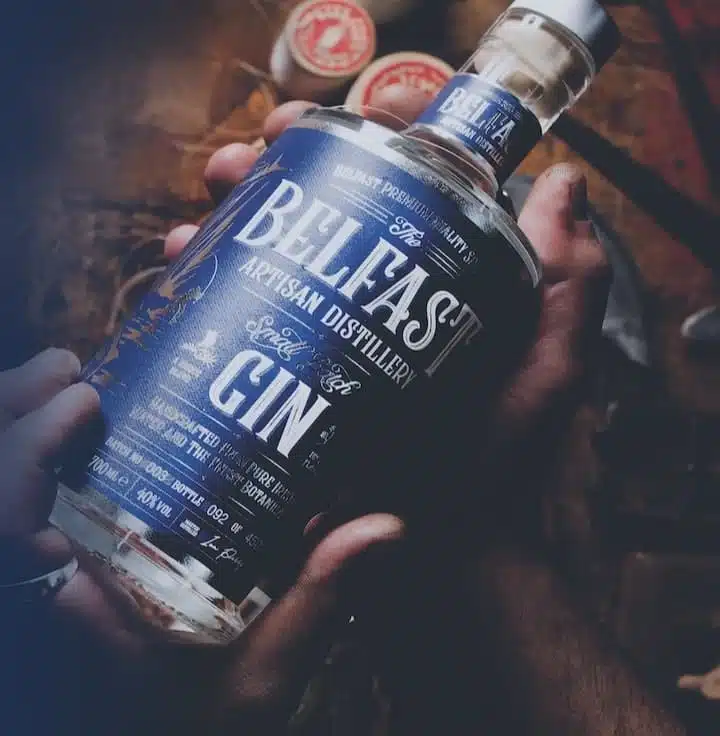
Belfast Artisan Still is a proud representation of a revitalised Belfast — an independent gin distillery built on friendship, community spirit and craftsmanship. Combining locally sourced ingredients with traditional botanicals, the distillery produces premium...
LearningMole is a fun, curriculum-aligned educational platform built to help children genuinely enjoy learning. What started as a small project in 2017 has grown into one of the UK and Ireland's most watched children's...