Skip to content

Website Design for Arts Organisations: Young at Art Belfast

Updated on: Updated by: Nouran Ashraf

ProfileTree, a Belfast-based web design and digital marketing agency, delivered a full WordPress website rebuild for Young at Art, a Northern Ireland arts organisation serving children and young people. The project included TicketSolve event booking integration, WCAG accessibility compliance, and a restructured content architecture, resulting in a 72% on-page SEO score and sub-75ms desktop interactivity.

ClientYoung at Art
Website urlhttps://youngatart.co.uk/
Share on
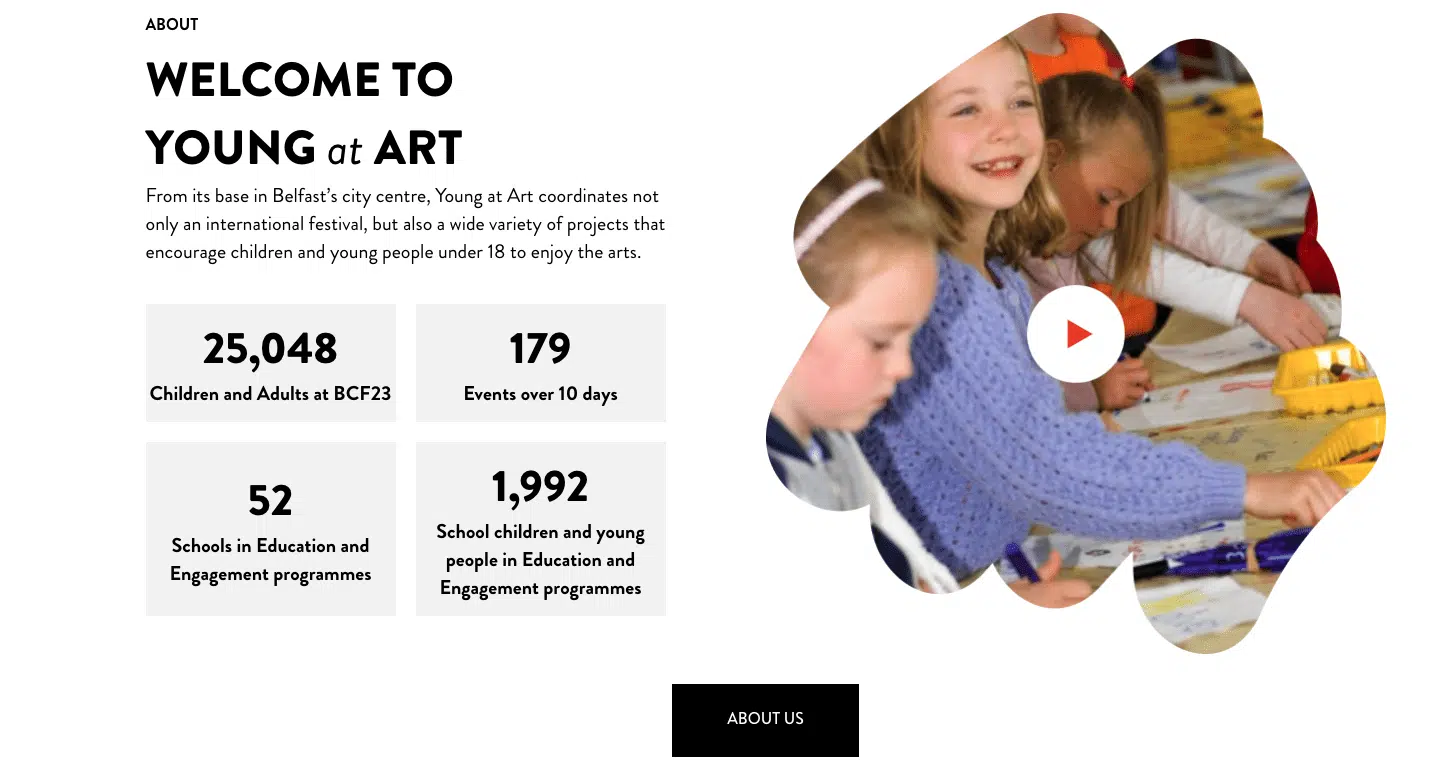
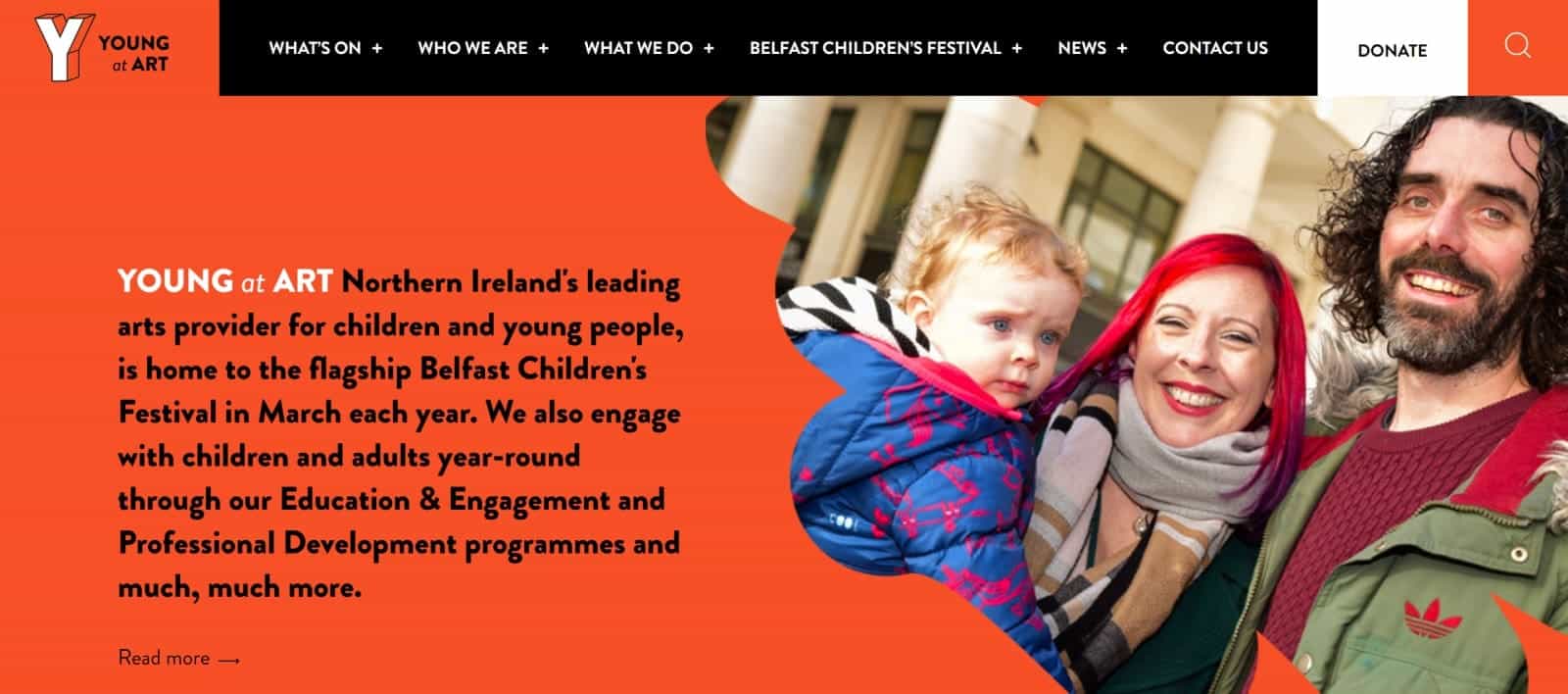
Screenshot of Young of Art site

The Challenge Arts Organisations Face Online

Arts organisations occupy an awkward middle ground in the digital space. They are not commercial businesses, but they compete for audience attention with the same tools. They often run on tight margins with small internal teams, yet they manage complex event calendars, school engagement programmes, and funding relationships simultaneously. Most of the websites ProfileTree encounters in this sector were built years ago, either by volunteers or low-cost suppliers, and have grown organically into something that works well enough for insiders but fails anyone arriving from a search engine.

The practical problems repeat themselves. Event information is scattered across multiple pages with no consistent structure. Booking systems, where they exist at all, are bolted on as afterthoughts rather than integrated into the user journey. Accessibility tends to fall short of WCAG standards, which matters especially for organisations whose mission is inclusive access. And organic search visibility is almost always weak: traffic comes from direct brand visits or social media, not from people discovering the organisation through Google at the point when they are looking for exactly what the organisation offers.

Website Design for Education and Events: A Case Study Review

For publicly funded arts bodies, this is a real strategic problem. Funders increasingly look at digital reach as a measure of community impact. A website that cannot be found, or that fails visitors when they arrive, costs the organisation more than just ticket sales.

“Arts organisations often have the most compelling stories to tell online, but the least infrastructure to tell them,” says Ciaran Connolly, founder of ProfileTree. “Getting the technical fundamentals right, accessibility, site speed, search visibility, creates the conditions for everything else to work.”

Our article on accessibility compliance in website design covers the broader technical requirements for organisations building to WCAG standards.

About Young at Art: The Project

Young at Art is a Belfast-based arts organisation that provides arts experiences for children and young people across Northern Ireland. Its programmes include the annual Belfast Children’s Festival, school and community engagement initiatives, and professional development for artists and educators. The organisation works with 25,000 children and adults annually across over 170 events, reaching nearly 2,000 school children through its education and engagement programmes.

The brief ProfileTree received was straightforward: the existing website was outdated, difficult to update internally, and not performing in search. The organisation needed a new WordPress build that would handle event listings and ticket booking, meet accessibility standards, and give the internal team full control over content without relying on an external developer for routine updates.

What We Did: The Website Design Approach

WordPress Build and CMS Setup

WordPress was the right platform for this project. Young at Art needed a CMS that their team could manage day to day without technical support. The build gave editors full control over event pages, news posts, programme information, and downloadable resources. The information architecture was rebuilt from the ground up rather than migrated from the previous site, which allowed the structure to be designed around actual user journeys rather than the organisation’s internal categories.

TicketSolve Event Booking Integration

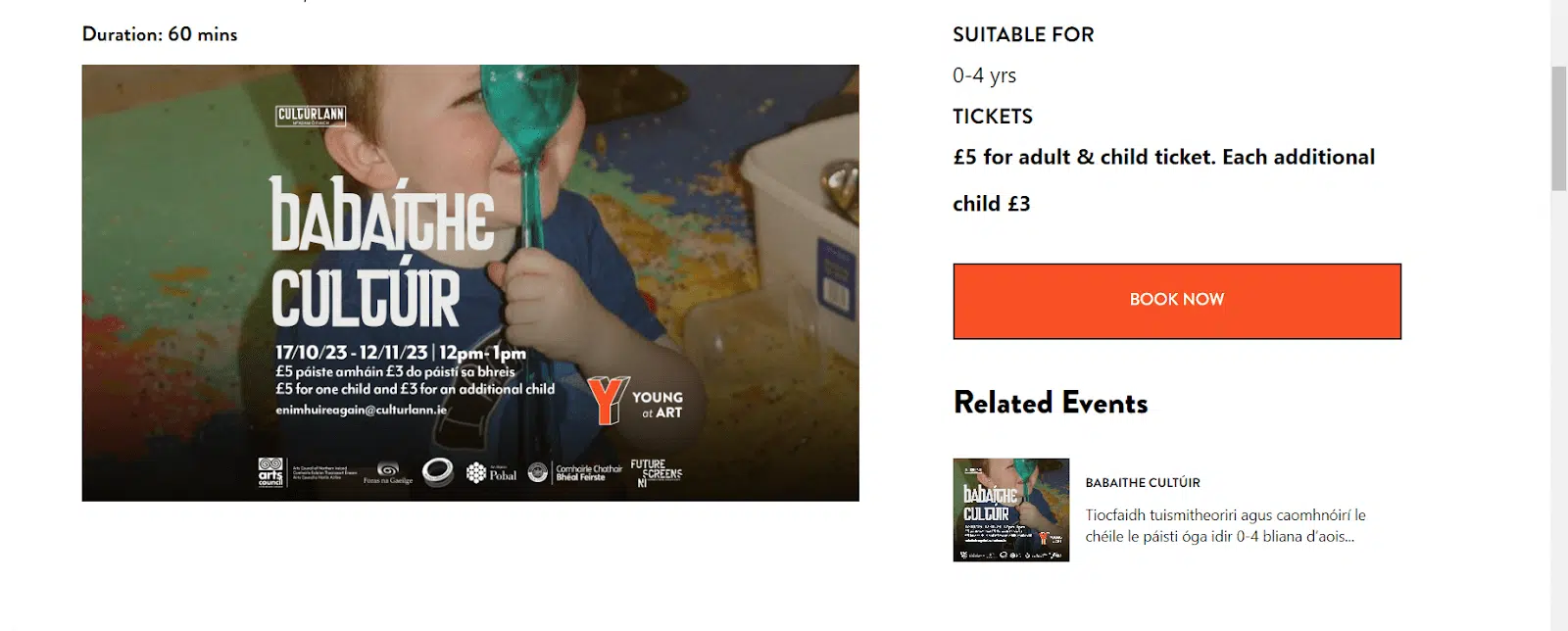
Booking integration was the most technically complex part of the project. ProfileTree deployed TicketSolve, a specialist ticketing platform used widely by arts venues and festivals in Ireland and the UK. The integration supported both recurring and one-off events, with real-time availability and a user journey that ran from event discovery through to booking confirmation without leaving the site. This is a significant UX improvement over the common alternative, where organisations embed a third-party booking widget that drops the user into a completely different interface.

Accessibility and WCAG Compliance

Every page was built and tested against WCAG 2.1 guidelines across multiple screen sizes and device types. For an organisation whose stated mission is inclusive access, this was not optional. Colour contrast, keyboard navigation, screen reader compatibility, and logical heading structure were all verified before launch. The accessibility work also has practical SEO implications: a site with correct heading hierarchy and descriptive alt text gives search engines a clearer picture of the content.

Clear Structure and User Flows

User Experience and Content Structure

The site structure was designed to move visitors quickly from arrival to action. Programme information, event listings, and booking pathways were surfaced at the top level of navigation rather than buried inside a general “what we do” section. A downloadable brochure was added as a clear secondary call to action for visitors who wanted more detail before committing to a booking.

Results

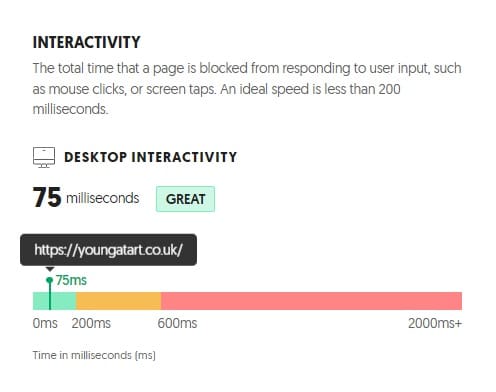
The rebuilt website achieved a 72% on-page SEO score on Rank Math, reflecting correct heading structure, metadata, and content optimisation across all key pages. Desktop interactivity speed came in at 75 milliseconds, within the sub-200ms threshold that Google considers optimal for user experience. Both metrics put the site in a meaningfully better position than the sector average for arts organisation websites of this type.

72% On-Page SEO Score

Fast Interactivity Speed

The internal team can now manage all content updates independently. Event pages go live, news posts are published, and programme information stays current without requiring a developer. For an organisation running over 170 events annually, that operational independence has ongoing practical value.

How ProfileTree Approaches Website Design for Arts Organisations

Arts and cultural organisations have specific requirements that differ from standard commercial web design briefs. Ticket booking and event management need to work reliably at high traffic moments, such as a popular festival going on sale, without requiring a separate platform that breaks the user experience. Accessibility needs to be built in from the start, not retrofitted after launch. And the CMS needs to be genuinely manageable by people whose primary job is not digital.

Our approach for arts clients starts with the user journeys that actually matter: someone looking for what events are on, a teacher looking for an education programme, a parent looking for something specific at the festival. We build the information architecture around those journeys before touching a template or design element.

The technical build follows: WordPress as the CMS for flexibility and editor control, integration with specialist booking platforms where needed, accessibility compliance as standard, and an SEO foundation that gives the site a realistic chance of being found by people who do not already know the organisation.

For arts organisations and cultural bodies considering a website rebuild, our website development services for Northern Ireland and Ireland cover what a structured project looks like from brief through to launch.

Young at Art is based in Belfast. ProfileTree’s web design work across Belfast covers how we approach digital projects for organisations operating in the city and across Northern Ireland.

Frequently Asked Questions

What should a website for an arts organisation include?

Event listings with booking integration, a programme section structured around who it serves, an accessible design built to WCAG standards, and a CMS the internal team can manage without developer support. A news section and downloadable resources are secondary priorities for most organisations in this sector.

How does ticket booking integration work in WordPress?

Platforms like TicketSolve, Spektrix, and Eventbrite integrate with WordPress via API or plugin, keeping the user on your site through the full booking journey. A properly configured integration pulls live availability from the ticketing platform and returns the user to a confirmation page on your site after payment.

Does WCAG compliance affect SEO?

Yes. WCAG compliance requires correct heading structure, descriptive alt text, and logical page flow — all of which help search engines index a page correctly. A site built to WCAG 2.1 AA will generally carry better technical SEO signals than one that has not been tested for accessibility.

How long does a website rebuild take for a small arts organisation?

A project combining WordPress build, booking integration, accessibility testing, and content migration typically runs eight to twelve weeks from brief to launch. The main variable is content sign-off; the technical work rarely causes delays when the client brief is clear from the start.

How do you measure the success of a website project for a cultural organisation?

Technical scores (on-page SEO, site speed, accessibility) provide the baseline. The meaningful measures beyond that are booking completion rates, whether the internal team can keep content current, and whether organic search traffic is growing from people who did not already know the organisation.

Can a smaller arts organisation afford a professional WordPress build?

A core WordPress build with event listing structure and CMS setup is within reach for most funded arts organisations. Specialist booking integration and bespoke design add to the cost, and many organisations in this sector are eligible for digital development funding through Arts Council grant schemes.

Join Our Mailing List

Grow your business with expert web design, AI strategies and digital marketing tips straight to your inbox. Subscribe to our newsletter.