ProfileTree, a Belfast-based web design and digital marketing agency, delivers multilingual website design for education providers and language schools across Ireland and the UK. This case study covers a full WordPress rebuild for Bridge Mills Galway Language Centre, including a six-language WPML implementation, restructured information architecture, and improved SEO keyword rankings across multiple markets.
Language schools occupy an unusual position in the education market. Their clients come from across the world, often making enquiries in their own language, yet the majority of language school websites are built entirely in English and designed for a domestic audience. For schools that compete internationally, that gap between the students they want to reach and the experience they actually provide online is a serious commercial problem.
The schools ProfileTree works with in this sector consistently run into the same set of issues. First, many are running on platforms chosen for convenience rather than capability. When those platforms are discontinued or fail to scale, the school is forced into an emergency migration with no clear strategy for what comes next.
Second, course information is rarely structured well. A prospective student from Spain, looking for a general English programme in Galway, should be able to find that information quickly, in Spanish if possible, with clear details on level, duration, and how to apply. Most language school websites make that journey harder than it needs to be.
Third, organic search visibility tends to be weak. Schools attract some direct brand traffic, but for search terms like ‘English language school Ireland’ or ‘study English Galway’, many are nowhere to be found. The opportunity to capture students at the point of decision, through well-structured multilingual content, goes unused.
“The challenge for language schools is that their website needs to work for a global audience, not just a local one,” says Ciaran Connolly, founder of ProfileTree. “That means thinking about language, structure, and search visibility as a single problem, not three separate projects.”
Our article on language and localisation strategies for European audiences covers the broader context for organisations thinking about multilingual digital strategy.
About Bridge Mills Galway Language Centre: The Project
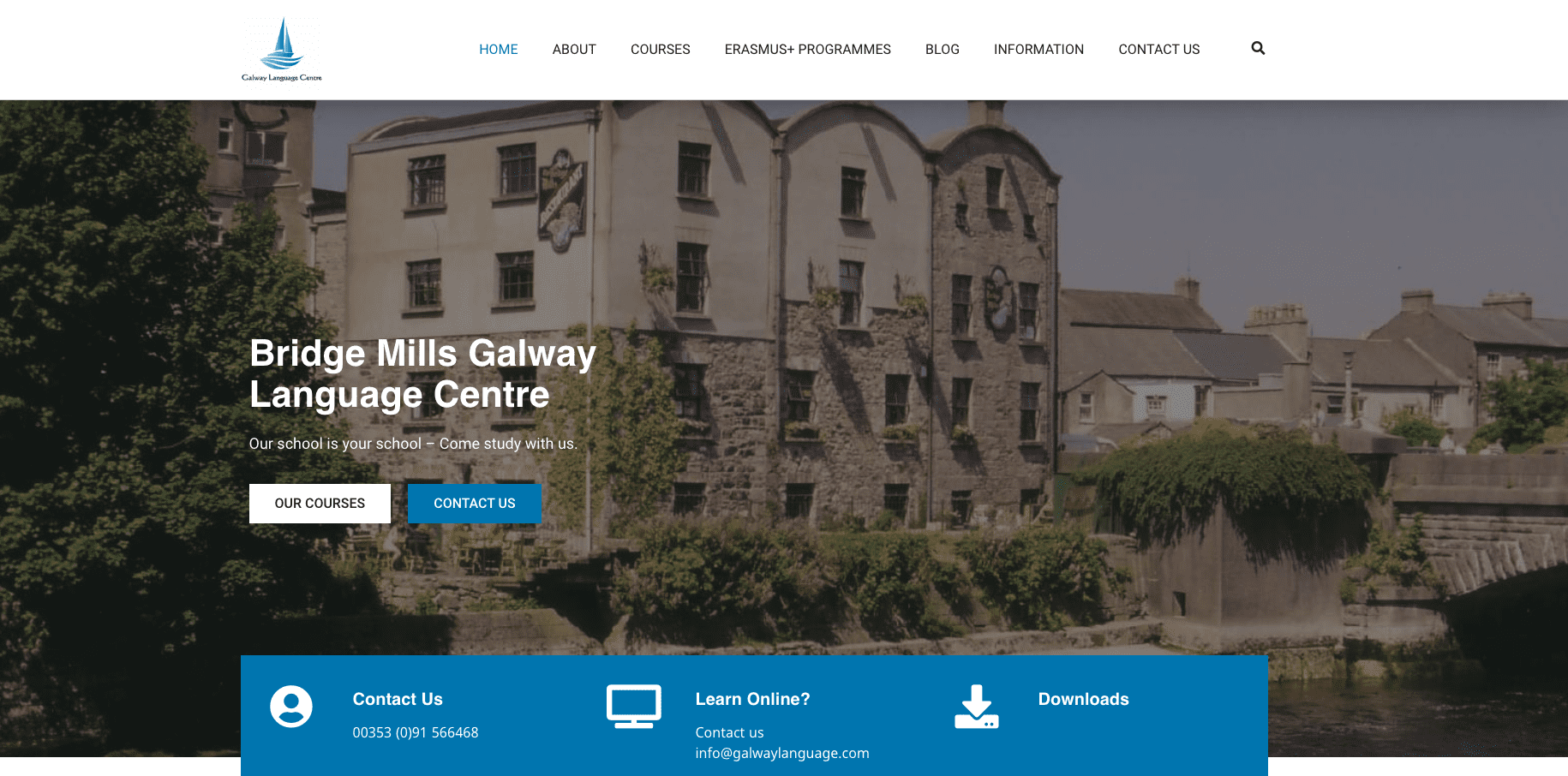
Bridge Mills Galway Language Centre is an adult English language school located in Galway, Ireland. Established in 1987, the school is accredited by EAQUALS, ACELS, MEI, ALTO, QQI, Quality English, Cambridge Examinations and Cambridge Admissions Testing. Its courses include general English, exam preparation, business English, and teacher training, alongside online lessons and self-guided study packs.
The school had a strong academic reputation and a genuinely international student base. The problem was a practical one: the platform hosting their existing website was being discontinued, and the school needed to move quickly to a new digital home without losing their search visibility or disrupting the experience for current and prospective students. The brief ProfileTree received was to deliver a new WordPress website that could serve students across six languages and support the school’s ongoing content and SEO activity.
What We Did: The Multilingual Website Design Approach
CMS Selection and WordPress Migration
The first decision was the platform. Given the school’s need for frequent content updates, flexible page creation across six language versions, and the ability to integrate SEO tools and booking enquiry forms, WordPress was the right choice. It gave the school full editorial control and a foundation that could be extended as their requirements grew.
The migration was managed to preserve existing page structures and URL patterns where possible, protecting any residual search equity from the previous site. All content was reviewed and restructured before being brought across rather than carried over as-is.
Multilingual Framework via WPML
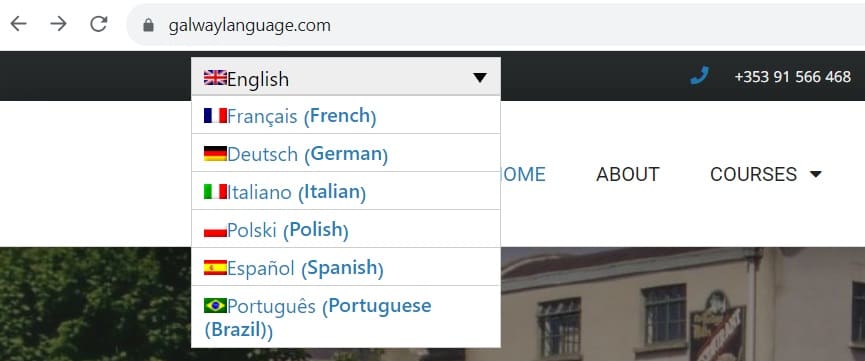
To implement the multilingual website design, ProfileTree deployed WPML, the WordPress Multilingual Plugin. This enabled the site to serve content in English, French, Spanish, Italian, Portuguese, and Polish from a single domain, with language-specific SEO tags and canonicalisation rules applied to each version.
Language switchers were added to both the header and footer, ensuring they were visible and accessible on all device types. This matters more than it might seem: a student accessing the site on a mobile device in their home country needs to find the language toggle immediately, not after scrolling through an English-language homepage.
Information Architecture and User Experience
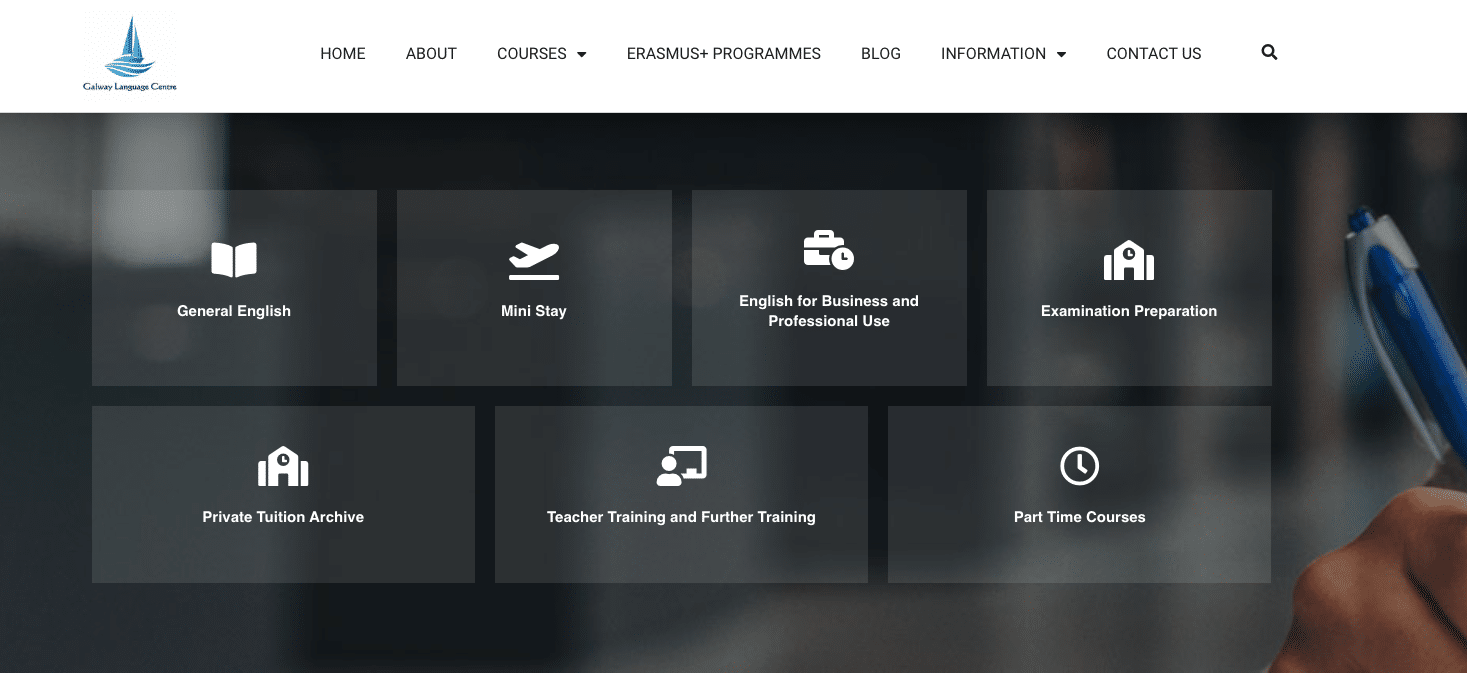
Alongside the multilingual framework, the information architecture was rebuilt from the ground up. The previous site made it difficult for prospective students to locate and compare course options. The new structure introduced clear categorisation of course types (general English, business English, exam preparation), filters for duration and language level, and downloadable course brochures available in all six supported languages.
A frequently asked questions section was added to address the practical concerns of international learners: visa requirements, accommodation options, course progression, and accreditation. This content serves a dual purpose: it answers genuine questions from prospective students and it creates well-structured, self-contained content that search engines can extract and cite.
Results
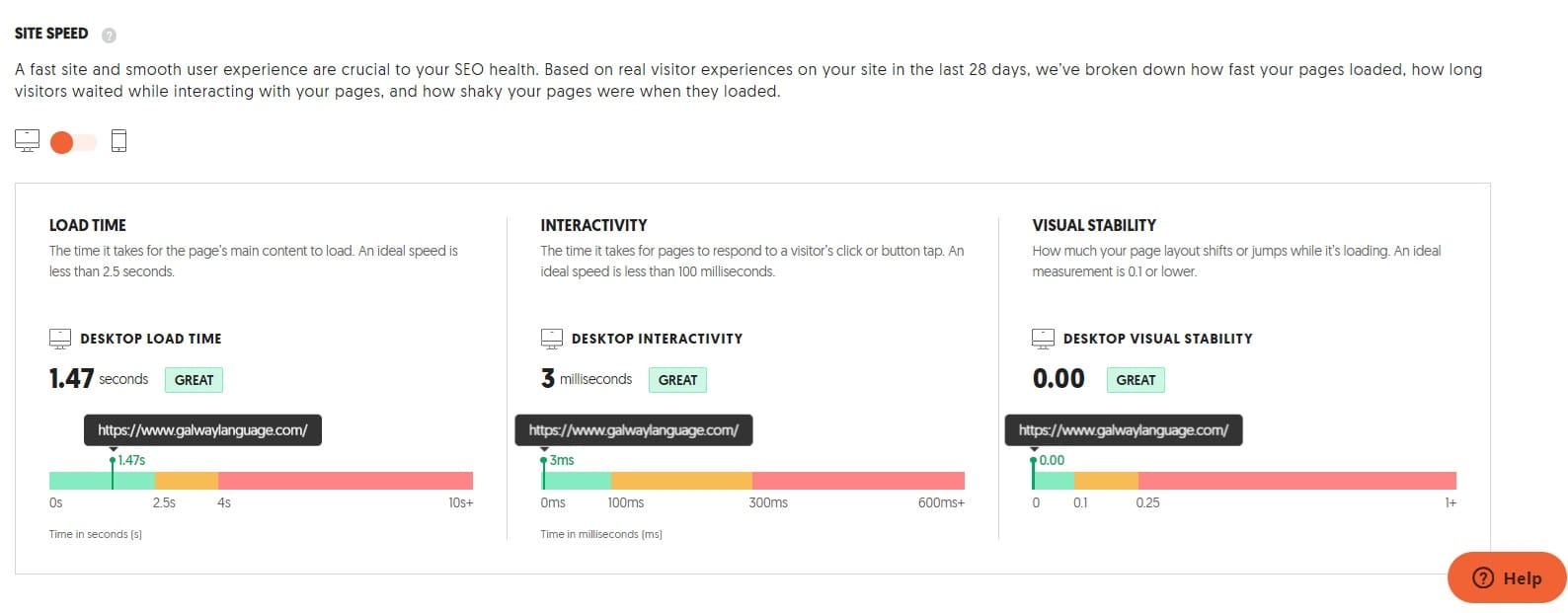
The rebuilt website delivered measurable improvements in technical performance and search visibility. Site speed metrics across all six language versions returned strong scores for load time, interactivity, and visual stability, achieving optimal ratings in desktop testing.
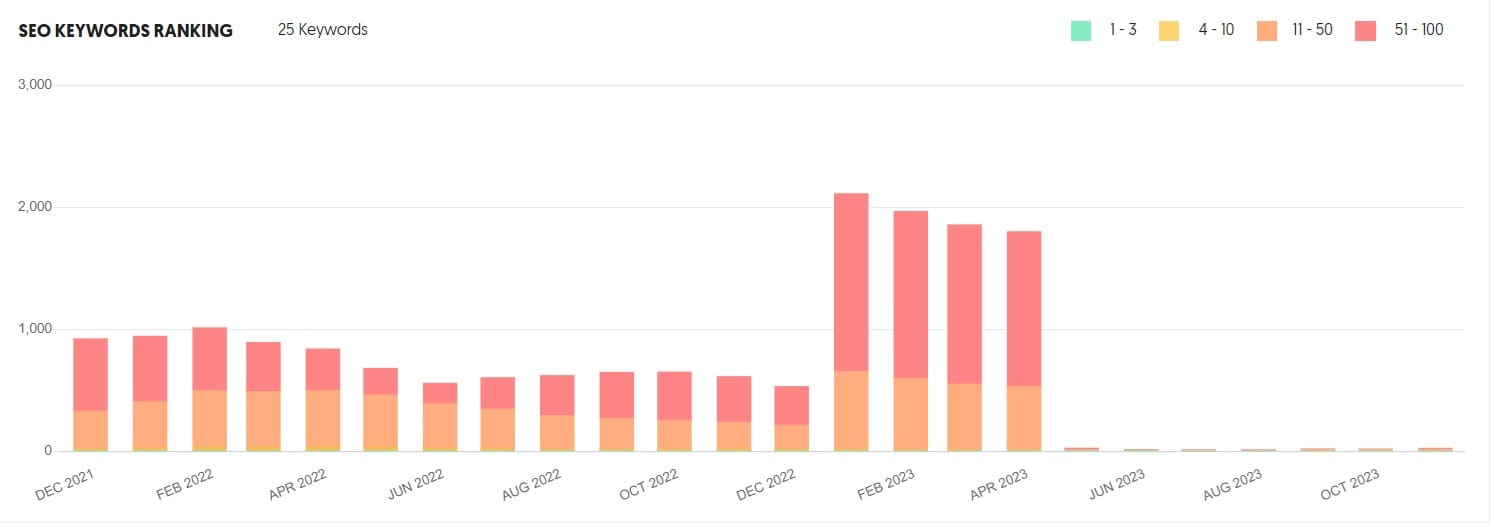
Keyword rankings increased across multiple languages, improving the school’s visibility for relevant searches in target student markets. The multilingual structure created the conditions for SEO performance in regional searches that the previous English-only site could not reach.
The school now has a digital platform that reflects its academic standards, serves its international student base in their own languages, and provides a foundation for ongoing content and SEO work.
How ProfileTree Approaches Multilingual Website Design for Education Providers
Every multilingual project ProfileTree takes on starts with a clear question: which languages are genuinely needed, and what does the content experience need to deliver in each one? A site that lists six language options but provides only partial translations, or that shows the same English content behind a language toggle, creates more confusion than a well-structured English-only site.
Our approach combines platform selection, multilingual framework implementation, and information architecture into a single project rather than treating them as separate workstreams. For education providers, these three elements are closely dependent. The CMS choice affects what the multilingual plugin can do. The information architecture determines whether the translated content is actually findable. Getting one right while ignoring the others produces a site that functions technically but fails commercially.
The practical programme for a language school or education provider typically includes a WordPress migration or rebuild, WPML or equivalent multilingual plugin implementation with language-specific SEO configuration, a restructured information architecture designed around the student decision journey, and an ongoing content strategy covering blog articles in supported languages and location-specific landing pages for key student markets.
What is WPML and why is it used for multilingual website design?
WPML, the WordPress Multilingual Plugin, is the most widely used solution for building multilingual websites on WordPress. It allows a single WordPress installation to serve content in multiple languages, applying language-specific URLs, SEO metadata, and canonicalisation rules to each version. For education providers and language schools, it is a practical choice because it integrates with the major SEO plugins and page builders, gives editors control over each language version independently, and handles the technical requirements of multilingual SEO without requiring a separate domain or subdomain for each language.
How many languages should a language school website support?
This depends on where the school’s students actually come from, not where the school would like them to come from. The right starting point is the school’s own enrolment data: which nationalities make up the largest groups of students? Those are the languages to prioritise. Adding languages that see no traffic or enquiries creates maintenance overhead without commercial return. For most Irish and UK language schools, Spanish, Italian, French, and Portuguese cover the majority of European student markets, with Polish relevant for schools with significant Eastern European enrolment.
Does a multilingual website help with SEO?
Yes, when implemented correctly. A multilingual website on a single domain consolidates search authority rather than splitting it across multiple sites. Language-specific pages, with properly configured hreflang tags and translated metadata, can rank for searches conducted in those languages in the relevant markets. For a language school, this means appearing in searches like ‘English language school Ireland’ conducted by prospective students in Spain, Italy, or Poland, in their own language, from their own country. That visibility is not achievable through an English-only site, however well optimised.
What content should be translated on a language school website?
At minimum: the homepage, course pages, application or enquiry process, FAQ section, and any content that addresses common concerns from international students such as accommodation, visas, or course progression. Secondary content such as blog posts can be translated selectively, focusing on the most-visited pages and the content most relevant to each language market. Downloadable materials such as course brochures and application forms should also be available in all supported languages. Generic pages such as the team page or school history are lower priority.
How long does a multilingual website rebuild take?
For a school of this scale, a project combining WordPress migration, WPML implementation, information architecture restructuring, and translation coordination across six languages typically runs over eight to twelve weeks from brief to launch. The timeline depends on how much existing content needs to be restructured rather than simply translated, the complexity of the course information, and how quickly translation can be supplied. Translations produced by the school or professional translators generally produce better results than machine translation for content that directly influences a prospective student’s decision to apply.
What ongoing work does a multilingual website require after launch?
The site needs to be maintained across all language versions, not just the primary English version. When a new course is added, or fees change, or a new intake opens, that information needs to go up in every language simultaneously. A content strategy that treats the multilingual site as a single unified asset, planned and updated in all languages together, avoids the situation where the English version is current and the Spanish version is eight months out of date. ProfileTree advises education clients to build multilingual update cycles into their standard content calendar from the outset.
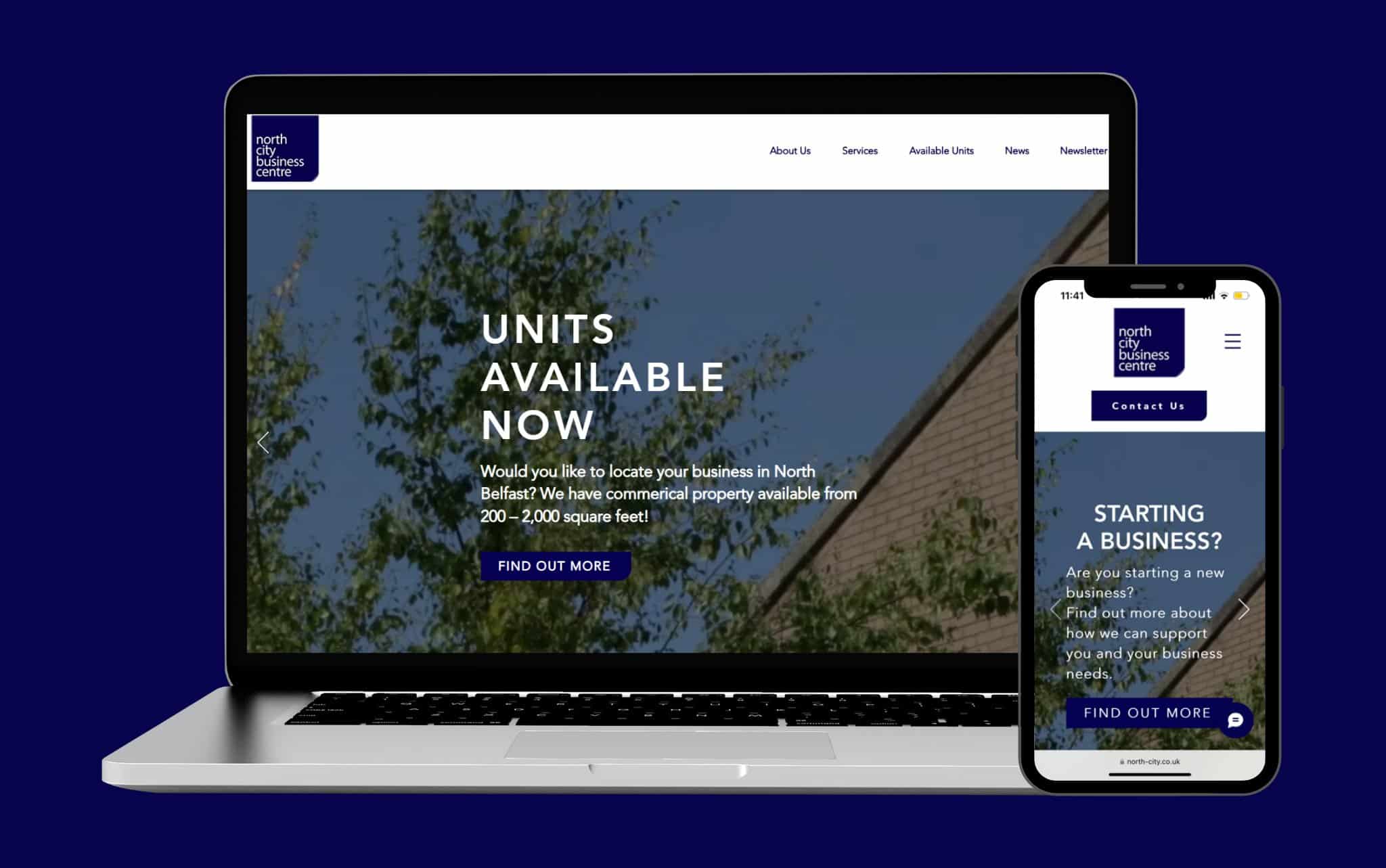
Business parks and local enterprise agencies occupy an unusual position online. Their work is highly local, deeply community-rooted, and often includes a mix of services (workspaces, funded programmes, conferencing, virtual offices) that don't fit...
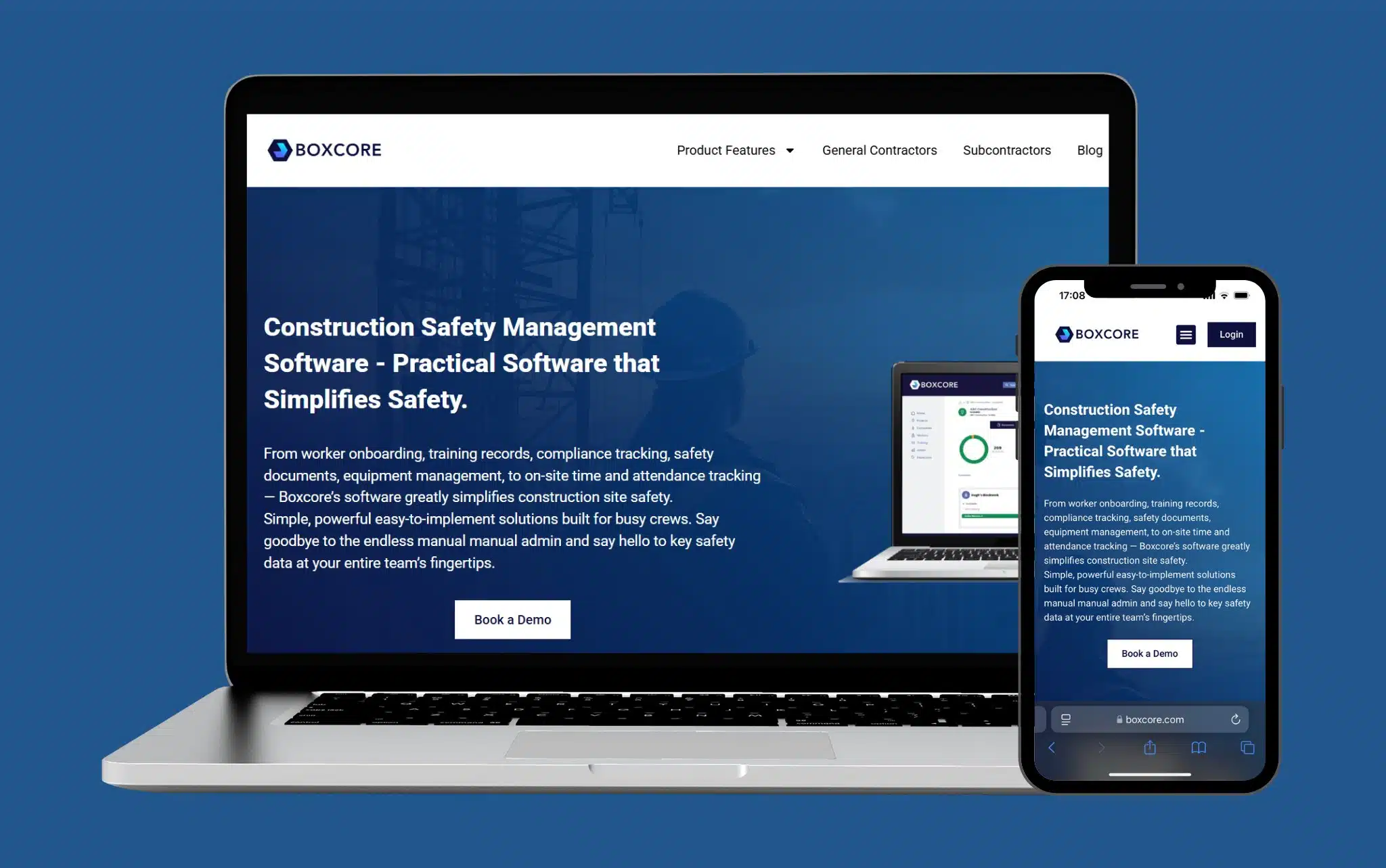
ProfileTree, a Belfast-based digital agency, delivered a complete construction software website design for Boxcore, a construction technology platform managing safety and compliance documentation across the UK, Ireland and the US. This case study covers...
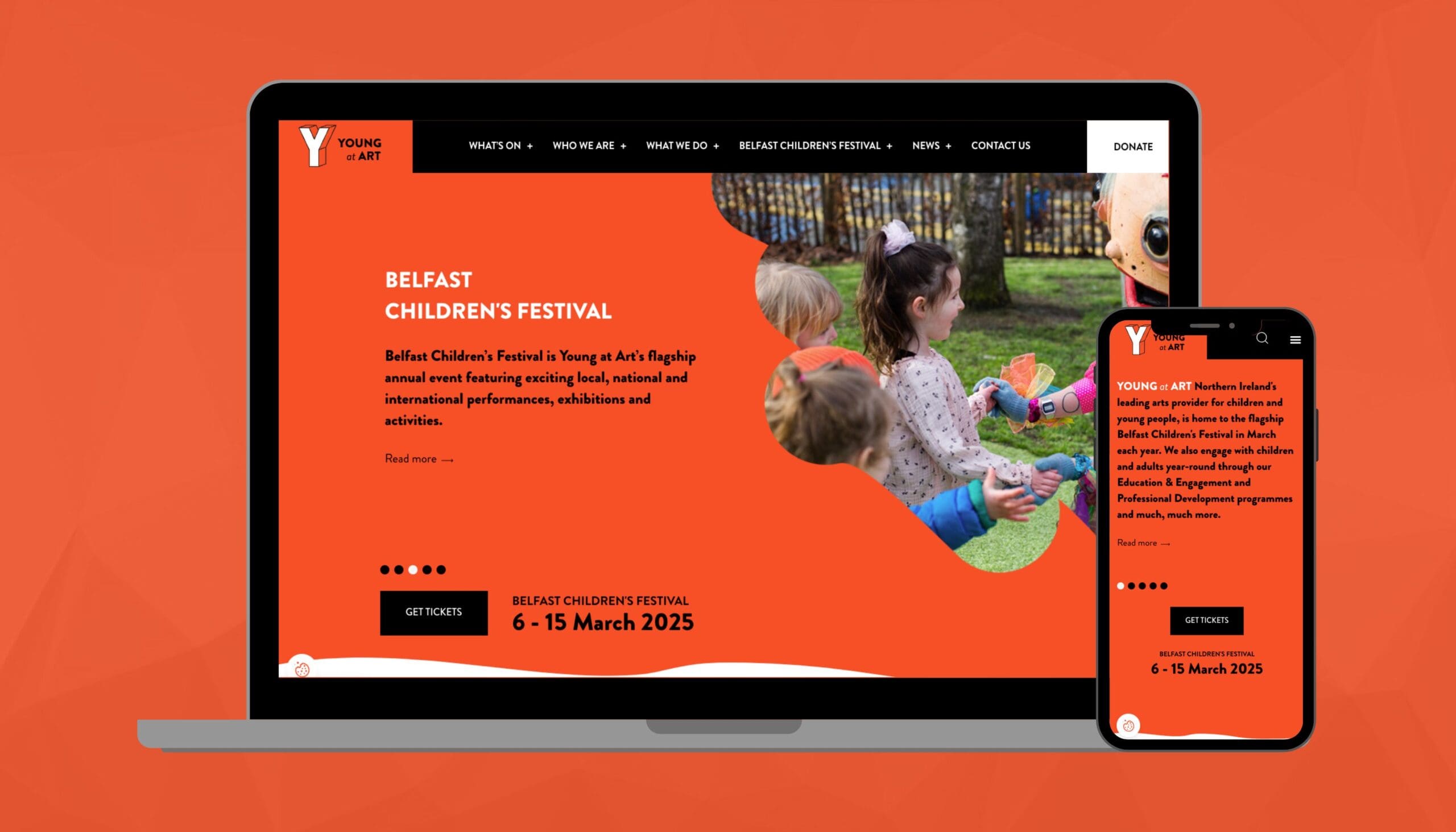
ProfileTree, a Belfast-based web design and digital marketing agency, delivered a full WordPress website rebuild for Young at Art, a Northern Ireland arts organisation serving children and young people. The project included TicketSolve event...
Navigate the digital landscape with a marketing strategy. Our team crafts comprehensive plans that resonate with your target audience, drive engagement, and boost conversions.
Elevate your digital proficiency. Our in-depth training sessions equip your business with cutting-edge digital marketing techniques to outperform competitors and thrive online.
Captivate and grow your social following. We create tailored social media strategies that ignite engagement, amplify your brand's online presence, and foster lasting connections.
Harness the power of your mailing list. Our precision-targeted email marketing campaigns are engineered to nurture relationships and drive tangible business outcomes.
Elevate your brand with our content marketing mastery. From thought-provoking blogs to eye-catching infographics, we craft content that captivates, informs, and converts your ideal audience.
Bring your brand's story to life with authenticity. We craft compelling narratives that strike a chord with your audience, forging a powerful emotional bond with your brand.
Empower your business with AI expertise. Our tailored training demystifies AI, equipping your team with the knowledge to leverage its potential for growth and innovation.
Transform customer service with AI chatbots. We develop sophisticated chatbots that elevate user experience, streamline interactions, and deliver unparalleled efficiency.
Transform your reach with AI-driven marketing. Harness data-driven insights for laser-targeted campaigns that captivate, engage, and convert your audience.
Optimise your operations with cutting-edge AI tools. We integrate intelligent solutions that streamline processes, enhance efficiency, and support data-driven decision-making.
Join Our Mailing List
Grow your business with expert web design, AI strategies and digital marketing tips straight to your inbox. Subscribe to our newsletter.