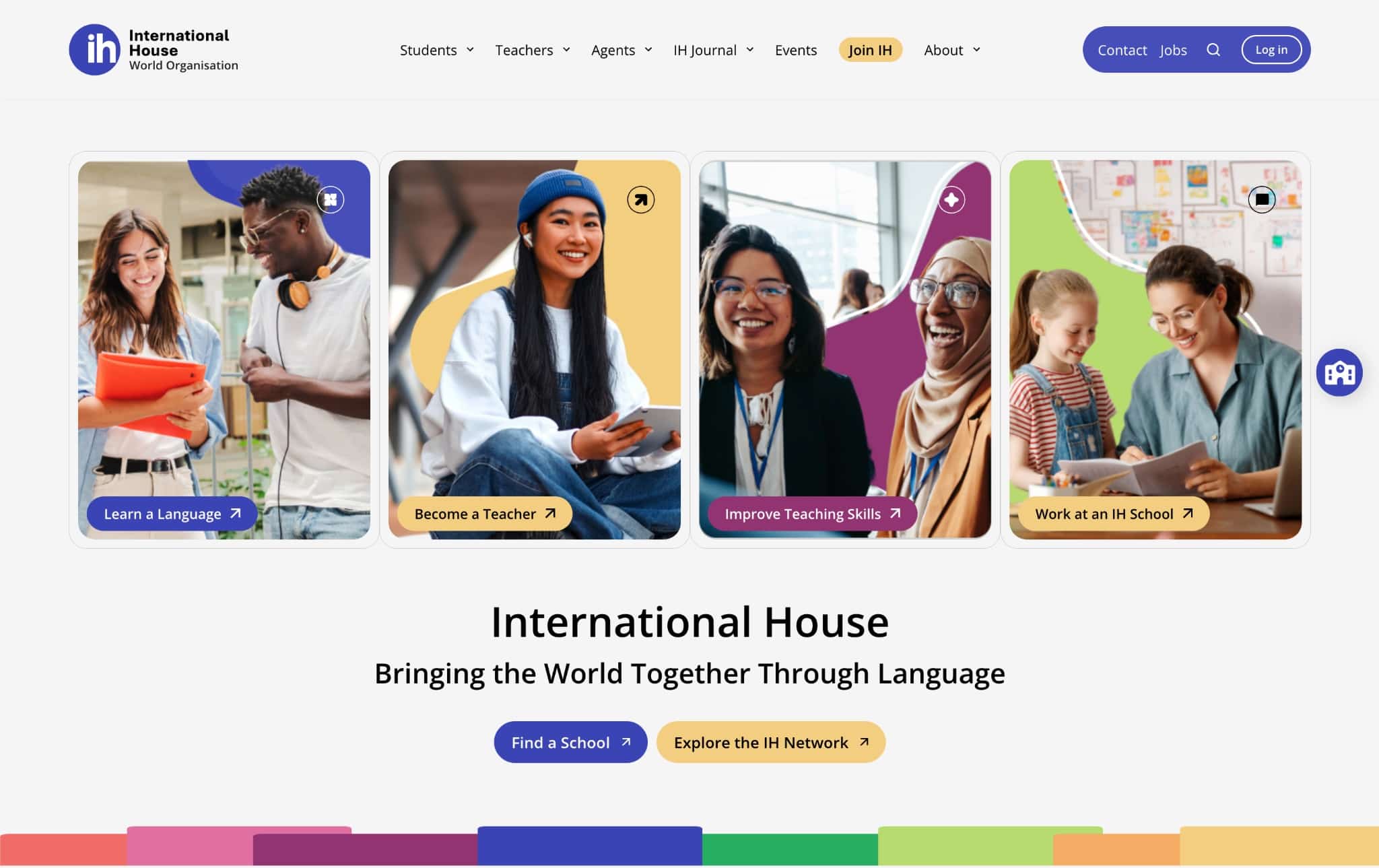
ProfileTree, a Belfast-based web design and digital marketing agency, builds WordPress websites for international membership organisations and education networks. This case study covers a full platform migration and redesign for International House World Organisation — a network of 130+ language schools in 45 countries — improving navigation, internal content control, and member portal functionality.
The Digital Challenges Membership Organisations Face
Large membership organisations share a problem that is easy to overlook until it becomes a real operational drag: their websites grow sideways rather than forward. A new section gets added here. A portal workaround gets bolted on there. The result, after five or ten years of organic growth, is a site that nobody planned — and that nobody can maintain without calling in external help for every minor change.
This is what the team at ProfileTree encounters regularly when working with professional networks, associations, and international education bodies. The website was built incrementally, which made sense at the time. The problem is that visitors — whether they are students searching for a language school, teachers looking for CELTA training, or member schools trying to access shared resources — cannot navigate something that was never designed for them. They leave.
There is also the internal cost. When a content management system is too rigid to edit without developer support, the marketing and operations team stops trying. Pages go stale. Resources go un-updated. The site becomes a liability rather than an asset.
For organisations operating across multiple countries and serving diverse audience groups simultaneously, the stakes are higher. A student in Brazil looking for an English course and a school director in Spain seeking membership documentation need to reach their goals quickly — through the same website. Without clear user pathways mapped around intent, both fail.
The solution is not a new visual identity. It is rethinking the architecture, the content hierarchy, and the platform from the ground up — then handing control back to the people who know the organisation best. For more on what makes a membership website function effectively, see our guide to web design for organisations across Northern Ireland.
About International House World Organisation: The Project
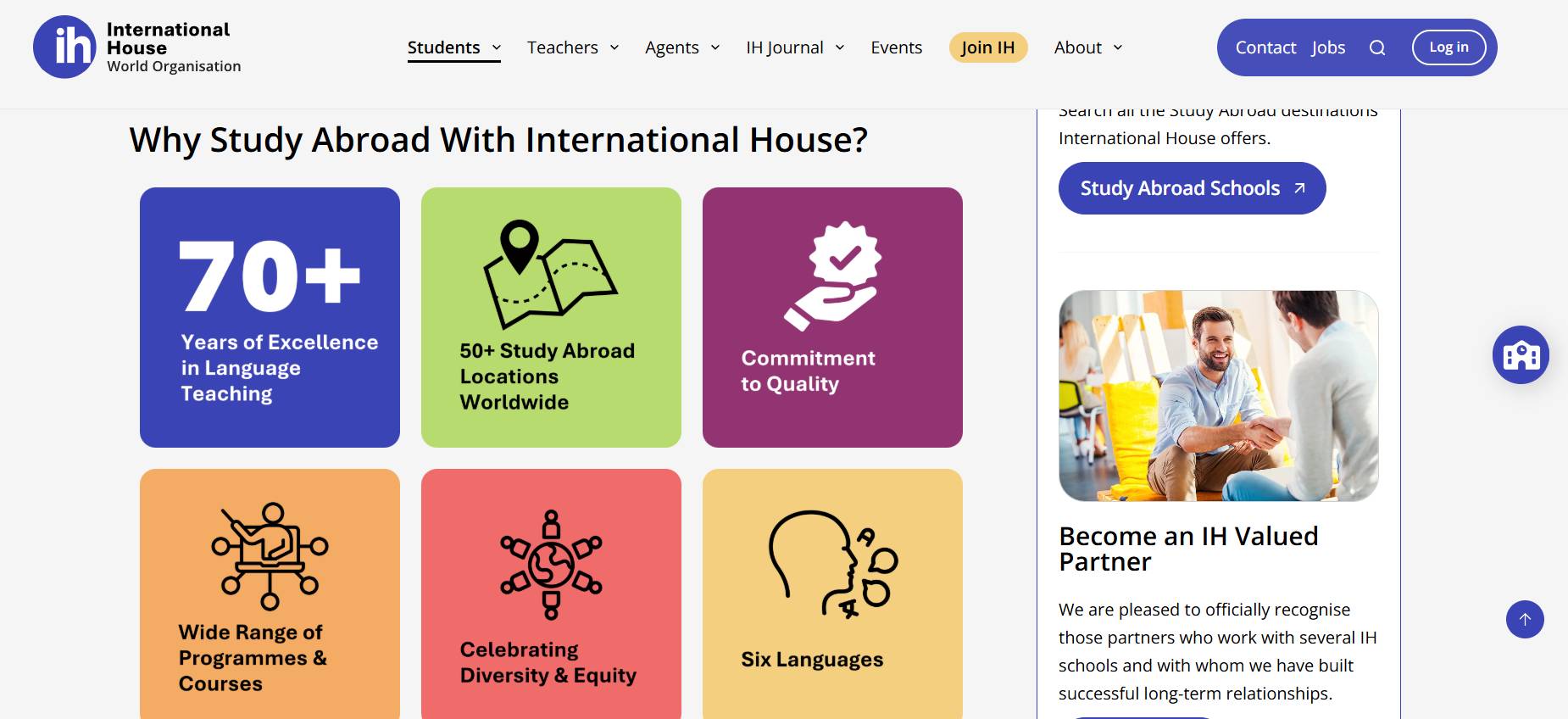
Founded in 1953, International House World Organisation (IH World) is one of the most widely recognised names in global language education. The network comprises more than 130 independently owned and managed language schools operating across 45 countries. Member schools collectively teach over 200,000 students annually in English, Spanish, German, French, Italian, and other languages.
IH World schools are also significant players in teacher training — together responsible for training approximately half of the world’s CELTA graduates. The network employs more than 5,800 teachers and staff worldwide.
IH World itself functions as a governing body and central resource hub, supporting member schools, engaging students, connecting agents, and attracting prospective teachers — all through a single digital platform with very different audiences to serve at once. When the organisation approached ProfileTree, their platform had reached a point where growth and usability had both become critical problems. This project is part of ProfileTree’s wider WordPress web design and development work across Northern Ireland and the UK.
What We Did: The WordPress Redesign Approach
Platform Migration and CMS Selection
The first decision was the most consequential: moving the site from a restrictive legacy platform onto WordPress with Elementor. The previous system required external developer involvement for even routine content changes, creating a bottleneck that slowed the team and left sections of the site out of date.
WordPress with Elementor gave the IH World team a visual editing interface they could own. Pages can now be updated, expanded, or restructured in-house without code. That operational independence was not a nice-to-have — it was a core project objective, and it shaped every subsequent decision about the build.
Site Architecture and Navigation
The legacy site had grown organically over many years into a cluttered structure. Visitors struggled to find information, regardless of which audience group they belonged to.
ProfileTree restructured the navigation around a clear top-level hierarchy designed for user intent: Home, About, Find a School, Teacher Training, For Schools, Join IH, News & Events, and Contact. Each section serves a primary audience goal rather than reflecting the organisation’s internal structure.
User Journey Design
We mapped distinct journeys for each high-priority audience group. Students needed a clear path to finding and contacting a school. Teachers needed direct routes to CELTA and professional development pathways. Schools needed a functional portal for resources and administrative tasks. Prospective member organisations needed to understand the requirements and value of joining the network.
Each journey was built into the visual hierarchy and page architecture — so users reach their goal without having to decipher the menu or make assumptions about where information lives.
Redesigned Member Portal
The previous member portal was unintuitive for both IH World staff and the schools it served. Accessing shared documents, submitting forms, and coordinating across the global network were slow and frustrating processes.
The rebuilt portal functions as a centralised resource hub with form-building tools, collaborative forums, and improved navigation specific to school and staff needs. The aim was to reduce friction for the tasks that member schools carry out most often, and to make collaboration across 45 countries a practical daily reality rather than a scheduled effort.
Brand and Visual System
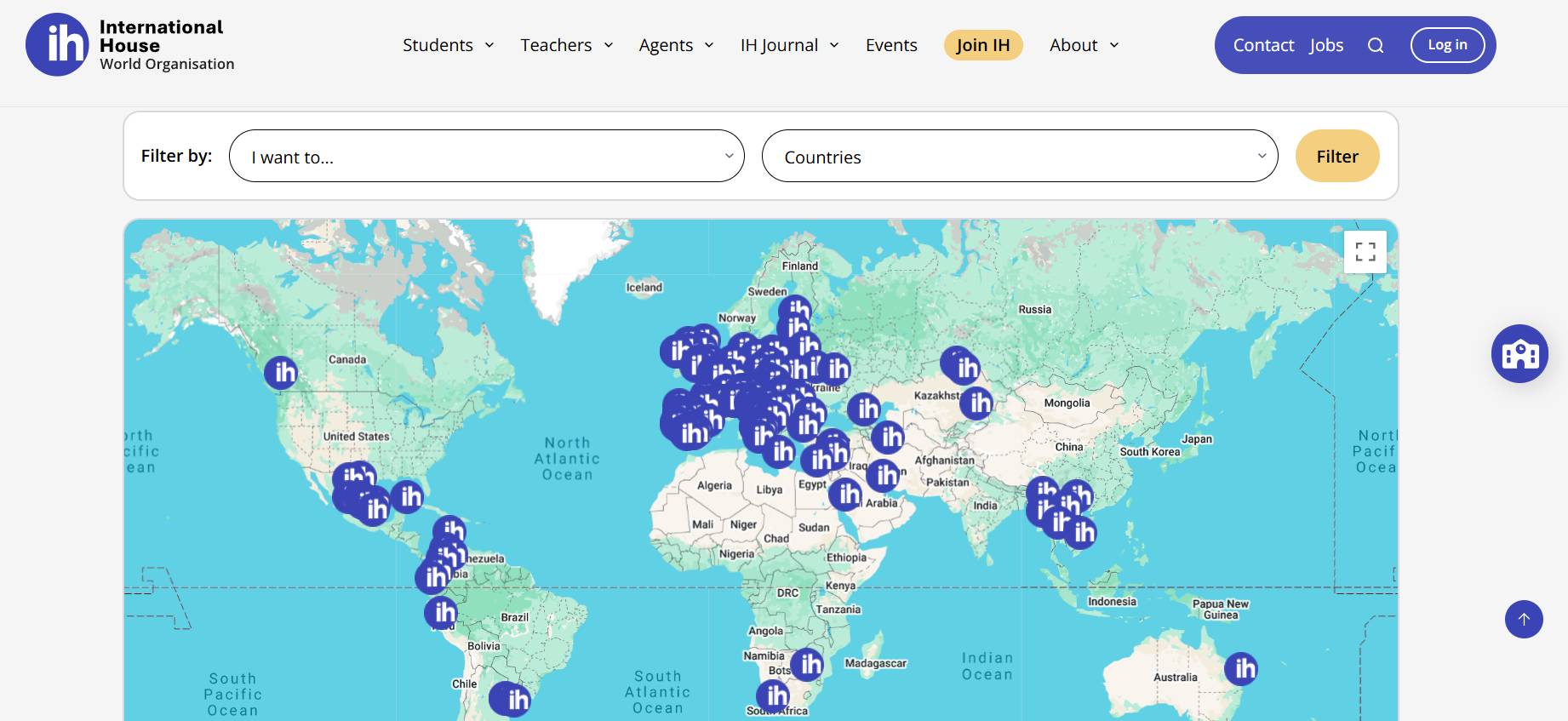
IH World was simultaneously undertaking a broader brand refresh. The WordPress rebuild integrated this updated visual identity across the site — consistent typography, iconography, colour system, and interactive elements — presenting a professional, cohesive digital presence appropriate to the organisation’s global standing. An interactive “Find a School” map was introduced as part of the user-facing design, allowing prospective students and agents to explore the IH network visually.
Results
The redesigned site gave IH World’s internal team control they had not previously had. Content updates that previously required developer support are now handled in-house through Elementor’s visual editor.
The restructured navigation reduced the steps required for each audience group to reach their primary goal. The rebuilt member portal consolidated resources, forms, and communication tools that had previously been scattered or inaccessible to many schools.
The flexible WordPress architecture is built to scale alongside the organisation — accommodating new member schools, additional language programmes, and evolving training pathways without requiring a rebuild each time the network grows.
“Great design isn’t just about how a site looks — it’s about how it works. Our work for IH World ensured that complex content became easy to access, intuitive to explore, and a true reflection of the organisation’s global reach.” — Ciaran Connolly, Director, ProfileTree
How ProfileTree Approaches WordPress Web Design for Membership Organisations
Membership organisations and international networks have specific requirements that a standard web design brief does not always capture. The site must serve multiple audience groups with genuinely different needs — often in multiple languages, time zones, and technical contexts. It must give the internal team real control, not the impression of control. And it must reflect the credibility of the organisation to every visitor who arrives, regardless of how they found it.
ProfileTree’s approach starts with architecture. Before any design decisions are made, we map the audiences, identify their primary goals, and build the content hierarchy around those goals. The visual design follows the structure — not the other way around.
For organisations on legacy platforms or restrictive CMS environments, WordPress with Elementor is often the right foundation. It combines the flexibility to build exactly what the organisation needs with the editorial simplicity that lets non-technical teams manage content day to day. We have used this approach across projects ranging from local SMEs in Belfast to international networks operating across multiple continents.
If you are managing a membership site, a professional network, or a multi-audience educational platform and the current setup is creating operational drag, our WordPress web design services for organisations across Northern Ireland and the UK cover the full process from strategy and architecture through to build and ongoing support.
Frequently Asked Questions
How long does a WordPress redesign take for a large membership organisation?
For a project of this scale — involving platform migration, portal development, navigation restructuring, and brand integration — the typical timeline runs from four to six months. The discovery and architecture phase, where we map user journeys and agree on the content hierarchy, is the most important investment of time upfront. Getting that right compresses the design and build phases considerably. Rushing the strategy phase is the most common reason redesign projects overrun.
What is the difference between a WordPress redesign and a standard website refresh?
A refresh typically updates the visual design while keeping the existing structure intact. A redesign involves rethinking the architecture, navigation, and content organisation from the ground up — and usually includes a platform change or significant CMS upgrade. For most membership organisations with sites that have grown organically over many years, a surface-level refresh rarely resolves the underlying usability and maintenance problems. The structure is what needs to change.
Can a non-technical team manage a complex WordPress site after launch?
Yes, with the right foundation. WordPress with Elementor gives editorial teams a visual drag-and-drop interface for creating and updating pages without writing code. The key is training during handover — not just showing the team how the tools work, but agreeing on which tasks are self-serve and which should involve the development team. ProfileTree provides post-launch support and training as standard on membership organisation projects.
What does rebuilding a member portal involve?
A member portal rebuild typically covers three areas: resource management (centralised document and guideline access), process tools (forms, submissions, approval workflows), and communication features (forums, announcements, collaborative spaces). The complexity depends on how many user roles need different access levels and how much integration is required with existing systems such as membership databases or CRM platforms. The IH World portal covered all three areas across a global network of schools with varying technical capabilities.
How does ProfileTree handle multi-audience websites where different user groups need different journeys?
The starting point is user journey mapping before any structural decisions are made. We identify the three to five highest-priority audience groups, define their primary goals, and trace the path from landing on the site to completing that goal. The site architecture is then built around those journeys — not around the organisation’s internal structure, which is rarely how visitors think. Separate page templates, navigation pathways, and content hierarchies are built for each primary group, with visual segmentation making it immediately clear which section belongs to which audience.
What should an international organisation look for in a web design agency?
Experience with complex, multi-audience sites is more important than a long portfolio. Ask specifically about projects involving portal functionality, multiple user roles, or international content requirements. Look for an agency that leads with architecture questions rather than visual ones — a team that asks about your user journeys and content management requirements before showing you design examples is more likely to deliver something that works. Check whether the agency provides post-launch training and support, or whether the project ends at handover.
In today’s competitive digital landscape, businesses face an ongoing challenge: standing out online. A well-designed website and engaging content are important, but they are not enough to secure top rankings in search results. To...
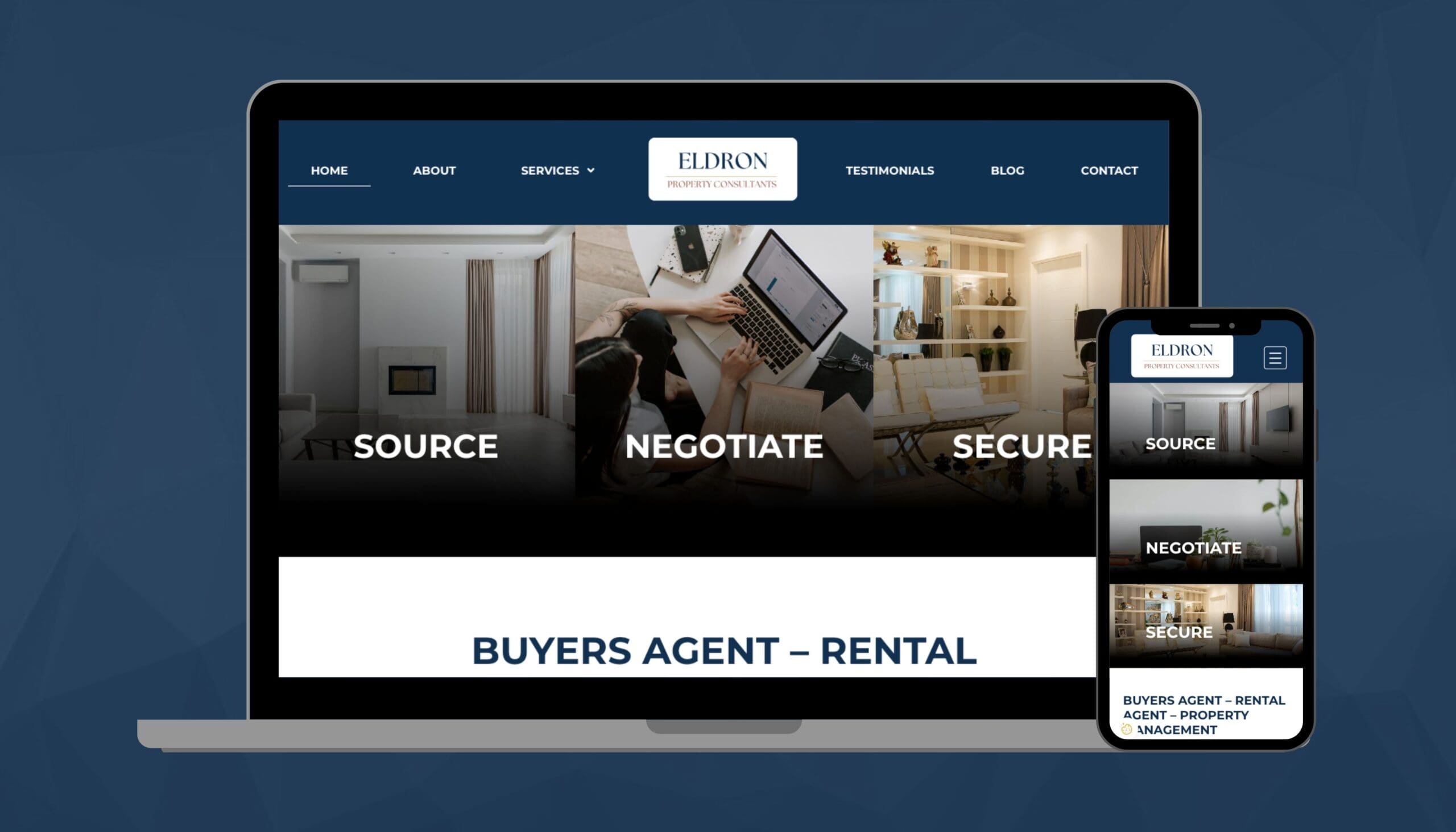
ProfileTree, the Belfast-based digital agency, built Eldron's online presence from the ground up, delivering a property website, structured SEO, video production, and a content marketing strategy that supports long-term lead generation. This case study...
ProfileTree delivered website design for business advisory services firm Brexit Plan, a Belfast-founded consultancy that helped businesses across the island of Ireland work through the economic impact of the UK's departure from the EU....
Navigate the digital landscape with a marketing strategy. Our team crafts comprehensive plans that resonate with your target audience, drive engagement, and boost conversions.
Elevate your digital proficiency. Our in-depth training sessions equip your business with cutting-edge digital marketing techniques to outperform competitors and thrive online.
Captivate and grow your social following. We create tailored social media strategies that ignite engagement, amplify your brand's online presence, and foster lasting connections.
Harness the power of your mailing list. Our precision-targeted email marketing campaigns are engineered to nurture relationships and drive tangible business outcomes.
Elevate your brand with our content marketing mastery. From thought-provoking blogs to eye-catching infographics, we craft content that captivates, informs, and converts your ideal audience.
Bring your brand's story to life with authenticity. We craft compelling narratives that strike a chord with your audience, forging a powerful emotional bond with your brand.
Empower your business with AI expertise. Our tailored training demystifies AI, equipping your team with the knowledge to leverage its potential for growth and innovation.
Transform customer service with AI chatbots. We develop sophisticated chatbots that elevate user experience, streamline interactions, and deliver unparalleled efficiency.
Transform your reach with AI-driven marketing. Harness data-driven insights for laser-targeted campaigns that captivate, engage, and convert your audience.
Optimise your operations with cutting-edge AI tools. We integrate intelligent solutions that streamline processes, enhance efficiency, and support data-driven decision-making.
Join Our Mailing List
Grow your business with expert web design, AI strategies and digital marketing tips straight to your inbox. Subscribe to our newsletter.