ProfileTree provides SEO and content strategy for professional sports clubs across the UK and Ireland. This case study covers a structured content publishing project for the London Lions basketball club, showing how consistent search-intent-led publishing improved organic visibility and reduced reliance on match-day traffic spikes.
The Challenge Sports Organisations Face Online
Sports clubs have a visibility problem that most digital agencies misunderstand. The issue is not getting found during a match week. Any club with a halfway decent website will pick up branded search traffic when fans want score updates or fixture information. The real problem is what happens in the 72 hours after the final whistle, and across the weeks between fixtures.
The organisations we work with in sports face three consistent digital challenges. First, search demand is event-driven by design: interest spikes around fixtures and results, then drops sharply, creating a traffic pattern that looks healthy on match days and hollow the rest of the month. Second, the SERPs for anything sports-adjacent are dominated by national publishers, broadcasters, and aggregators with decades of domain authority. A club’s own website is rarely positioned to compete for generic sports queries. Third, the content clubs do produce — usually match reports and injury updates — tends to be reactive and inconsistently optimised, earning a short burst of visibility and then going cold.
The result is that historic content does not compound value over time. Each piece works in isolation, then stops working. The club’s publishing effort does not build into anything.
What we have found, working across sports clients, is that the solution is not more content. It is smarter structuring of what you already produce. Applying search intent mapping for content strategy to an existing publishing calendar, combined with consistent on-page optimisation and internal linking between match content and evergreen club pages, can turn reactive publishing into a compounding organic asset.
About the London Lions: The Project
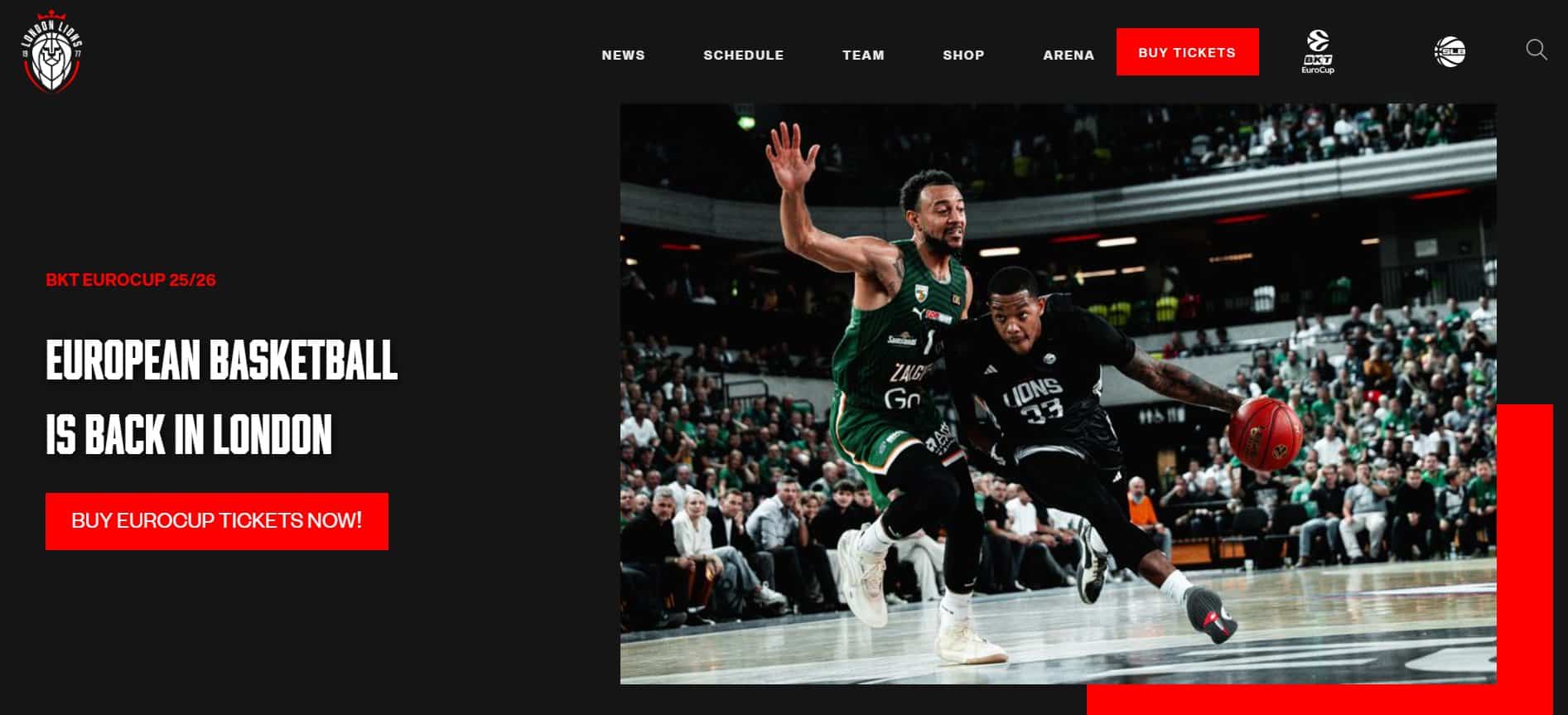
The London Lions are a professional basketball club competing at the highest level within British and European basketball, including the BKT EuroCup. The club runs a fast-moving content calendar driven by fixtures, results, player updates, and commercial announcements.
Prior to working with ProfileTree, the club produced regular editorial content but publishing was not structured around search intent or long-term organic performance. Match reports and news articles served fans well in the short term but were often inconsistently optimised and not aligned with how people actually search for basketball content between fixtures.
The project goal was not to change the club’s editorial voice or priorities. It was to make each piece of content work harder from an organic search perspective, without adding resource strain to the existing publishing workflow.
What We Did: The SEO Approach
Search Intent Mapping
Before any content was written or optimised, we mapped the London Lions’ publishing calendar against search intent. Each content type — match reports, fixture previews, player news, club announcements — was assigned a clear intent category. This determined how titles were written, what headings were used, and which related queries each piece of content could serve beyond the immediate news event.
Consistent On-Page SEO Execution
Each piece of content published during the project followed a repeatable on-page checklist: optimised title tags written for search relevance, logical heading structures supporting readability, internal links connecting match content to evergreen club pages, and meta descriptions written to improve click-through from search results. The process was designed to be carried out by the club’s existing team without specialist input every week.
Content Publishing Cadence
The core of the strategy was consistency. Weekly output included SEO-optimised match reports covering fixtures with search-friendly titles and structured headings, alongside news articles focused on club updates and topics aligned with fan search behaviour throughout the week. This regular cadence kept the site active in Google’s index and signalled freshness and relevance between match days.
Performance Review and Iteration
Performance data from Google Search Console was reviewed regularly throughout the project to identify content formats earning consistent impressions, queries driving the strongest click-through rates, and pages maintaining visibility beyond their initial publication window. Where patterns emerged, publishing effort was focused on replicating successful approaches.
Results
The results reflected steady improvement rather than short-term spikes. SEMrush data recorded a measurable increase in organic clicks across the project period, with impressions growth indicating broader visibility across basketball-related search queries.
Click-through rate for published content performed strongly within competitive sports SERPs, indicating that titles and descriptions were closely matching user expectations. Match reports continued to earn impressions beyond the immediate post-fixture window, supporting mid-week traffic stability.
Operationally, the cadence and optimisation process proved repeatable throughout the season without requiring significant additional resource from the club’s in-house team.
How ProfileTree Approaches SEO for Sports Organisations
Sports SEO is a different discipline to standard business SEO because the content calendar is controlled by the fixture list, not by keyword opportunity alone. A strategy that works for a professional services firm will not transfer directly to a sports club.
When ProfileTree works with sports organisations, the starting point is always the existing publishing workflow. We do not recommend starting from scratch. What we do is map the club’s natural content output against search intent, identify the gap between what gets published and how fans actually search, and build a repeatable process that bridges that gap without adding unsustainable workload.
The focus is on content that compounds. Match reports should earn impressions beyond match day. Player profiles should rank for name searches throughout the season, not just at signing. Club history content should build evergreen authority that supports commercial pages. Internal linking connects all of these so that publishing effort in one area strengthens the rest of the site.
“The sports clubs we work with are not short of content,” says Ciaran Connolly, founder of ProfileTree. “What they are short of is a process that makes each piece of content work beyond the day it is published. That is the gap we close.”
For sports organisations looking to build sustainable organic visibility, our SEO services for UK sports organisations cover the full process from intent mapping and on-page optimisation through to performance reporting and iteration.

Frequently Asked Questions
How long does it take for an SEO strategy to show results for a sports club?
For most sports clubs, the first measurable improvements in impressions and click-through rate appear within eight to twelve weeks of implementing consistent, intent-optimised publishing. Traffic growth is cumulative rather than immediate: the first few weeks build index coverage, and compounding visibility follows as Google indexes content patterns rather than individual posts. Clubs that publish reactively without optimisation often see strong match-day spikes that then drop sharply. The goal of structured SEO is to flatten that curve so the site earns traffic throughout the week, not just around fixtures.
Can a sports club’s website compete with national sports media for search visibility?
Not for generic sports queries, and trying to do so wastes resource. National broadcasters and publishers will consistently outrank club websites for broad terms like ‘basketball results’ or ‘EuroCup fixtures.’ Where clubs can win is on specific, branded, and long-tail queries: team name plus location, player names, specific fixture matchups, and club-specific content that national media does not produce. Owning those queries reliably builds a loyal organic audience that national publishers cannot replicate.
Do sports clubs need a separate content team to run an SEO strategy?
No. The most effective approach is to build SEO into the existing publishing workflow rather than running it as a separate function. What changes is not how much content gets produced, but how it is structured before publication: title format, heading use, meta descriptions, and internal links. With a clear repeatable process in place, in-house communications or media teams can apply consistent on-page SEO without specialist input on every article.
What SEO tools are most useful for a sports organisation?
Google Search Console is the most important tool for any club running an SEO strategy because it shows exactly which queries drive impressions and clicks, and at what ranking positions. It is free and provides data directly from Google’s index. For broader keyword research and competitor tracking, tools like SEMrush or Ahrefs are useful, but they are secondary to Search Console for day-to-day performance monitoring. Most clubs do not need both.
Should match reports be optimised differently from other club content?
Yes, and the difference matters. Match reports are time-sensitive content with a short visibility window unless they are structured to serve ongoing search demand. A report titled ‘Lions vs Zalgiris’ serves the immediate news moment but earns little long-term visibility. The same report structured to include both team names, the competition, and the result in a search-readable format will continue to earn impressions for anyone searching that fixture in the following weeks. The content does not change; the on-page structure does.
How does internal linking help a sports club’s website perform in search?
Internal linking distributes authority from frequently updated content — like match reports and news articles — to the pages that matter most commercially, like ticketing, membership, and sponsorship pages. Without deliberate internal linking, each piece of content works in isolation. With it, publishing a well-optimised match report also strengthens the ticketing page it links to. Over a season of consistent publishing, this compounds into measurable domain authority for the pages that drive revenue.